Shaping Cultural Beliefs Through Fantasy Photography for my Worldbuilding Process
The Power of Fantasy Photography in Worldbuilding
What if I told you that a single photoshoot could transform the way you understand your entire fantasy world? Not just visually or aesthetically—but culturally, spiritually, and emotionally.
When most people think about worldbuilding, they focus on maps, magic systems, languages, or political structures. But what about belief systems? Rituals? The quiet, sacred moments that shape how people live—and how they die?
In my previous work, I explored how sewing costumes from my fantasy world helped me deepen both my worldbuilding and my writing. Understanding materials like fabric, fur, and layered clothing revealed new historical and cultural details.
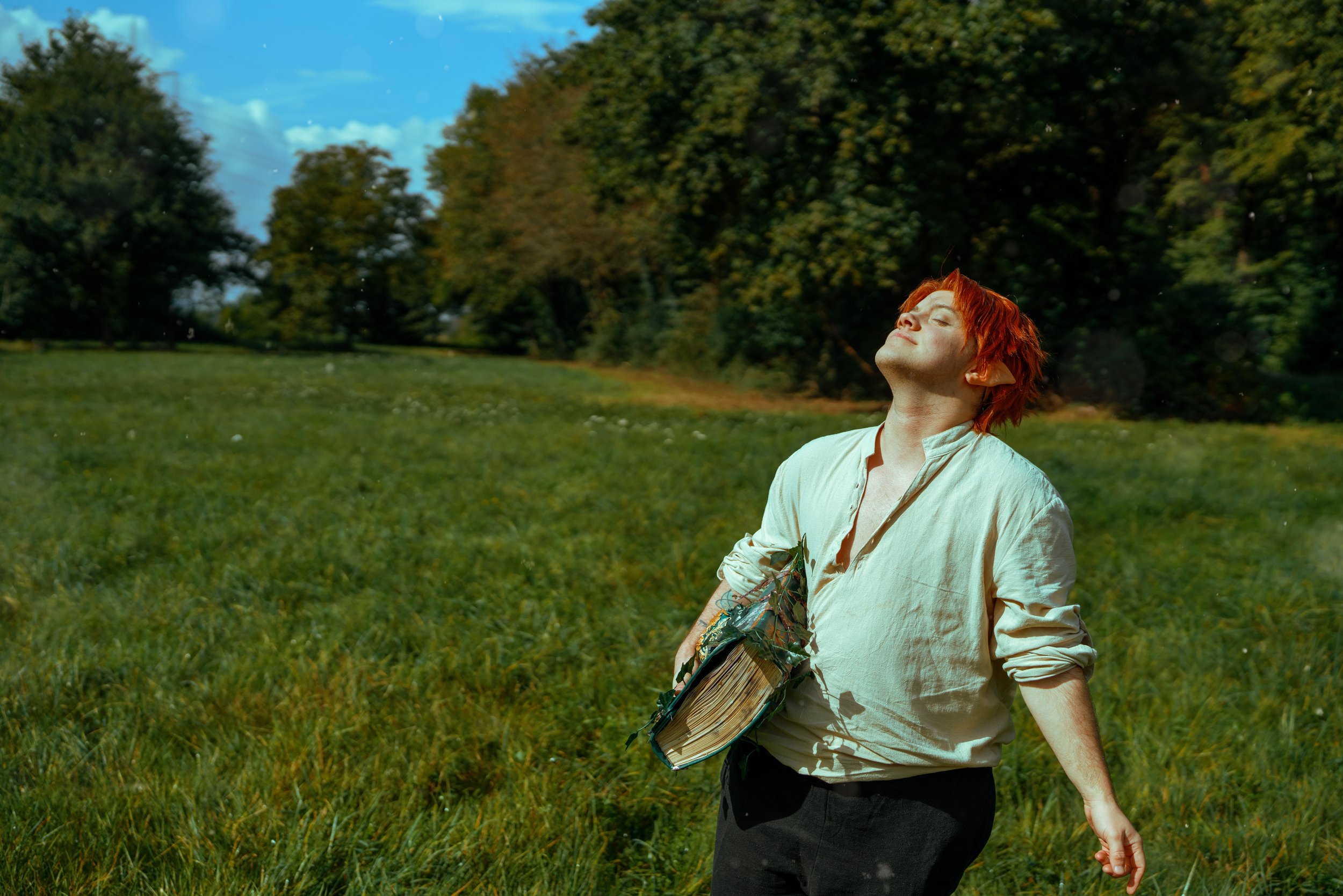
Photography doesn’t just bring these details to life—it gives you a better understanding of your characters. By staging scenes, I could reflect a character’s background, personality, and role within Ananthara.
In this article, I’ll take you behind the scenes of a fantasy photoshoot that did more than create beautiful images—it deepened the culture, religion, and emotional core of my world Ananthara. Through costume, lighting, symbolism, and character embodiment, I discovered details I hadn’t even realized were missing from my story.
How Photography Enhances Your Worldbuilding
These photoshoots didn’t just generate beautiful visuals—they answered critical questions:
What do my people believe in?
How do they celebrate life, death, and the cosmos?
How does faith shape daily life and societal rituals?
By stepping into the world through photography, I observed it like a historian, felt it like a believer, and questioned it like a writer. The process transformed abstract ideas into lived experiences, making the world of Ananthara more believable and immersive.
Photography bridges imagination and reality. It allows you to explore culture, character, and story in ways that writing alone often cannot.
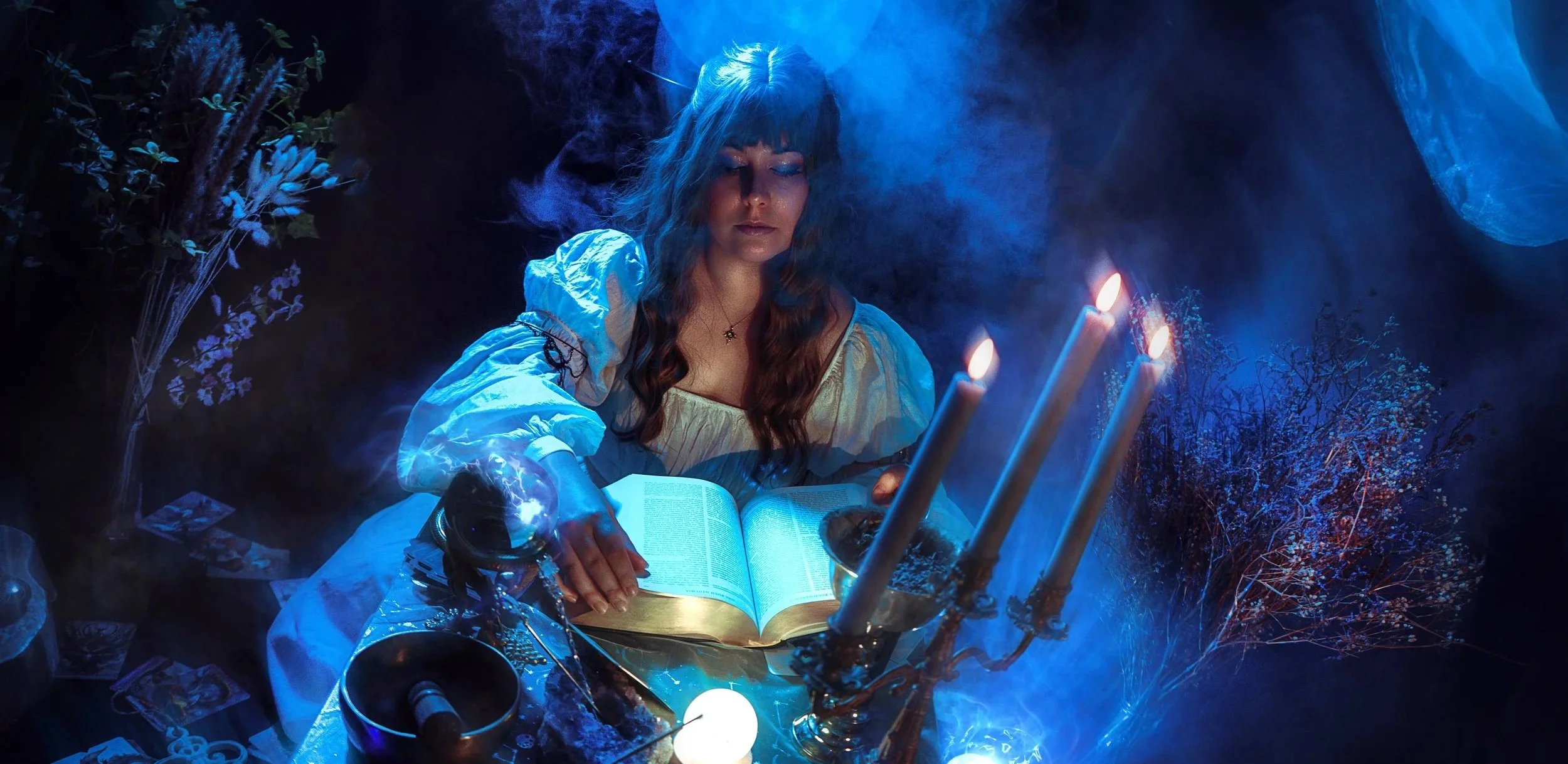
Portrayed ceremonial preparations for the dead.
Channeling, ritual cleansing, and guiding the soul to the realm of dreams.
Moonlight and blue lighting symbolize connection to Lunaris and the phases of the moon.
These details helped me understand how rituals reinforce cultural beliefs, making Thal’draen feel lived-in and authentic.
Bringing Characters to Life: Three Key Concepts
For this photoshoot, I wanted to recreate a spiritual ceremony from my first fantasy novel. Thal’draen is the capital of magical, academic, and technological innovation, and the culture reflects this in its rituals, architecture, and daily practices.
I focused on a ceremony that guides the soul to the realm of Lunaris, the moon goddess of Thal’draen.
Moon magic and spiritual practices are central to maintaining the Thal’ithara, the magical source of Ananthara.
Worldbuilding is about asking deeper questions: not just which goddess is worshiped, but how belief shapes daily life, death, and societal interactions. Think of Tolkien’s Silmarillion: you may not include every detail in your story, but the knowledge informs every cultural nuance, character decision, and scene.
Through this photoshoot, I observed how characters interact with their environment—beyond the page. Costume, makeup, lighting, and props all became tools for worldbuilding.
1. Claire: The Priestess
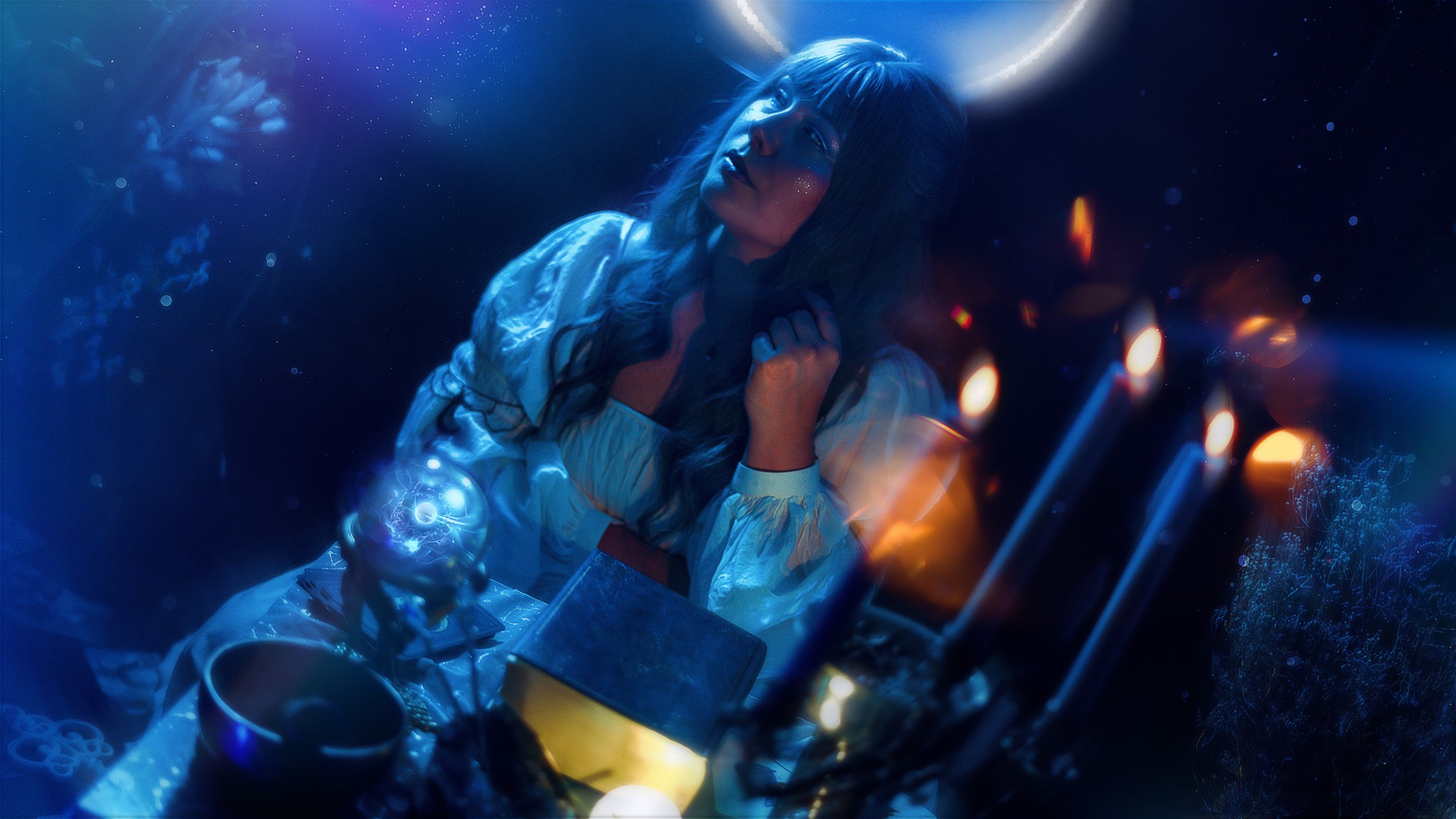


2. Mizu: The Perspective of the Dying


Explored existential questions: what happens after death? How does one move on?
Built a “cloud floor” representing the realm of dreams, where souls rest before reincarnation.
Props like veils, incense, and celestial symbols reinforced cultural symbolism.
By photographing this perspective, I could explore emotions, beliefs, and spiritual practices that inform the culture of my world.
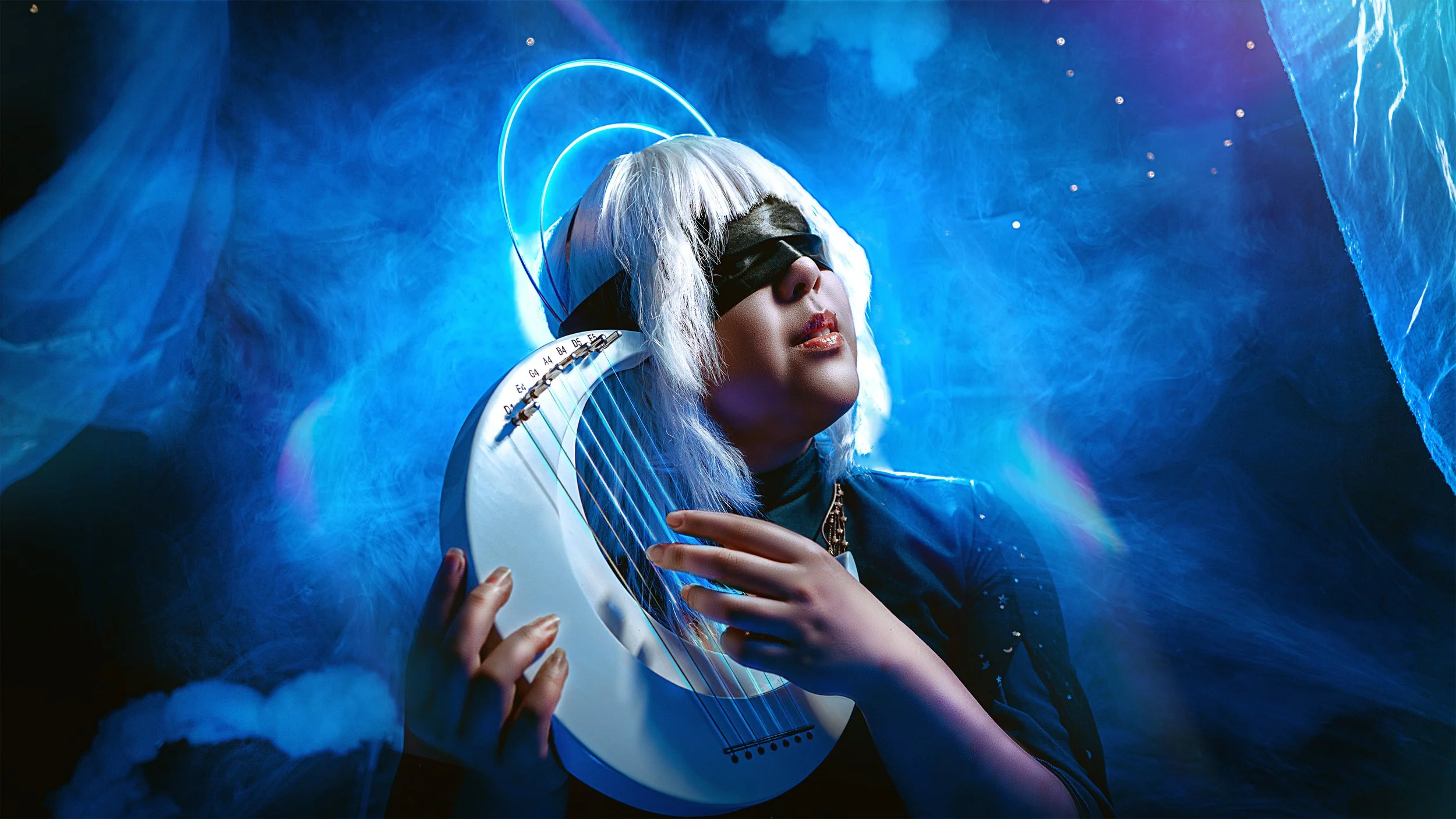
3. Lunaris: The Moon Goddess
Developed through inspiration boards, sketches, and symbolic props.
The harp became a central symbol for guiding souls.
The blindfold represented impartiality and fairness, echoing Tarot symbolism.
This final set clarified the goddess’s role in Ananthara, influencing lore, rituals, and character behavior.
Conclusion + Takeaways for Fantasy Authors & Artists
Worldbuilding isn’t just about inventing places, gods, or magic systems—it’s about understanding how your people feel inside their world.
Through this photoshoot, I discovered that interacting with your world beyond the page makes it come alive. It stops being an idea—it becomes lived experience.
For fantasy writers, artists, and creators: photography is more than a visual tool. It’s a bridge between imagination and reality, helping you understand your culture, characters, and story on a deeper level.
Step into your world physically: Costumes, props, and sets can reveal cultural details you may have overlooked.
Observe and embody: Treat your characters, rituals, and spaces as real; ask questions about their daily lives, beliefs, and challenges.
Use photography as a tool: Visual storytelling deepens character development, cultural richness, and emotional impact.
Small details matter: Makeup, lighting, props, and posture convey belief, ritual, and personality.
If you’re building a fantasy world and feel stuck, try creating, wearing, staging, and photographing it. Let your world answer you back.

Jetzt Brief Club beitreten, eintauchen & Goodies sammeln.