How It Improved My Worldbuilding, turning My Fantasy Character Concept Into a Cosplay
In my last DIY post, I shared step by step
how I designed and sewed a priestess robe.
But why did I do it — and what does sewing a costume have to do with worldbuilding, writing, my fantasy novel,
and character development?
More importantly: how did it help me improve not only my writing style, but also my worldbuilding?
Let’s dive in.



The Origin of the Idea
I’m currently writing my first novel and began by brainstorming the kingdom, environment, clothing — in short, the culture — my protagonists are confronted with.
For my main character, I needed a more distinctive design that would realistically fit her surroundings. My story takes place in an icy environment where surviving in a tank top simply isn’t an option.
Clothing is never just clothing. It reflects culture, tradition, hierarchy, climate, and belief systems.
When you’re building a fantasy world from scratch, these details matter.
Functionality Instead of Pure Aesthetics

Schülerrobe der Wyldheart Academy - erster Entwurf.
I didn’t just want the design to look good. I needed to know if it would function.
Magic plays a significant role in my world, especially in this kingdom. It is woven into nearly everything — including clothing.
The design needed to feel airy and pure, similar to temple garments worn by monks. But at the same time, the characters couldn’t realistically freeze to death. I needed a balance.
In the novel, crystals and ornamental patterns generate warmth and distribute it throughout the garment.
In real life, I don’t have magic.
So I had to test whether the design would still work without it.
Would it hold warmth?
Would it feel believable?
Would it make sense in a harsh climate?
From Runes to Crystals –
Creating a More Cohesive Concept

Eldwyns Priester Uniform | Concept Art Design - Wyldheart Studio
Initially, I planned to weave magical runes into the fabric.
Embedding crystal elements into the clothing created a stronger narrative connection cause of the information in the book. It tied the garments to the capital’s origin, its energy source, and its cultural identity.
It felt far more cohesive than simply embroidering runes onto fabric.
The Creation Process as Deep Immersion


The process of selecting materials and sewing the robe felt like sitting in that world as a tailor crafting a garment for an academy student.
It wasn’t just about appearance.
It was about:
The texture of the fabrics
The weight of the cloak
The way materials realistically work together
The physical sensation of wearing the garment
Only by wearing it could I truly understand whether the design made sense.
The Practical Test: Wearing, Feeling, Understanding
When I tried on the robe, the cloak rested heavily on my shoulders — but not as heavily as a winter coat dragging behind you.
The faux fur woven into the hood and upper garment provided real warmth. It felt light and breathable, yet insulating enough to protect against cold.
For the first time, I understood how my protagonist would move, how the fabric would react, how it would behave in wind or snow.
That kind of embodied knowledge is impossible to invent purely from imagination.
Bringing the Protagonist to Life
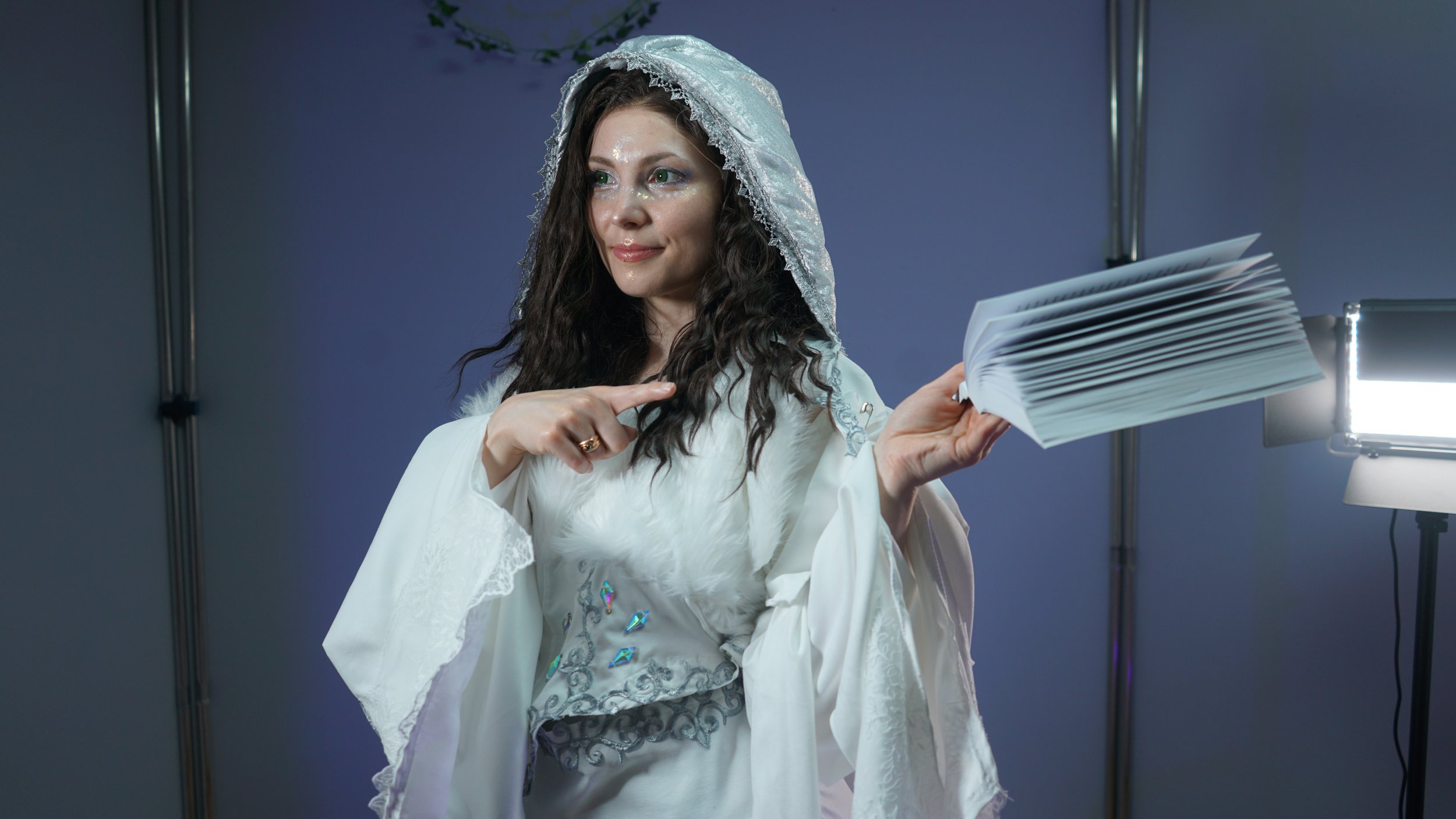
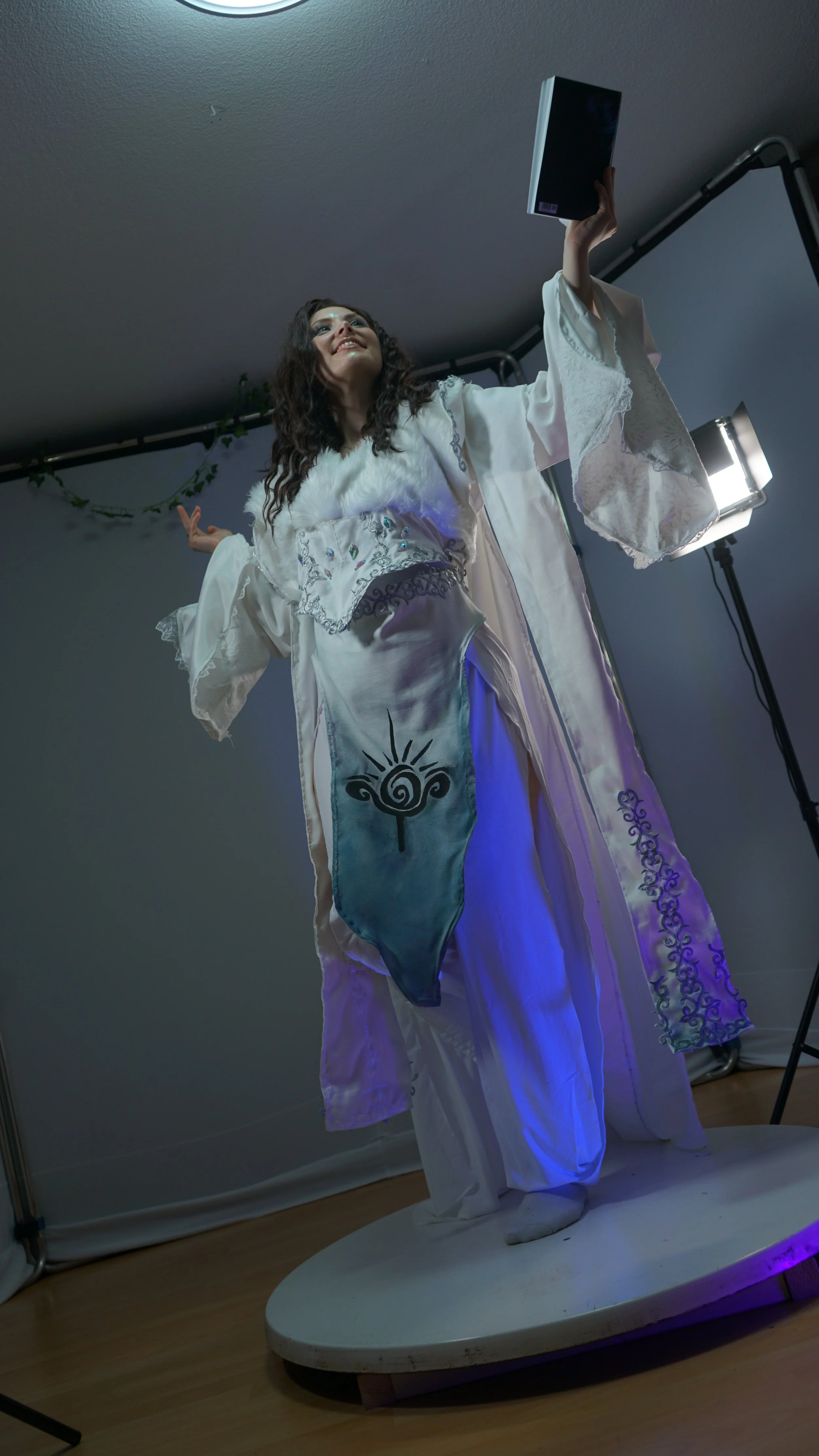
After finishing the cosplay, my dear friend mary_misantrophe wore the costume and stepped into the role of my protagonist.
I built a small set and photographed her in an academy-like setting.
Through this, I gained:
A vivid visual understanding of my character
A clearer sense of how she interacts with her environment
A realistic impression of how the clothing fits into the world
The character stopped being abstract.
She became tangible.

How This Improved My Worldbuilding and Writing Style
Was all this effort necessary?
No.
You absolutely do not need to sew a costume to write a strong character or culture.
But for me, this was my form of research and immersion.
By handling fabrics, observing how they move, feeling their weight, and watching them interact with light and environment, I learned:
How materials actually behave
Which descriptions feel realistic
Which fabric combinations make sense
How to describe texture, weight, and warmth vividly
Instead of guessing, I experienced it.
That allows me to write sensory details that feel authentic and grounded.
When building a fantasy world from scratch, immersion like this transforms abstract ideas into something concrete.
Conclusion
Bringing my character design to life wasn’t a necessary step — it was a personal gateway into my own world.
Through practical creation, physical experience, and observation, I deepened my worldbuilding on a tangible level.
This process helps me:
Write more authentically
Notice details more consciously
Create descriptions readers can truly visualize
Understand my world instead of just describing it
For me, immersive creation isn’t just crafting — it’s research.
And sometimes, the best way to build a fantasy world from scratch is to physically step inside it.
Folge mir auf Social Media
Neuste Beiträge