
3 Lessons I Learned While Creating My Fantasy Magic System
At first, I felt overwhelmed trying to create a magic system for my fantasy world — and at the same time, I was so excited thinking about the abilities, how magic would unfold, what it would look like, and what kind of possibilities would open up for the people in Ananthara if magic was part of their everyday life.
But in the end, I realized that magic is not only about abilities and power — there is way more to it, and way more questions that need to be answered.
Let’s take a look at the lessons I’ve learned.

Lesson 1: Magic Always
Has a Message
In many fantasy worlds, magic already exists in fixed forms. It may come through elemental powers, ancient spells, divine blessings, bloodlines, rituals, magical schools, or secret techniques that people learn to master over time.
Magic can be studied. Strengthened. Controlled. Inherited. Taught. Feared. Weaponized. And there is absolutely nothing wrong with that.
Clear systems can make magic easier to understand. They help the audience know what is possible, what is dangerous, and where the limits are.
But if we look deeper than the question “What can magic do?”, another question begins to appear:
What does magic say about
the World and the People who use it?

Because magic is rarely just a collection of abilities. It can represent knowledge. Faith. Nature. Control. Freedom. Memory. Corruption. Creation. Identity. Self-expression.
A great example of this is elemental magic in Avatar: The Last Airbender. On the surface, bending is a power system. Some people can control fire, water, earth, or air. But the elements are not only abilities. They become philosophies, cultures, and identities.
For most of the story, fire is shown through the Fire Nation as something aggressive and dominating. It becomes connected to rage, ambition, power, control, and destruction.

But one of the most interesting moments in the series happens in The Firebending Masters, when Aang and Zuko learn from the Sun Warriors and the dragons that this is not the full truth of fire. At one point, the Sun Warrior Chief tells Aang:
“Fire is life, not just destruction.”
That moment matters because it shows that the element itself was never the problem. The way people understood it was.
And that is exactly what makes Avatar’s bending system so strong. The elements are not just powers. They carry meaning.
Water represents healing, community, adaptability, and emotional flow.
Earth represents stability, endurance, patience, and resilience.
Air represents freedom, spirituality, movement, and detachment.
And when you look closer at the characters who bend these elements, you can often see how their personality, culture, philosophy, fighting style, and even clothing are shaped by the element they are connected to.
The ability itself is only one layer. The meaning behind it is what makes magic feel connected to a culture, a character, and a world.
Avatar showed me how magic can reflect culture and philosophy. But as a neurodivergent creator, I wanted to take that idea somewhere more personal.
I started asking myself…
what magic would look like if it reflected the way I experience the world — the wonder, the intensity, the sensitivity, but also the exhaustion of constantly adapting yourself in order to belong, function, and keep up.
For Ananthara, magic was never meant to be just power. It became identity. Self-expression. Authenticity. A way to break the chains and become who you were meant to become without rules, boxes or society standarts.

Lesson 2: Magic needs Rules
The second lesson I learned was that magic needs rules. And by rules, I do not mean that every spell has to be explained like a scientific formula. I do not mean that magic needs a diagram, a list of ingredients, or perfect mathematical logic.
Rules are not there to remove mystery. They are there to give magic a shape.
Rules help us understand where magic comes from, how it is accessed, what kind of form it usually takes, what kind of pressure it creates, and what happens when someone pushes it too far. They do not make magic smaller. They make it readable.
Because once the audience understands the shape of the magic, they can feel the stakes. They can recognize when something is stable, unstable, dangerous, desperate, forbidden, or wrong.
Without rules, magic can still look beautiful. But it becomes harder to understand what a magical moment actually means. Is this rare? Is this dangerous? Is this ordinary? Is this forbidden? Did the character earn this? Or did the magic appear because the story needed a solution?
When everything feels equally possible, nothing feels particularly meaningful.
And this became a real challenge for Thal’ithara.
I wanted magic in Ananthara to feel deeply personal. I wanted it to express identity, emotion, sensitivity, creativity, memory, fascination, and the inner shape of a person. I did not want people to be reduced to fixed magical categories like healer, bard, fire mage, or druid.
But at the same time, I realized something uncomfortable: complete freedom can become its own kind of cage.
Because without structure, there is no connection. No recognizable pattern. No way to understand where the magic begins, how it develops, or why one expression still belongs to the same system as another.
So I had to ask myself: if magic in Ananthara does not begin with a spell, an element, or a class, what does it begin with?
I needed something that worked like a shared root with many possible evolutions.
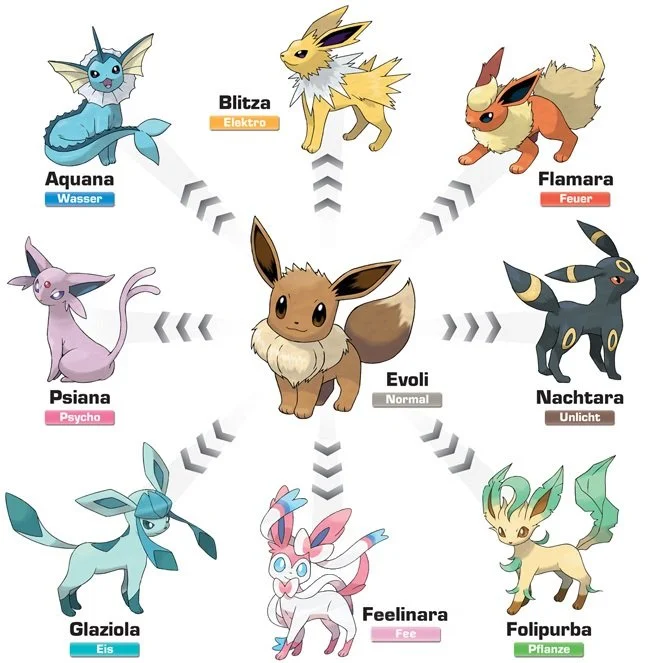
A simple example would be Eevee. Eevee starts from the same base, but depending on the condition, environment, bond, or influence, it can evolve into very different forms.
That helped me think about Thal’ithara.
The Calling is the base. It gives the magic its root. But the Calling does not decide the final expression.
Resonance shapes that root through emotion, memory, experience, wounds, fascination, and inner state. And Manifestation is the form the magic finally takes.
So two people can share the same Calling and still express it in completely different ways.
The system has rules. But those rules create possibility instead of removing individuality.
That gave Thal’ithara the balance I was looking for. Enough structure to make the system readable. Enough freedom to make the magic feel alive.
In the end, putting magic into a system did not make it less personal. It helped me understand its possibilities, its limits, and its consequences. It made the magic more believable, more tangible, and more meaningful.
Because rules do not make magic less magical. They make personalization understandable.

Lesson 3: Every Magic System Needs a Counterpart
The third lesson I learned was that every magic system needs a counterpart. Not necessarily an evil version of itself. But something that answers the question: what happens when this magic is pushed too far?
Every magic system has something it values. And the counterpart reveals what happens when that value is damaged, corrupted, exploited, or taken too far.
If magic is built around nature, its counterpart might be exploitation, imbalance, decay, or extraction. If magic is built around faith, its counterpart might be doubt, obsession, broken vows, or spiritual manipulation. If magic is built around creation, its counterpart might be destruction, obsession, or the inability to let anything remain unfinished.
And if magic is built around identity, the counterpart becomes much more personal.
That was the case with Thal’ithara.
Because the magical source of the Thal’ithara the Soul. Our soul is connected to identity, memory, emotion, self-expression, and the inner shape of a person.
So the darkest counterpart of Thal’ithara could not simply be exhaustion. Exhaustion matters. Overuse matters. Strain matters. But the deeper danger is manipulation. Control. Severance. The possibility that someone might try to bend, damage, suppress, or remove another person’s connection to their own magic.
And in Ananthara, that is horrifying because Thal’ithara is not just a power someone uses. It is expression.
And that became one of the most important realizations for me: the counterpart of a magic system should not feel random. It should grow from the same idea that makes the magic meaningful in the first place.
If the magic is about balance, the danger is imbalance. If the magic is about faith, the danger is corrupted belief. If the magic is about nature, the danger is exploitation. If the magic is about identity, the danger is self-betrayal, suppression, and control.
That counterpart gives the system weight. It shows that magic is not separate from consequence. It shows that every use of power can disturb something, demand something, reveal something, or break something.
Because without a counterpart, magic can become only a solution. But with a counterpart, magic becomes a choice.
And every choice has weight.

Summary: My biggest lesson
Magic Becomes More Meaningful
When It Has a Story to Tell
The biggest lesson I learned while building Thal’ithara is this: magic becomes more meaningful when it has a story to tell.
A magic system is not only a set of powers. Every part of it says something.
Its source shows where the world believes power comes from. Its rules show what gives that power shape. Its limits show where power stops. Its costs show what power demands. Its taboos show what people fear. And its consequences show what happens when power is used without care, balance, or understanding.
That is why magic can become one of the strongest parts of worldbuilding.
If you look closely, every spell, every rule, every restriction, and every forbidden form of magic can reveal something about the world and the people who live in it.
For Ananthara, that message became deeply connected to identity, suppression, and self-expression.
Thal’ithara is not simply about what someone can do. It is about who they are. What shaped them. What they carry inside themselves. And what happens when they are allowed to express that truth freely.
Magic needs freedom, because identity and self-expression cannot exist inside a cage. But it also needs boundaries, because power without consequence loses its weight.
So if you are building your own magic system, do not only ask what your magic can do. Ask what it means.
What does it say about your world? What does it say about power, fear, faith, nature, knowledge, control, freedom, identity, or belonging?
What do its rules reveal? What do its limits protect? What do its taboos warn people never to repeat?
Because the strongest magic systems are not always the ones where everything is possible. They are the ones where every possibility has meaning.
If you want to explore how this idea works inside Ananthara, you can read the full article on my magic system here.
Take the Quiz:
Find out who you are in Ananthara
and how would your magic unfold?
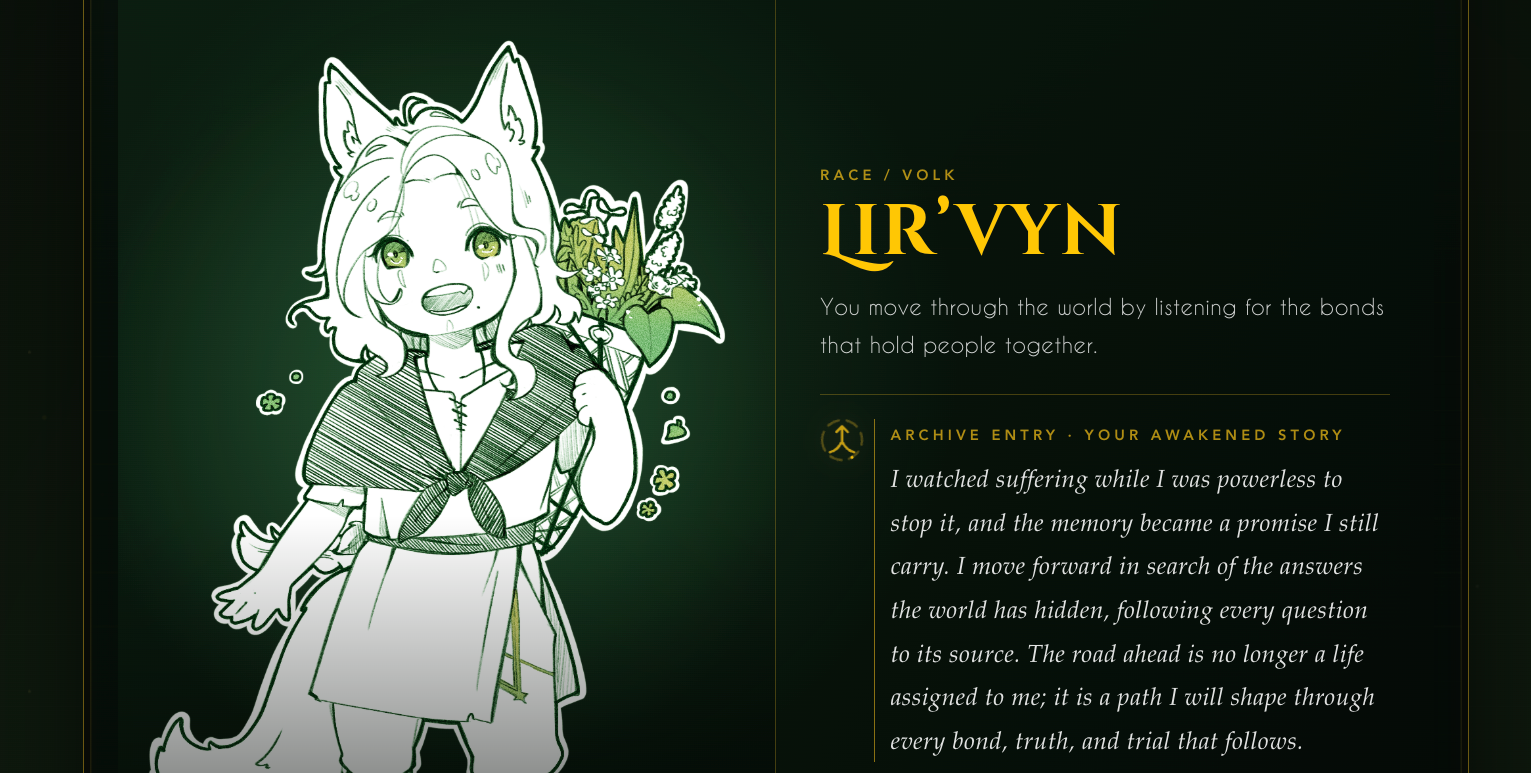
Find out who you are in Ananthara.
If magic truly emerged from who you are at your core… what would your Calling be? Which parts of your life, personality, and experiences would shape the way your magic evolves?
Discover your Archetype, uncover your Resonances, and explore how your own Thal’ithara might manifest.


40-page digital workbook · English · Instant download
Deepen your worldbuilding and develop a magic system that doesn’t feel like a random collection of powers, but instead becomes an integral part of your fantasy world making both the setting and its stories feel more vivid and alive.
This 40-page Magic System Workbook guides you step by step through the development of your magic and the deeper Questions that will enhance your Worldbuilding: your magic’s source, structure, limits, taboos, mastery, corruption, cultural impact and visual language. It also helps you test your system for loopholes, inequality and narrative relevance.
Includes: guided prompts, case studies, practical worksheets, English and German versions, and an instant digital download.
Perfect for fantasy writers, worldbuilders, TTRPG creators and artists.
Inside the workbook
Define the source and structure of your magic
Create clear limits, costs and taboos
Explore mastery, corruption and loss of control
Discover how magic shapes culture, power and everyday life
Develop a distinct visual and sensory language
Abuse, Loopholes, and Social Consequences
Explore exclusion, privilege and conflict
Connect your magic to your world and story
Guided prompts, case studies and practical worksheets
You will receive
40-page digital workbook
Checklist
Case studies from Ananthara and Thal’Ithara
English Version
Instant download
Printable PDF files
Perfect for fantasy writers, worldbuilders, game masters, TTRPG creators and artists developing original worlds.
This workbook does not just help you invent magical abilities. It helps you understand what magic changes.
Digital product only. No physical item will be shipped.





V’eild is the beating heart of trade in Ananthara — a kingdom stretching from tropical shores and endless deserts to towering mountains. In Kael’varun, merchants, pirates, Drae’khar, Dur’kaen and travellers from across the world meet beneath the shadow of an ancient dragon