Quicklinks
About | Words | Alphabet | Creating new Words | Summary

Draek’har - Chibi by Hiiyuki
At some point during worldbuilding, every fantasy creator has to make a choice: you can be reasonable, accept that not every tavern, ancient ruin, religious ceremony and suspiciously glowing stone needs three thousand years of linguistic history behind it — or you can look at your ancient dragon-descended people and think: they need their own language.
Obviously. That is approximately how Têhand happened. I did not originally sit down with the intention of creating a fully functional constructed language with its own phonology, grammar, case system, verb structure, writing conventions and enough linguistic detail to make me reconsider half the fantasy names I had already invented.
I mostly wanted my dragonborn people to sound cool. Which, as usual, was how the problem started.
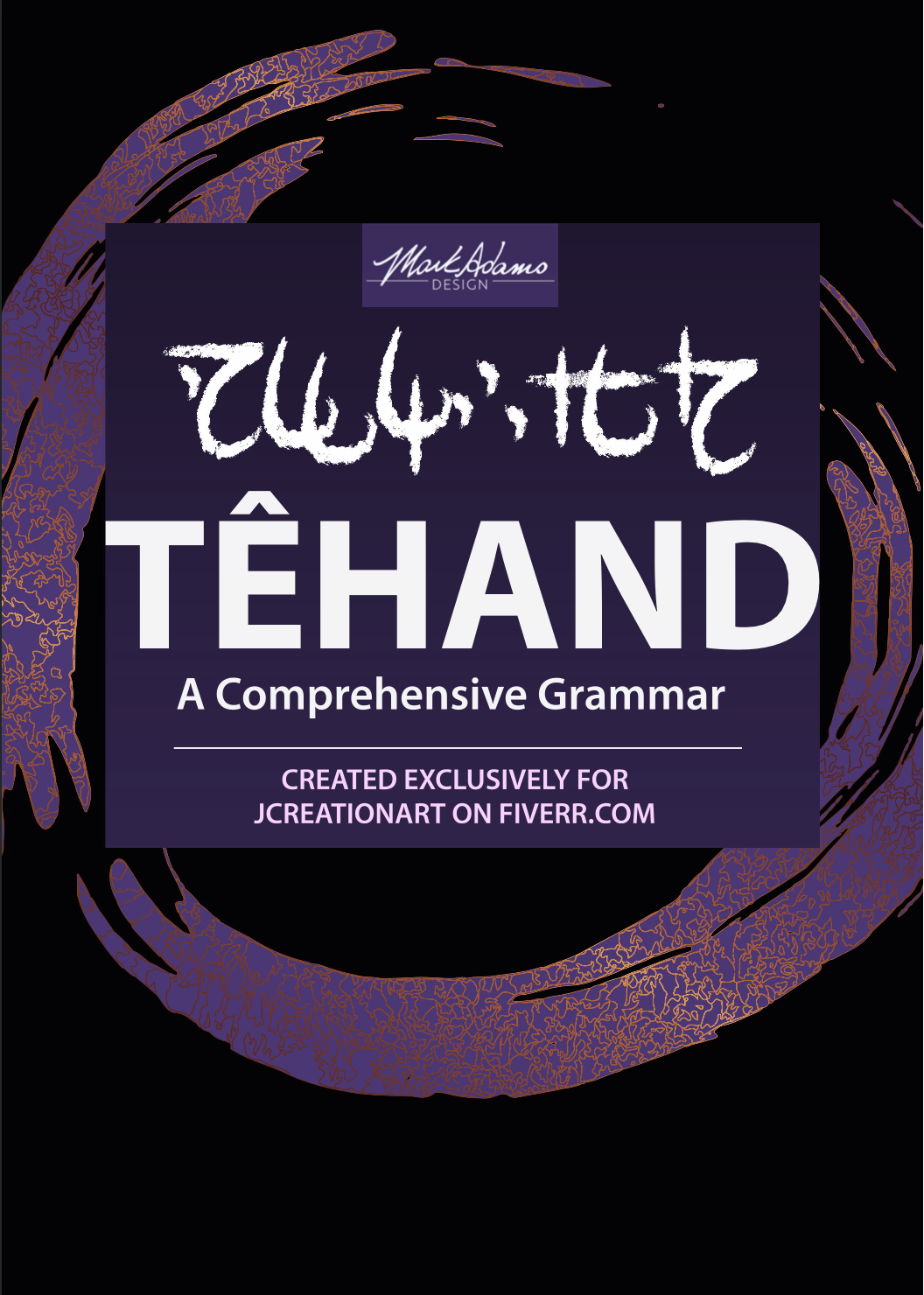
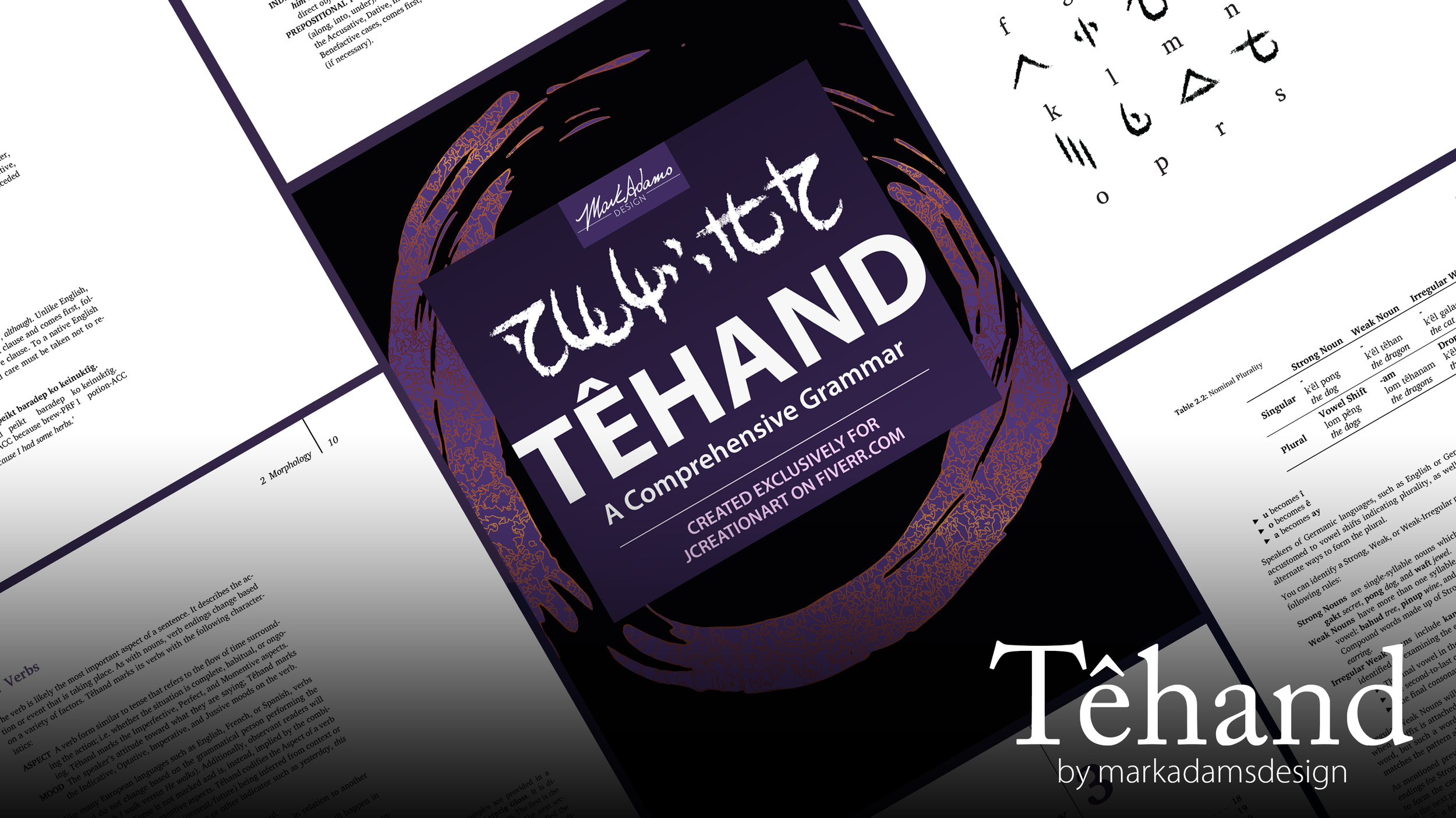
Created by Mark Addams on Fiverr
Back in 2023, I commissioned Mark Adams Design on Fiverr to help me create a proper language for what would become one of the oldest linguistic foundations of Ananthara.
My original brief was actually quite simple:
the language was meant for my dragonborn folk (drae’khar), and I imagined something that sat somewhere between Dovahzul from Skyrim and Dwarvish from The Lord of the Rings.
Dovahzul already came fairly close to the feeling I wanted because it could sound ancient and powerful without constantly sounding aggressive, while Dwarvish always felt much harsher to me — heavier, more grounded, almost carved rather than spoken.
Somewhere between the two, I wanted to find the voice of an ancient people with equally ancient magic: powerful, protective, imposing when necessary, but not so harsh that every normal conversation sounded like someone was about to declare war on a mountain.
Why create a language at all?
The obvious question is why I bothered doing any of this instead of simply inventing fantasy-sounding names whenever I needed them. And the answer is that having an actual linguistic foundation changes the way I approach the world.
When I name a place, ritual, people or philosophical concept, I can ask what the name means, where it came from, whether its meaning changed over time, whether it belongs to modern Têhand or an older form, whether another culture borrowed it and altered the pronunciation, or whether the modern interpretation is even correct.
Suddenly language creates history, and history creates more worldbuilding, which creates another document, which creates another folder, which creates another evening where I confidently tell myself that I am “just going to fix one small piece of lore” and then somehow end up researching grammatical case systems again.
Although Têhand originally began as a language for the Drae’khar, its role inside Ananthara has gradually become much larger. It now functions as one of those older linguistic layers that can leave traces behind in names, sayings, rituals, places and surviving texts.
And that also means I do not want every ancient name in Ananthara to perfectly match modern Têhand. Languages change. Pronunciations shift. Words survive after their original meanings are forgotten. Cultures borrow vocabulary from one another. People misunderstand old texts and occasionally build entire traditions around those misunderstandings. From a worldbuilding perspective, that is much more interesting to me than making everything perfectly clean.
Têhand - The Language
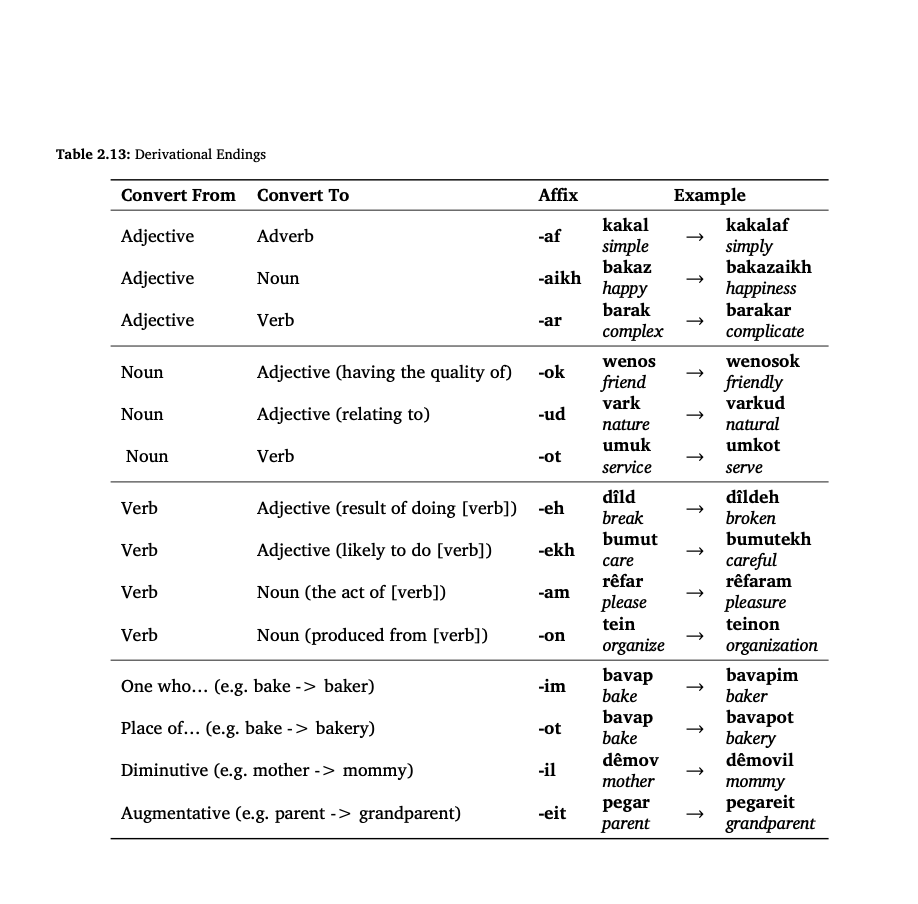
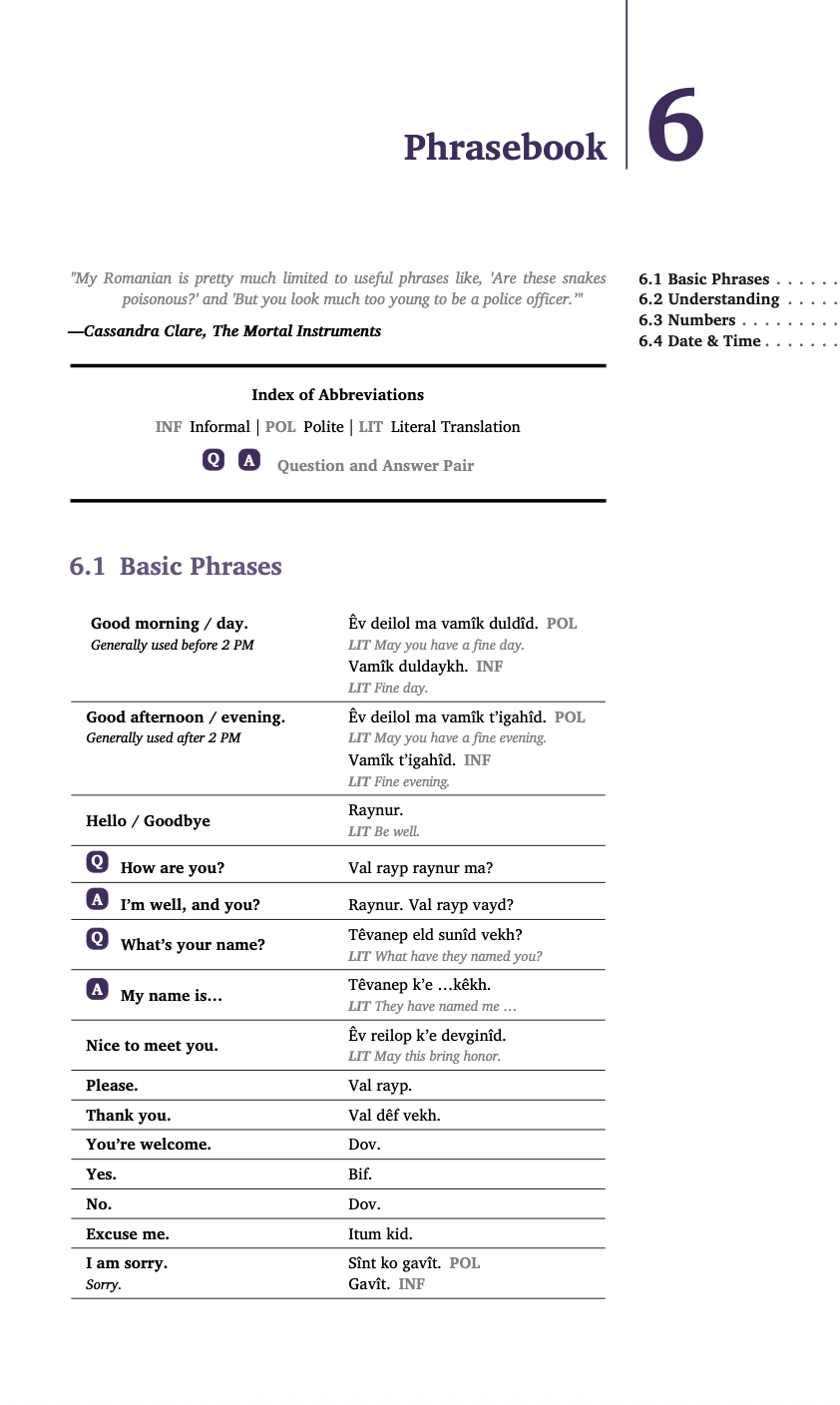
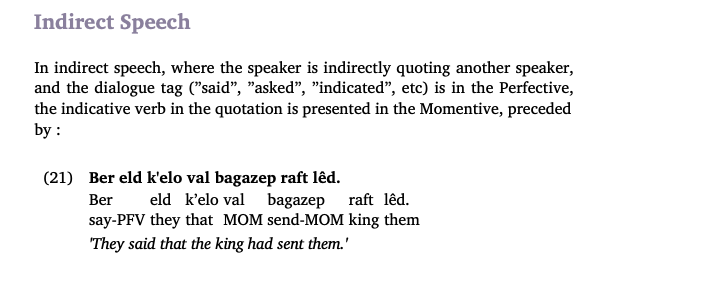
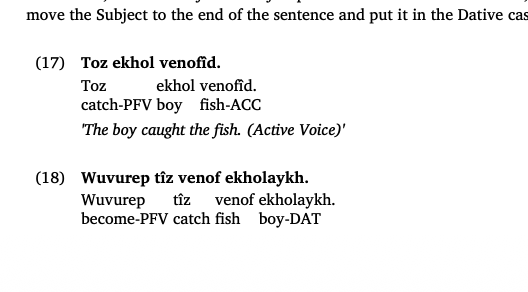
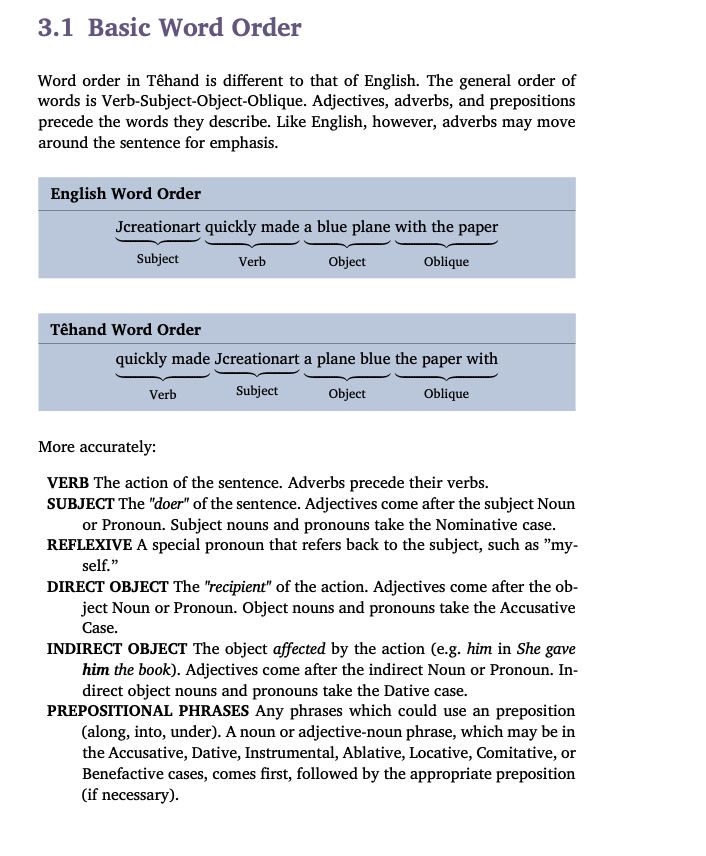
What came back was not simply a collection of fantasy words. It was a language system. And that is where Past Me once again created work for Future Me, because Têhand has rules. A lot of rules. It has its own sound inventory, spelling system, syllable structure, stress patterns, noun morphology, pronouns, verb aspects, grammatical moods, derivational rules, sentence structure and word-building system. In other words, I wanted names for ancient dragons and received grammar.
Têhand is a highly inflected language. Its nouns belong to strong or weak grammatical classes, distinguish singular and plural, and can appear in eight grammatical cases, including familiar concepts such as nominative, accusative and genitive alongside more unusual ones such as the Venerative, which is used when directly addressing something while emphasizing its value, preciousness or nobility.
Which, honestly, is extremely fitting for a language connected to ancient dragons. Apparently simply addressing someone was not dramatic enough. Sometimes grammar needs to say: you — but respectfully.
One of the things I like most about Têhand is that translating into it is not just a matter of replacing an English word with a fantasy equivalent. Its default sentence structure is Verb–Subject–Object–Oblique, rather than the Subject–Verb–Object order English speakers are used to.
That means even simple sentences force me to stop thinking in English first. Which is inconvenient, naturally, but also exactly what I wanted. A fantasy language becomes much more interesting when it feels as though it belongs to a culture with its own way of structuring thought rather than being English wearing an impressive number of apostrophes. I say this, of course, as the person responsible for names like Drae’khar, Thal’ithara and Lir’vyn, so I am fully aware of the irony.
Words and Phrases
One of my favourite simple expressions in Têhand is Raynur. It can be used both as hello and goodbye, with the literal sense of “Be well.”
I love that because it feels old without sounding ceremonially exhausting. You are not merely acknowledging someone; you are wishing them well when you meet and when you part. It is warm, simple and usable in everyday conversation, which means people in Ananthara can actually greet each other without performing a twelve-minute ritual every time they enter a bakery. Although, knowing me, there is probably a culture somewhere that does exactly that. I just have not written the bakery lore yet.
Certain words also began taking on much more importance once I started using Têhand inside the world itself. Duld can mean day or light. final Pand refers to life, including life in the sense of the soul. final Pitar can mean spirit, soul, or empathy, while tarkaikh means darkness.
Once concepts like these exist inside the language, they can begin carrying religious, philosophical and cultural meaning beyond their literal dictionary definitions. And that, to me, is where constructed languages become genuinely useful in worldbuilding: not when they simply translate the world, but when they begin helping to shape how that world understands itself.
Alphabet & Letterform
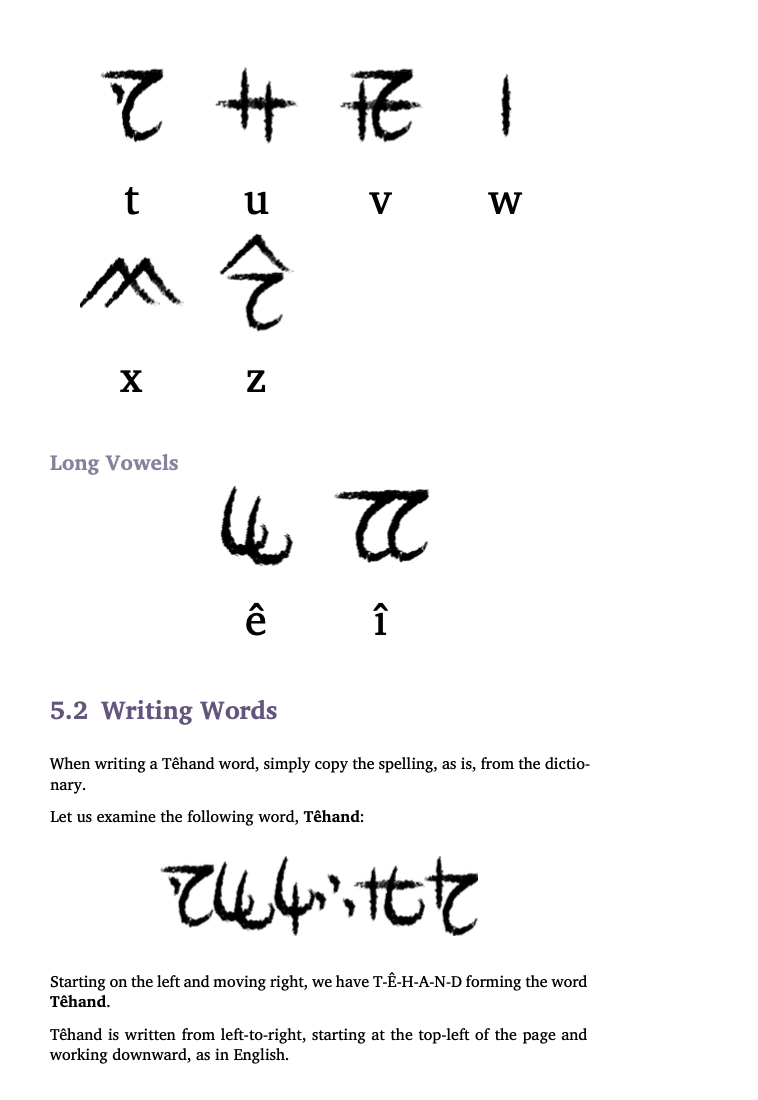
And Mark did not stop at giving Têhand its own vocabulary and grammar. He also designed dedicated letterforms for the language, meaning that the Latin spelling I normally use on the website is essentially the convenient, readable version rather than the only way Têhand can be written.
The language guide includes its own Têhand character forms, while still keeping the system practical: words are written letter by letter according to their spelling and read from left to right, just like English.
So yes, at some point “I would like my dragonborn to have a language” quietly turned into “they also need their own script.”
Because apparently ancient magical dragon people using Arial would have been where I finally drew the line. The custom letterforms are one of my favourite details, though, because they make inscriptions, old texts and carved phrases feel like something that genuinely belongs to Ananthara rather than English text put into a vaguely fantasy-looking font.
The dangerous part:
you can make new words
Têhand does not just contain a dictionary. It also includes rules for creating new vocabulary when a word does not already exist, and this has become slightly dangerous for me. One of the most important principles is that Têhand strongly prefers compound words whenever existing vocabulary can express a new concept.
Only when that does not work should a completely new root be created, and even then it has to follow the language’s phonological and word-formation rules. final This is excellent for consistency. It is also how I occasionally end up staring at a sentence for twenty minutes wondering whether I really need a new word, whether I can combine two older ones, whether an ancient speaker would interpret that compound the same way, and why exactly I am doing historical linguistics for imaginary dragon people at midnight. The answer is, naturally, because this is worldbuilding and there is no escape.
Têhand even has its own writing conventions. It is written from left to right, but in its traditional form it generally does not use spaces between words. Sentences are separated with two vertical dots, while a single centered dot can indicate a shorter pause. final So technically, after learning the vocabulary and grammar, you can finally look at an old inscription and discover that the spaces have also abandoned you. Wonderful. Ancient languages should contain at least one feature designed specifically to make future scholars miserable. It builds character.
What started as a commission became part of the world itself
When I commissioned Têhand in 2023, the original goal was fairly straightforward: give an ancient dragon-descended people a language that felt like them. Something between softness and strength, between magic and stone, between the melodic power I liked in Dovahzul and the heavier, harsher quality I associated with Dwarvish. Something ancient, protective and powerful enough to belong to people who once stood as guardians of forces much greater than themselves.
What I did not expect was that I would still be using it years later to shape names, rituals, sayings, cultures and old lore or that it would occasionally force me to discover that a fantasy phrase I wrote five years ago makes absolutely no grammatical sense. But that is probably my favourite part.
Ananthara has never been a world I wanted to finish once and then place neatly on a shelf. I want it to feel as though it existed before the story began, as though its cultures remember things differently, as though words travelled, changed and survived. Têhand gives me one more way to make that history visible.
Or occasionally completely invisible, because traditional Têhand apparently decided spaces between words were unnecessary.
But we are working on it.
Raynur. Be well.
PS: I also thought about Printing the Language information as a Collectible when my first Novel is out! So stay tuned!





40-seitiges PDF-Workbook · Deutsch · Sofort-Download
Vertiefe dein Worldbuilding und entwickle ein Magiesystem, das sich nicht wie eine Sammlung zufälliger Kräfte anfühlt, sondern eine Form annimmt die deine Fantasy-Welt und dessen Geschichten lebendiger werden lässt.
Das Magiesystem-Workbook führt dich Schritt für Schritt von der ersten Idee zu einem stimmigen System mit klarer Herkunft, nachvollziehbaren Regeln, Grenzen, Kosten und erzählerischen Konsequenzen.
DAS ERARBEITEST DU
Ursprung und Quelle deiner Magie
Struktur, Regeln und Funktionsweise
Grenzen, Kosten und Tabus
Meisterschaft, Kontrollverlust und Korruption
Einfluss auf Kultur, Religion, Macht und Alltag
Visuelle und sinnliche Sprache der Magie
Missbrauch, Schlupflöcher und gesellschaftliche Folgen
Verbindung zu Figuren, Konflikten und Handlung
DAS IST ENTHALTEN
40-seitiges digitales Workbook
Deutsche Ausgabe
Geführte Worldbuilding-Fragen
Praktische Arbeitsblätter zu jedem Kapitel
Fallbeispiele aus Ananthara und Thal’Ithara
Abschließende Checkliste für dein Magiesystem
Sofortiger PDF-Download
Ideal für Fantasy-Autor:innen, Worldbuilder, Game Master, TTRPG-Creator und kreative Menschen, die eine eigene fantastische Welt entwickeln.
Dies ist ein digitales Produkt. Es wird kein physischer Artikel versendet.