“I Thought Your Art Was AI-Generated — Then I Saw Your Book”
A few weeks ago, I wrote about my first Artist Alley experience, and to be very honest, there was one thing I was genuinely scared of before going there.
In times of generative AI, I was worried that people might look at my artwork and immediately assume it was AI-generated. Especially because my semi-realistic style seems to be particularly vulnerable to that kind of accusation — and, unfortunately, it has happened before.
Funnily enough, one customer approached my booth and said something along the lines of:
“I walked past your booth yesterday and honestly thought your art was AI-generated — then I saw your book.”
And what she meant was this book. The art of photobashing.
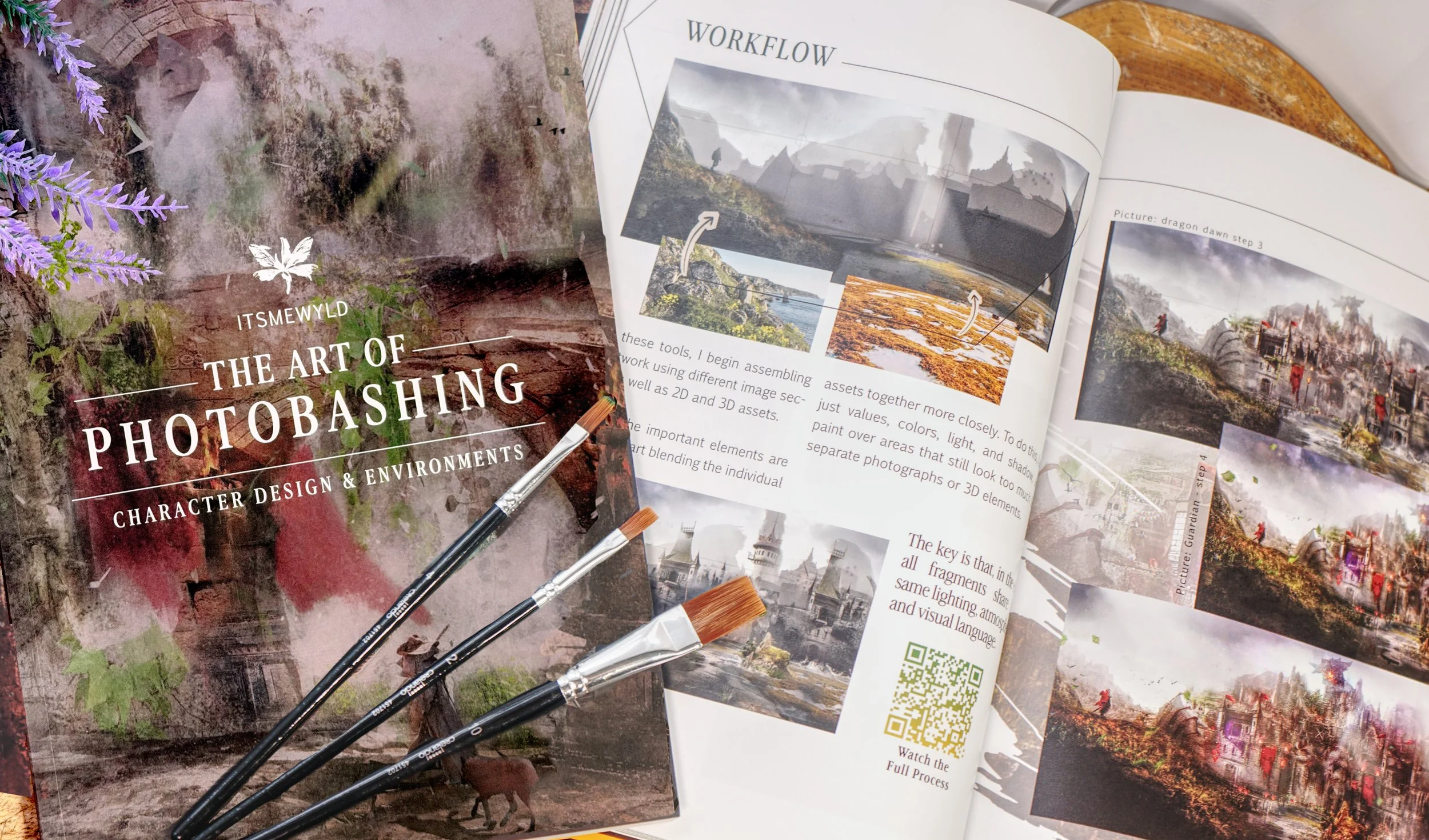
In which i show my workflow, fundamentals as well as tips and tricks on how to create characters snd environments with photobashing.
For my bachelors degree i made a similar book showing off some first protagonists and environment designs from my fantasy world Ananthara - and for the convention i thought - why not re-roll it all and make a book that covers your whole workflow transparently and even teached how to do it yourself?
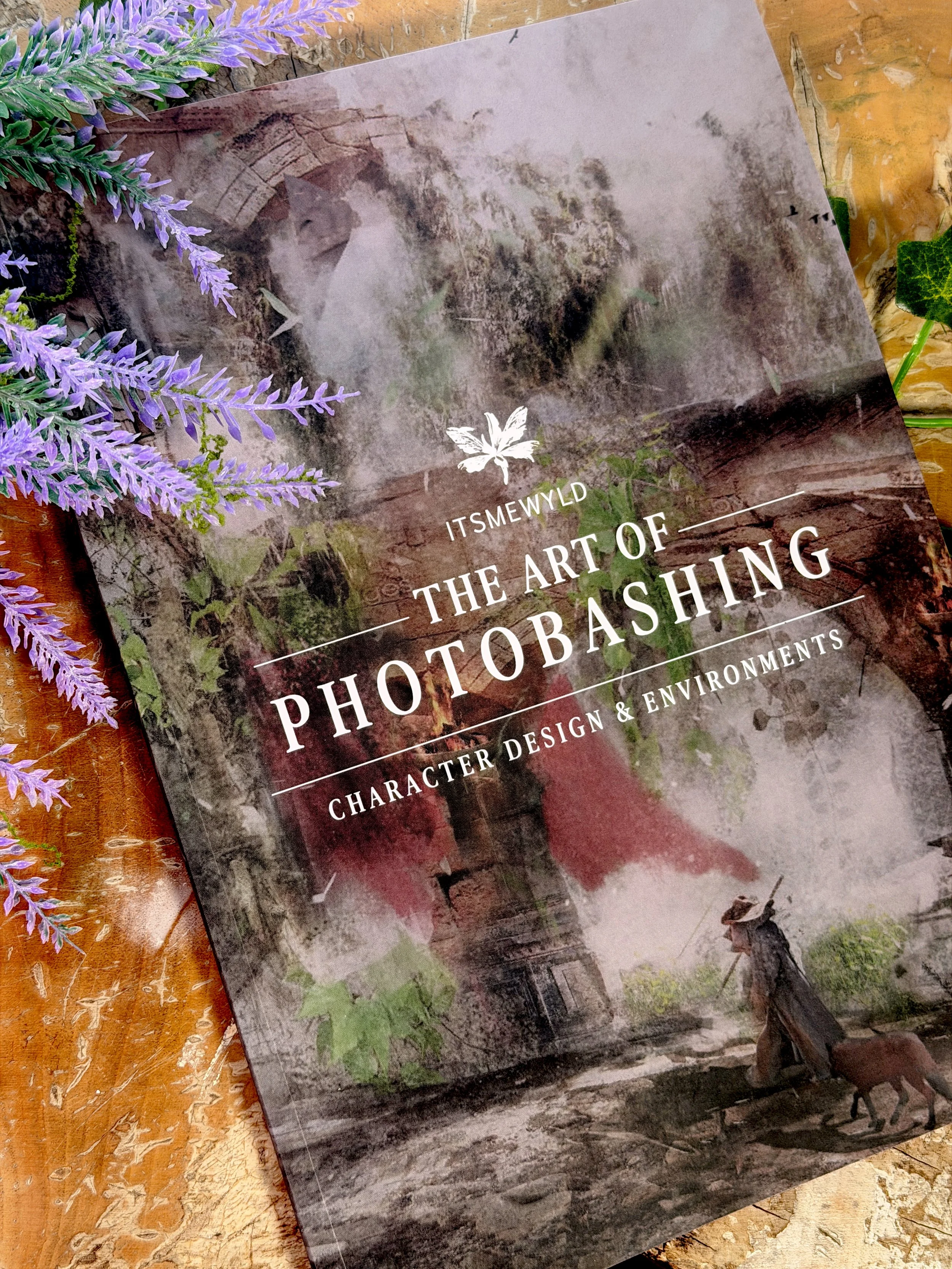
An idea can become an entire world.
Learn how to turn your ideas into artworks through Photobashing Techniques by combining photography, 3D, and digital painting into characters, environments, and cinematic fantasy scenes. In this 164 Pages Full step-by-step photobashing guide, we explore important artistic fundamentals and learn how to combine photography, your own references, 3D scenes, digital painting, and photobashing techniques into cohesive finished artwork, for artists who want to create atmospheric characters, cinematic scenes, and immersive fantasy worlds.
Inside the book you will learn about:
Character design and visual development
Environment and landscape design
Creating your own photo references
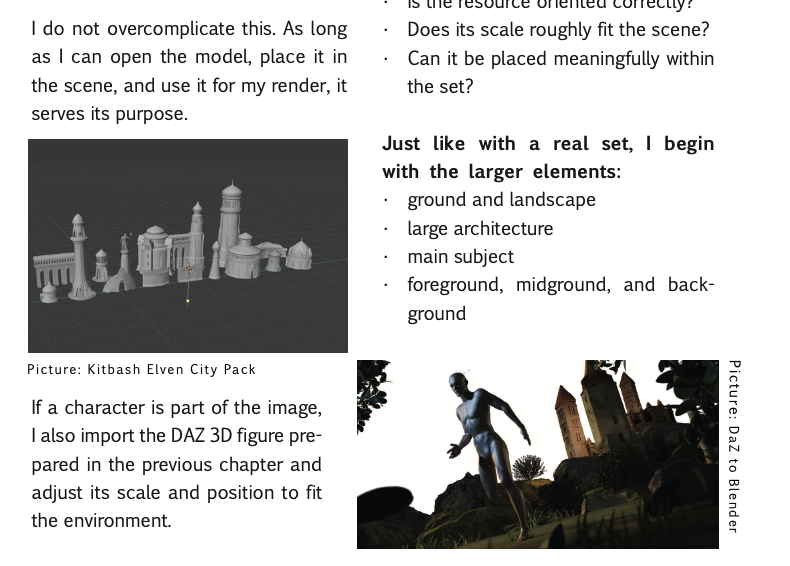
Working with 3D scenes and digital sets
Composition, perspective, lighting, color grading, and storytelling Fundamentals
Practical Photobashing workflows using Photoshop, Blender, Procreate, and DAZ 3D
Please note: This is a physical product and will be shipped to you. It is not an instant digital download.
Printed colors may vary slightly from the images shown on screen due to differences between RGB displays and CMYK printing.
I had the softcover edition of my recent book The Art of Photobashing displayed directly on my booth. People picked it up, flipped through the pages, looked at the artworks, process images and workflows inside, and then looked back at the title. And one question came up over and over again:
“What is photobashing?”
I never expected this to become the most asked question of the entire convention.
It made me realise something I had somehow completely overlooked after spending years using this technique: outside certain areas of concept art, film and game development, a lot of people simply have no idea what photobashing actually is — even though variations of the technique are commonly used in professional visual development to speed up the process of bringing ideas and concepts to life.
And honestly, that makes sense. If you are not already working somewhere inside the digital art bubble, “photobashing” sounds slightly like something you should probably not Google at work.
So with this article and with The Art of Photobashing itself — I want to bring the technique a little closer to everyone who has never heard of it before, is curious about how it works, or wants to start using it in their own artwork.
Because no, photobashing is not AI. And no, it is not just throwing three stock photos into Photoshop and hoping nobody notices.
So let’s start with the obvious question:
What is Photobashing?
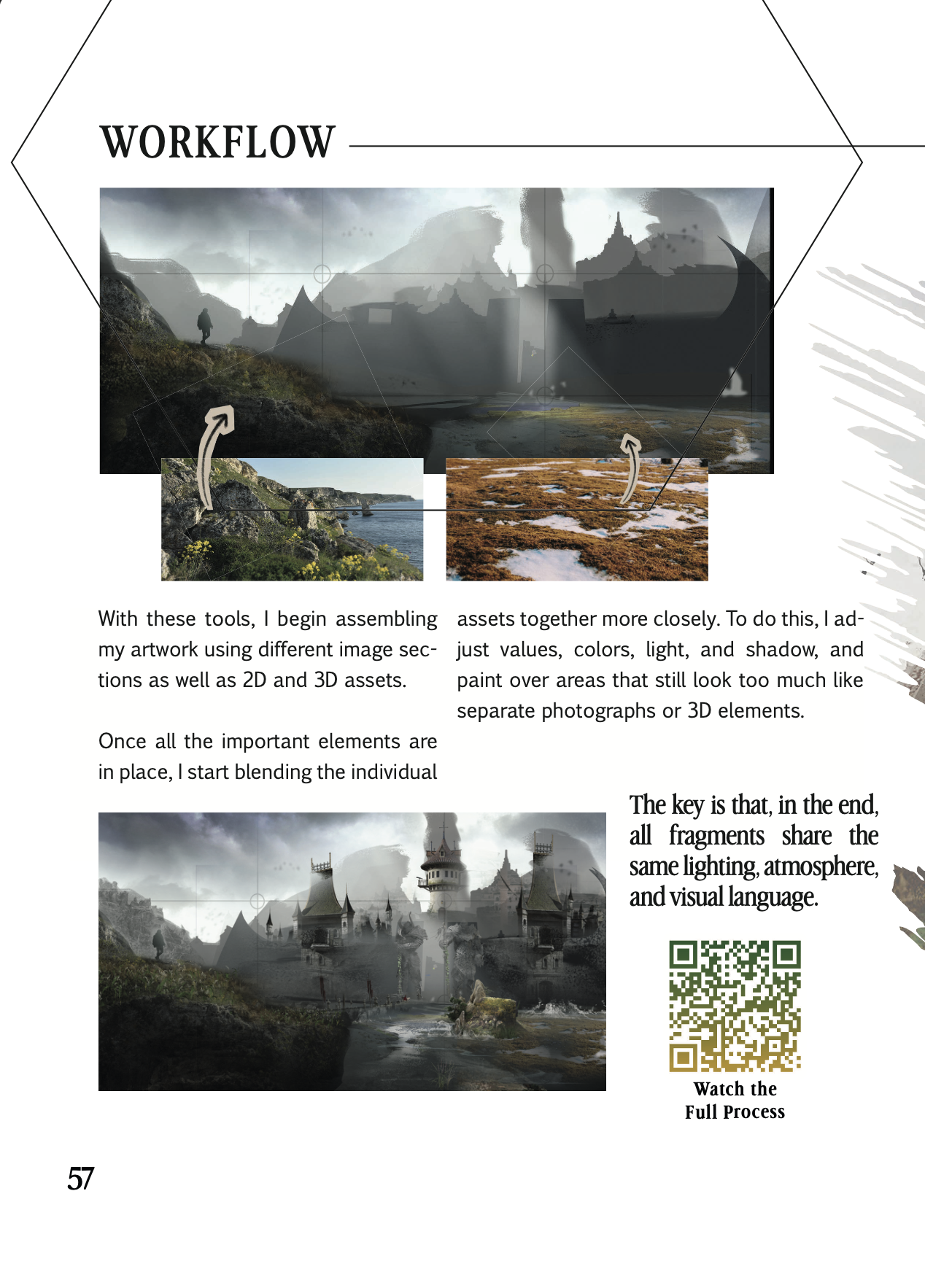
The Art of Photobashing | Insight
Photobashing is a digital art technique in which photographs, textures, 3D renders, digital painting and other visual elements are combined and transformed to create a completely new image.
Instead of painting every individual element entirely from scratch, an artist can use existing visual information as raw material and then reshape it until all those separate pieces feel like they belong to the same world.
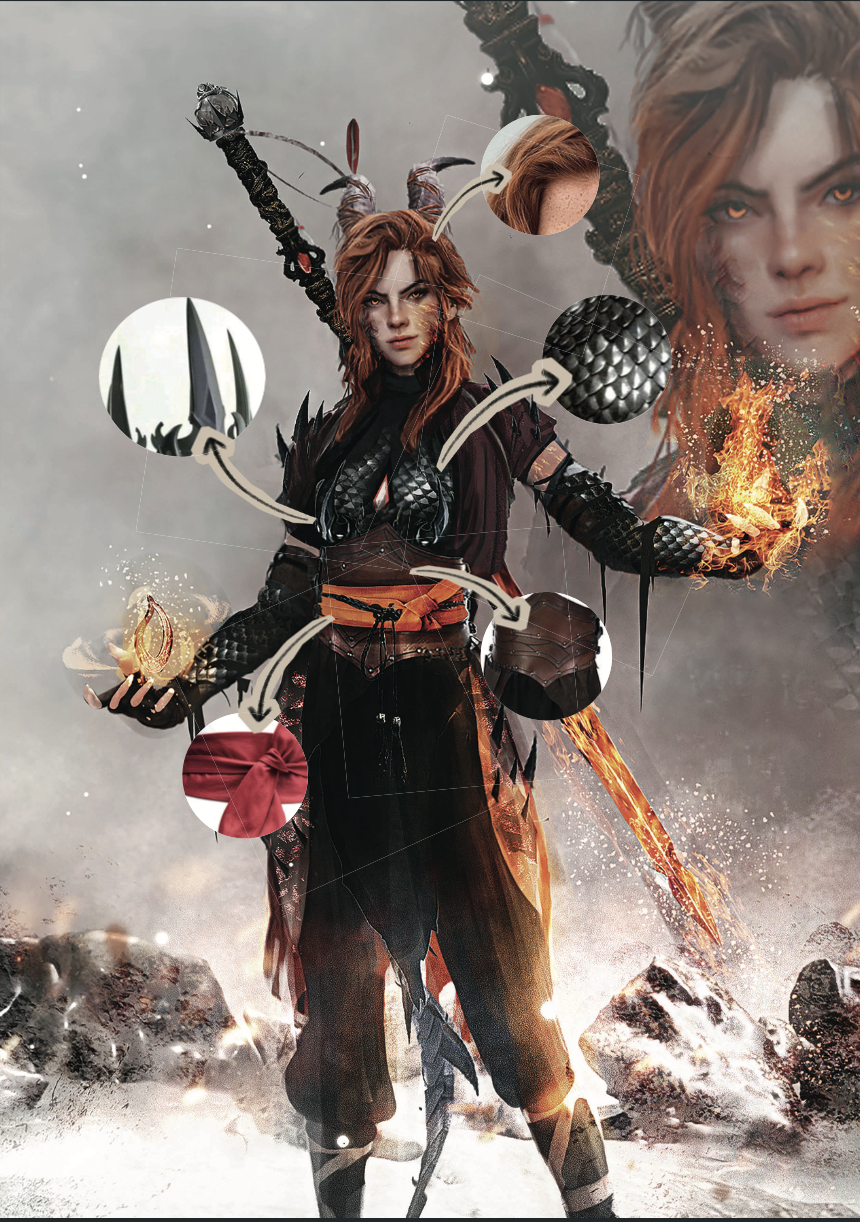
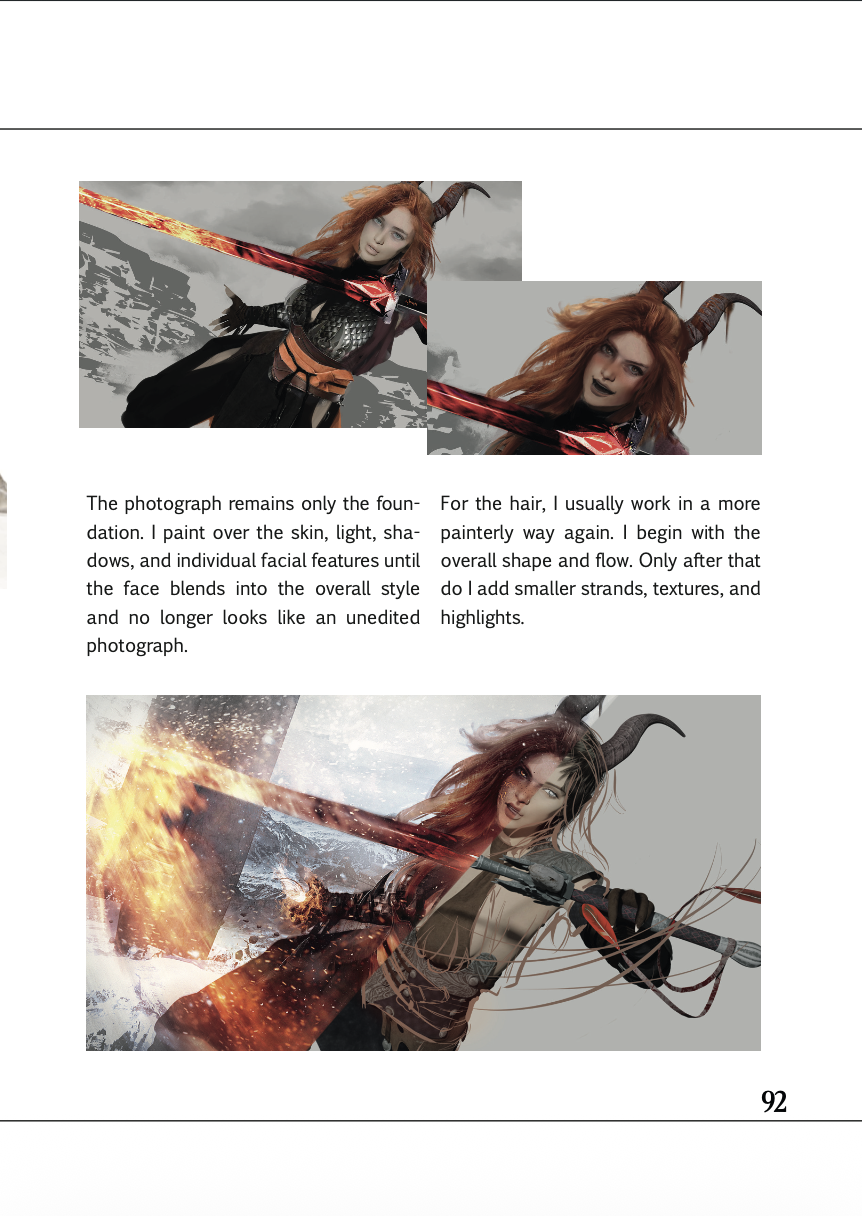
That might mean using a photograph of a landscape as the foundation of an environment, combining several different rocks and architectural elements, adding a 3D render for perspective, painting over parts of the image, replacing the sky, changing the lighting, altering materials and adjusting colour until the original sources are no longer perceived as separate elements. Photobashing can involve photographs, textures, digital painting, 3D models, renders, sketches, overlays and effects. Those elements are cut apart, warped, painted over, recoloured and blended together while things like perspective, proportions, light, shadow, values, materials and atmospheric depth have to be brought into the same visual language.
Basically, it is a little bit like cooking, except Photoshop has 47 layers called Layer 36 copy 7 final FINAL and somehow the one layer you desperately need is always hidden inside a folder called “stuff”.
The photographs are not the finished artwork.
They are ingredients.
Photobashing Is Older Than Photoshop
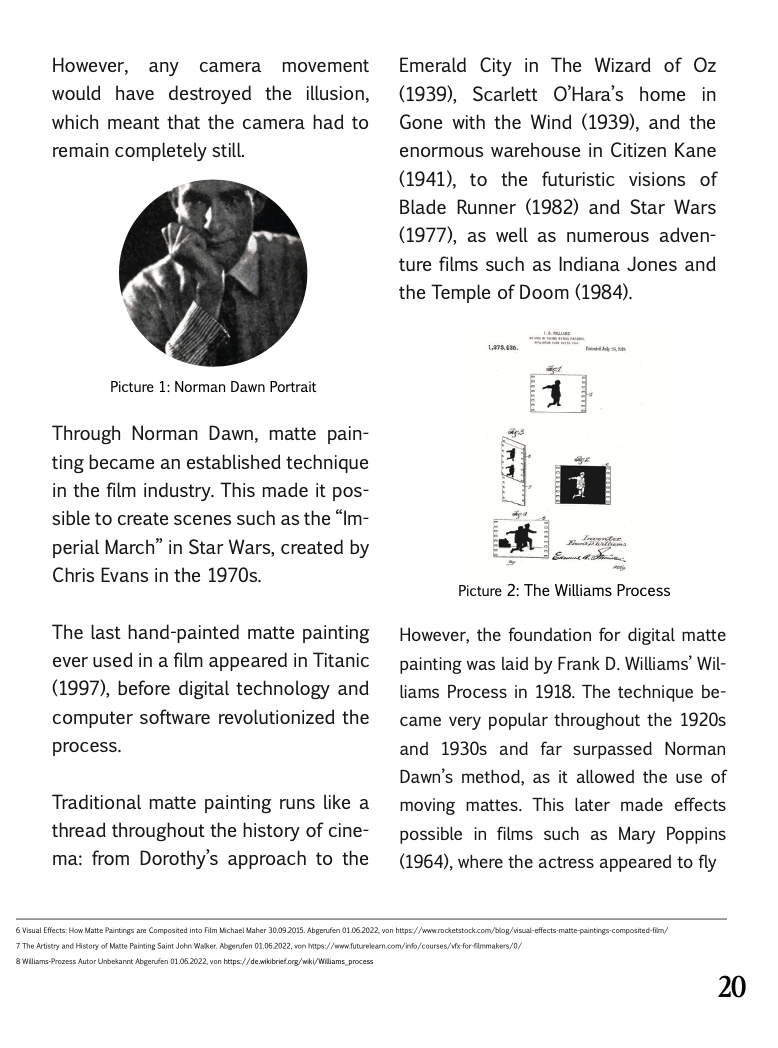
Chapter: History of Matte Painting & Photobashing
The basic idea behind photobashing did not suddenly appear when someone discovered that Photoshop had a layer mask. Its roots go much further back and are closely connected to matte painting in film.
Long before digital image editing existed, filmmakers combined painted environments with real footage and miniatures to create locations that could not realistically be built or filmed.
Huge cities, fantasy landscapes and impossible architecture could suddenly exist on screen because several different visual elements were made to appear as one coherent environment.
Modern photobashing continues that idea on a digital canvas. The tools have changed, obviously. I do not have to stand in front of a gigantic sheet of glass and paint a castle onto it while hoping nobody accidentally walks into the camera. I can work with photographs, digital painting, textures and 3D instead. But the basic question remains very similar:
How can I combine different elements so convincingly
that the viewer accepts them as one place?
That is also one of the reasons these techniques became so useful in concept art and visual development.
Is Photobashing AI? No.
And considering how often people now encounter AI-generated imagery online, I understand why this question has become relevant.
The important difference is that with photobashing I am actively building and manipulating the image myself.
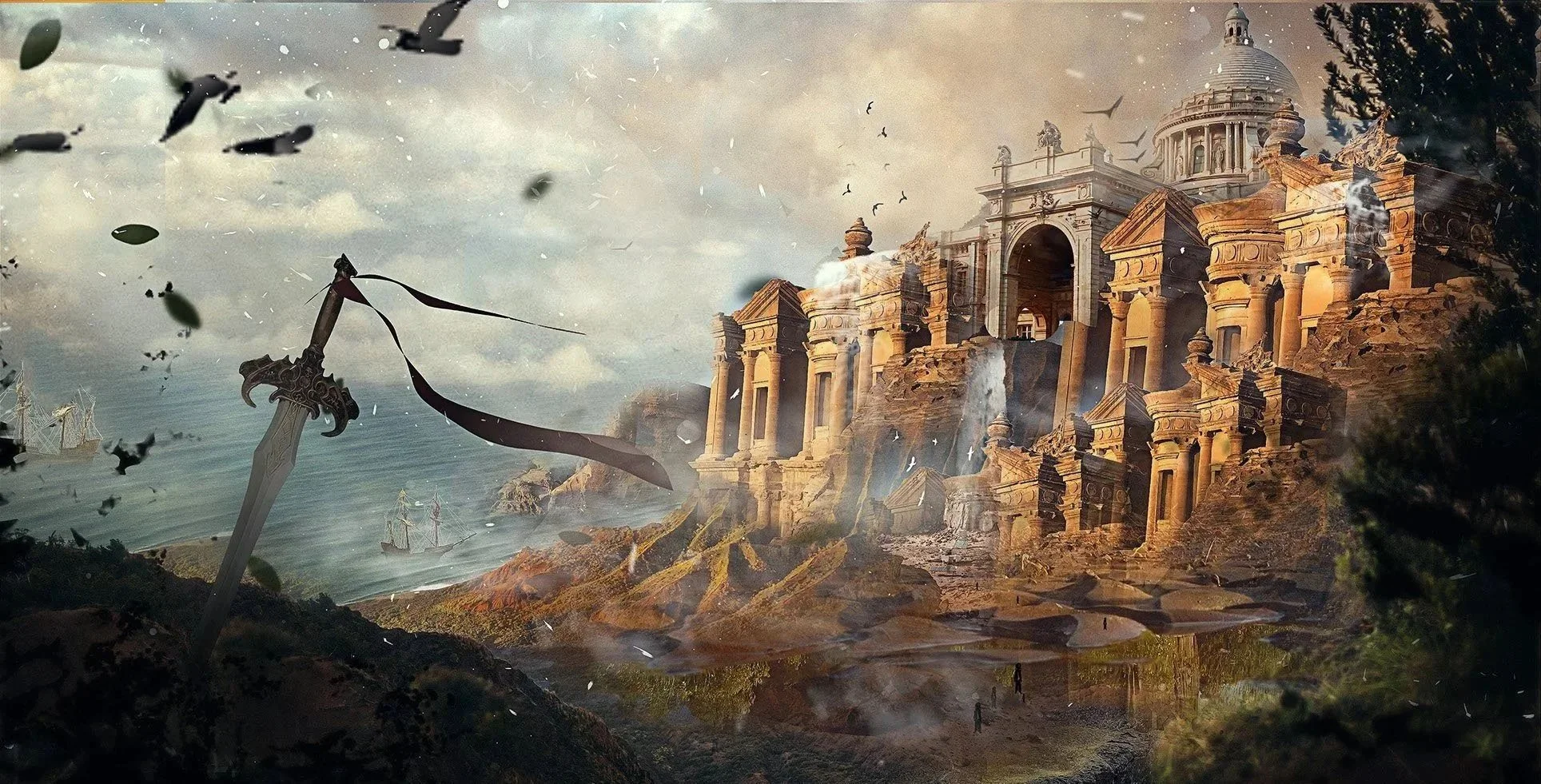
Concept Art Made with Photobashing | Speed Paint here
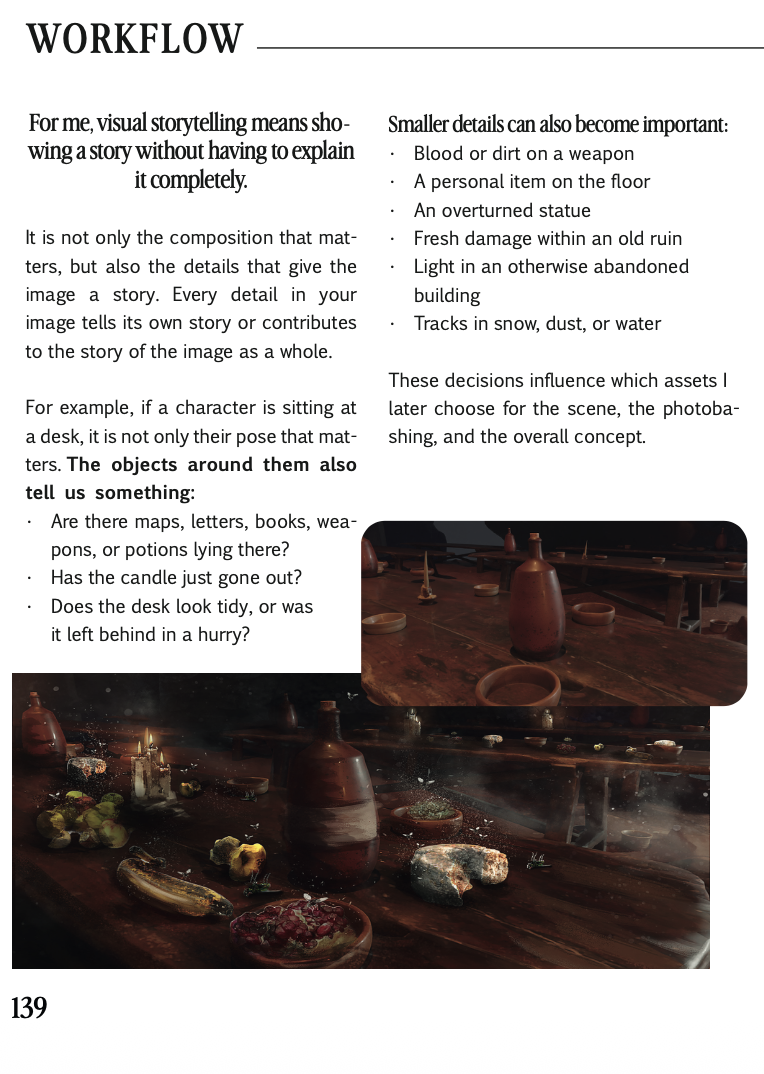
I choose the photograph. I decide which part of it I need. I cut it out, change its perspective, alter its proportions, paint over it and integrate it into everything around it.
I decide where the light comes from, which materials belong in the environment, what colours support the mood and which elements need to disappear again because apparently adding seventeen cool things to an image does not automatically improve the composition. Tragic.
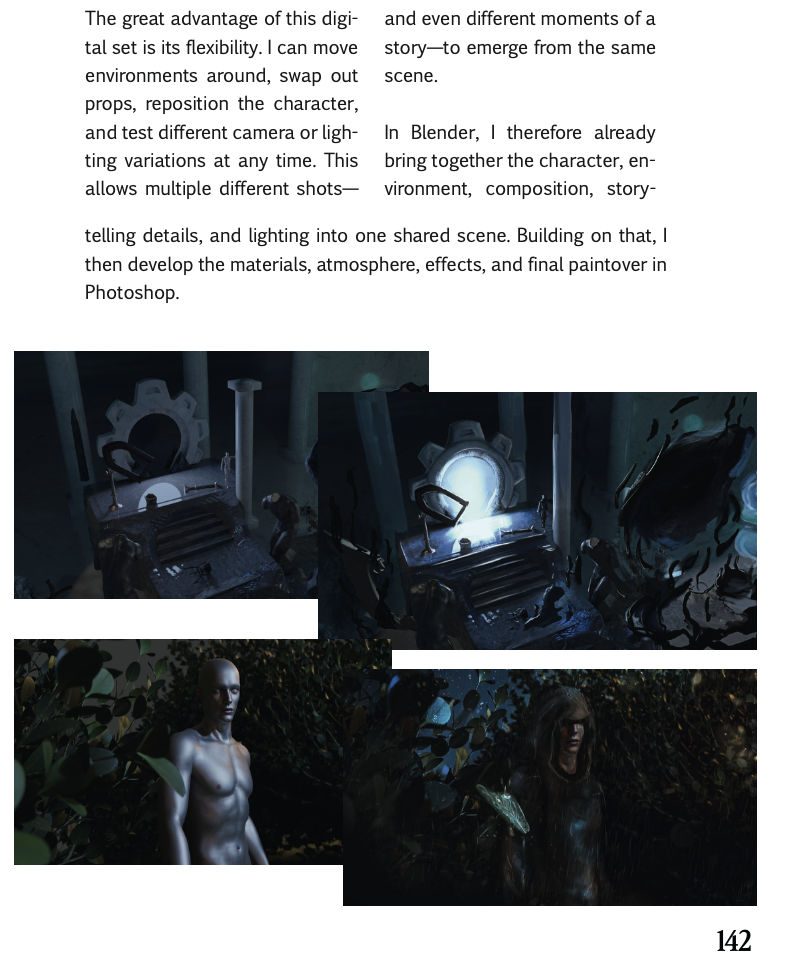
My own workflow has gradually become a combination of photography, digital painting, compositing, 3D and storytelling.
Sometimes I begin with photographs. Sometimes I build a 3D scene first. Sometimes I paint large parts manually. Sometimes I create the references myself because the exact image I need simply does not exist.
The final artwork may be a single image, but behind it can be a photoshoot, a costume, a Blender scene, multiple photographs, texture photography, painting, colour grading and several hours of staring at the screen thinking:
Something is wrong. What is wrong? Why does this rock look suspicious? And then moving the rock three pixels somehow fixes everything.
But Isn't Photobashing Cheating?
This is probably the other question that follows photobashing around. Because photographs and 3D assets can make certain parts of the process faster, photobashing is sometimes dismissed as cheating. And yes, of course using visual resources can save time.
A photograph already contains incredibly complex information about texture and material.
A 3D model can provide perspective and proportions.
A texture can save me from painting every individual crack in a stone wall.
That efficiency is not really a secret. It is one of the reasons these techniques are useful.
But having good resources does not automatically create good art.
I can have the most beautifully photographed rock known to mankind and still make it look completely ridiculous if the perspective, lighting and colour do not match the rest of the scene.
A detailed 3D model does not rescue a bad composition. A perfectly exposed portrait still feels wrong if the character is lit from the left while the entire environment insists that the sun is coming from the right.
Photobashing does not replace knowledge of composition, perspective, light, colour, materials or storytelling. It depends on those things. And usually, combining the first few elements is only the beginning. Shapes are changed, areas are painted over, materials are adjusted, edges are softened or sharpened and details are removed or added until the different sources finally begin to feel like one image.
Because ultimately, photobashing is exactly that: a tool.
Summary
Photobashing is a way of combining photography, 3D, textures and digital painting into one final image. It can speed up certain parts of the process, but it does not replace composition, lighting, colour, perspective or storytelling. The real challenge is making all those different elements feel like they belong to the same world.
For me, that is exactly what makes photobashing so interesting: it is not about using one specific medium, but about choosing whatever helps bring an idea to life. And if you want to see how that process works in more detail, that is exactly what I explore throughout The Art of Photobashing.
Want to Dive Deeper Into Photobashing?
If you want to see more of the process behind my work, I have collected years of experiments, workflows, artworks and probably far too many Photoshop layers in The Art of Photobashing.
The book goes much deeper into the topics I only touched on here — from photography and reference creation to composition, colour, 3D workflows, environments, character design and visual storytelling.
The book is available in my shop as both a digital edition and a limited softcover edition, depending on whether you prefer having everything instantly on your screen or physically on your desk while pretending you definitely do not already own too many art books.
So if you want to follow the process beyond the finished artwork and see how all those photographs, textures, 3D renders and painted elements slowly turn into a believable fantasy world, you can find both versions in the shop.
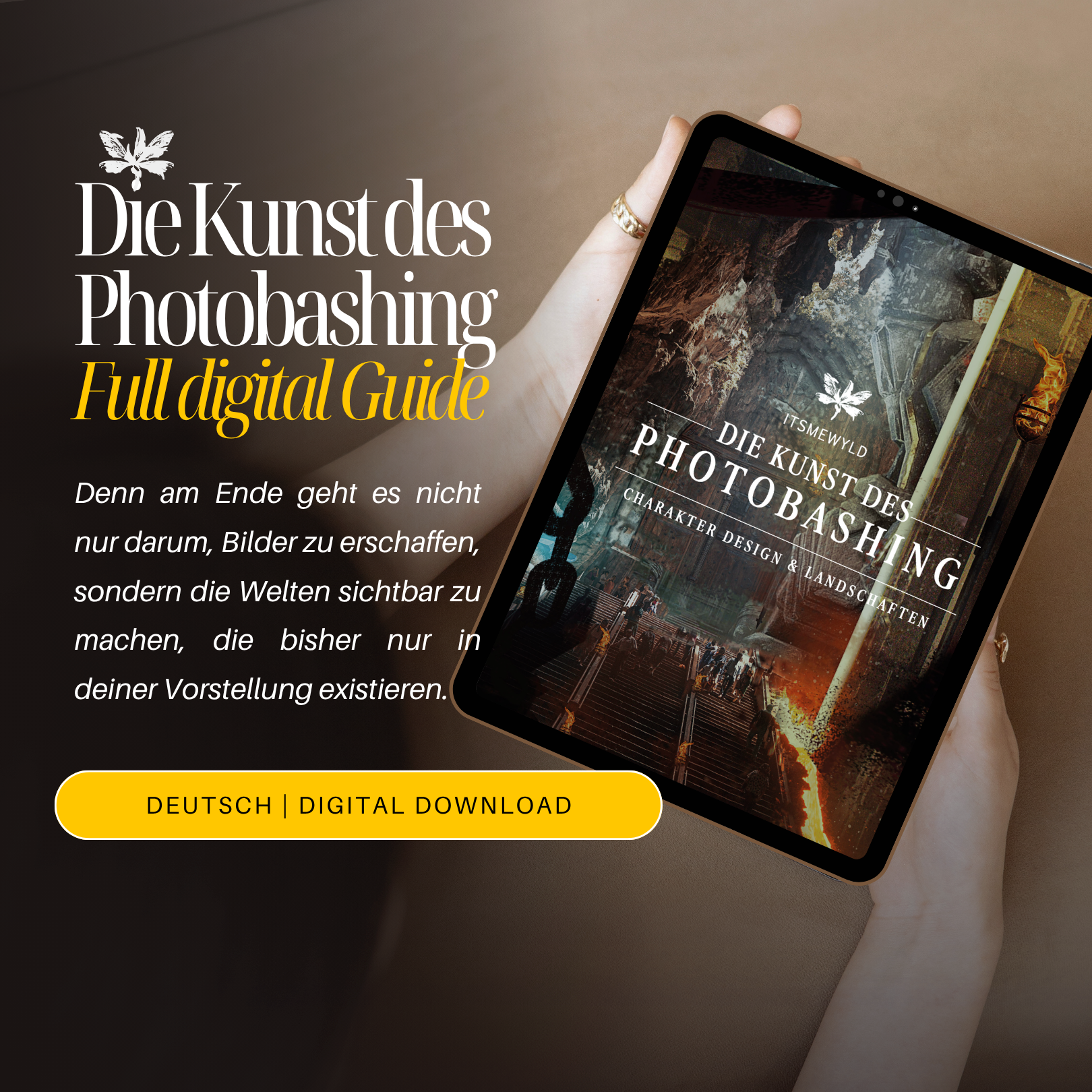


Learn how to turn your ideas into artworks through Photobashing Techniques by combining photography, 3D, and digital painting into characters, environments, and cinematic fantasy scenes. In this 164 Pages Full step-by-step photobashing guide, we explore important artistic fundamentals and learn how to combine photography, your own references, 3D scenes, digital painting, and photobashing techniques into cohesive finished artwork, for artists who want to create atmospheric characters, cinematic scenes, and immersive fantasy worlds.
Inside the guide you will learn about:
Photobashing techniques and workflow
Character design and visual development
Environment and landscape design
Creating your own photo references
Working with 3D scenes and references
Composition, lighting, Color Grading, and Storytelling
Fundamental Workflow for Photoshop, Blender and Procreate
Language: English
Format: Full Digital Guide / PDF
Delivery: Instant Digital Download