
I created a text based interactive fiction RPG for my fantasy world
Quicklinks
About | First Trials | Inspiration | Choice Script | Demo | Next Steps
I have always wanted to create worlds people can escape to

Photography by Dean Recklies
My absolute dream job has always been becoming a narrative designer for video games. I wanted to be the person writing interesting quests, storylines and all those tiny intertwined details that make you stop following the main quest for five hours because some random note in an abandoned house suddenly suggests that there is an entire forgotten civilization beneath your feet. I want to explore worlds at their deepest core. I want to escape into lore. And most importantly, I have always wanted to create worlds that make other people feel the same way.
Since my boyfriend introduced me to interactive fiction games, I immediately saw them as an opportunity to finally become the narrative designer I always wanted to be — at my own pace, with my own stories, inside my own fantasy world.
Ananthara: The Lost Fragments gave me the opportunity to finally experiment with that dream. Could I actually write branching storylines? Could I create character arcs that change depending on someone’s choices? Could I make decisions matter? And could I somehow make the whole thing technically work without sacrificing my remaining sanity in the process? The answer to the last question is still debatable, but we are getting there.
For everyone who doesn’t know me: I am a fantasy author and artist building my own fantasy world, Ananthara, and bringing it to life through art, creative projects and storytelling.
What Is Ananthara:
The Lost Fragments?
The short version is this: ANANTHARA: The Lost Fragments is a text-based interactive fantasy RPG about exploration, identity and the search for truths that history has left incomplete. As a newly appointed Envoy of Ithar’kael the Seekers of Truth, you are sent across Ananthara in search of the lost Chronicles - an ancient all knowing magic grimoire left by the Gods. But your official mission is only one thread within a much larger journey — one shaped by your character, your questions and what you choose to reveal.
Let’s dive into it.
How it all started
The very beginning of this idea started around two years ago, and what began as one idea eventually grew into a huge project involving green-screen footage with my dear friend Mary Misantrophe, fully synchronized voice-over samples from Sina Hoffmann a voice artist on Fiverr,
and even original soundtracks created by
Isabelle O. and Emily Music.
I had a story. I had art. I made an official intro with Assets inside After Effects. I put everything together.
And then I drove the entire thing straight into a wall.
Which, honestly, is sometimes part of the creative process.
The original idea was to create a fantasy story around mental health and mindfulness, allowing you to actively engage with those themes through an ongoing story, fantasy characters and a skill system. And I was actually happy with the story. I liked what I had created. I liked the world around it. I liked many of the ideas I had put together. But I wasn’t happy with how it felt to actually experience it.
I abandoned the Project…
The problem wasn’t necessarily the story. The problem was the format. Playing through it on my website didn’t feel like exploring a fantasy world. It started feeling more like working through a course. And that wasn’t what I wanted. I didn’t want Ananthara to feel like a collection of lessons with a fantasy skin placed on top of it. I wanted it to feel like a world. Something immersive. Something you could step into and discover naturally.
Ideally, I wanted it to become something closer to a game or an experience that could accompany you throughout your day without constantly screaming:
HELLO. IT IS TIME FOR YOUR
PERSONAL DEVELOPMENT EXERCISE.
That wasn’t the fantasy escape I had imagined. And there was another problem. To be very honest, I simply didn’t feel like creating endless artworks for the first story chapter, then the chapter after that, then the chapter after that... It slowly started to feel like I had signed myself up for a creative chore that could continue for years. Which just doesn’t work particularly well with my ADHD brain, especially not while life is happening at the same time and I am already working with the very limited amount of energy I often have left.
So I abandoned the project. Not the ideas behind it, but that version of it. And I decided to step back.

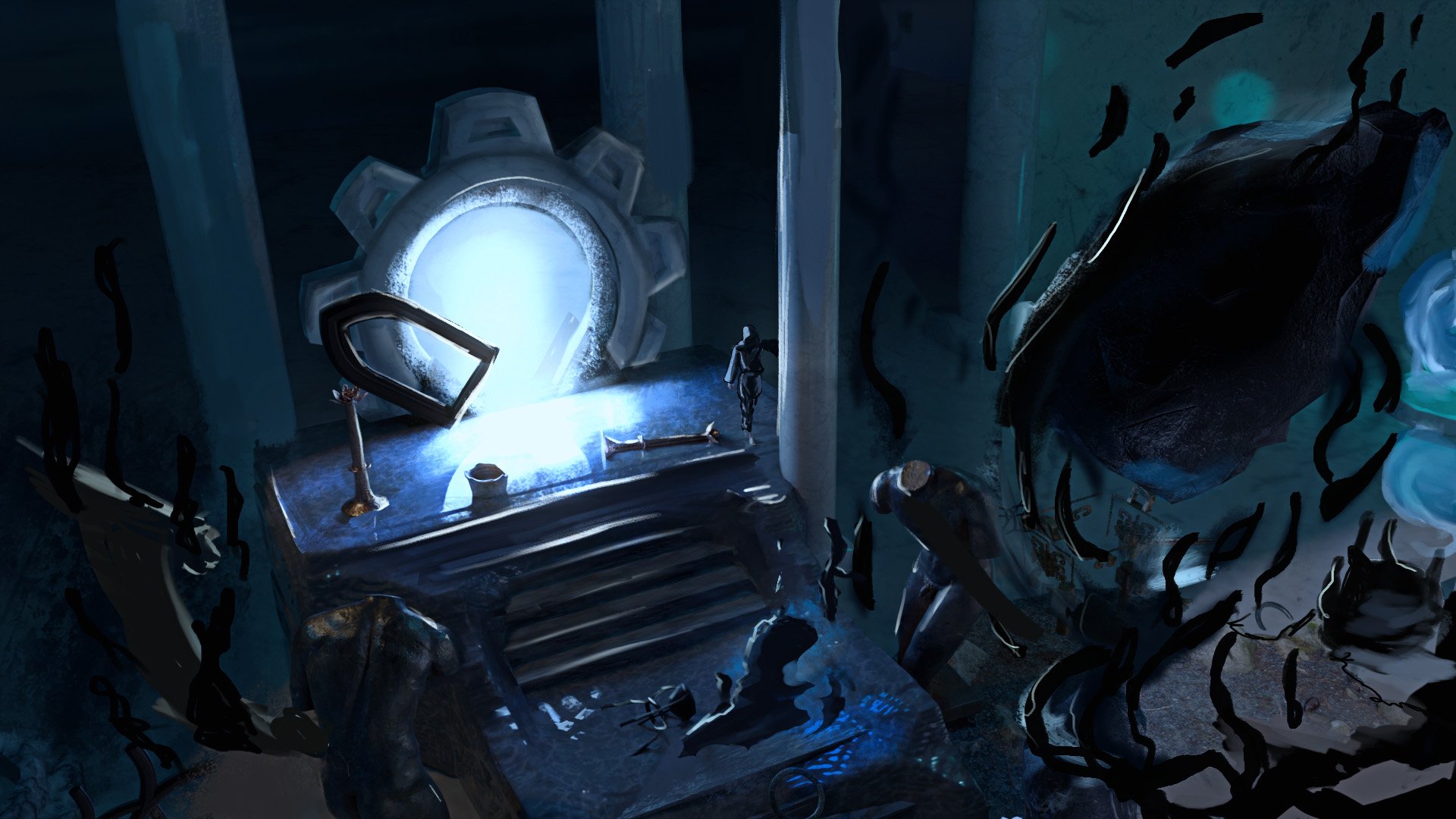
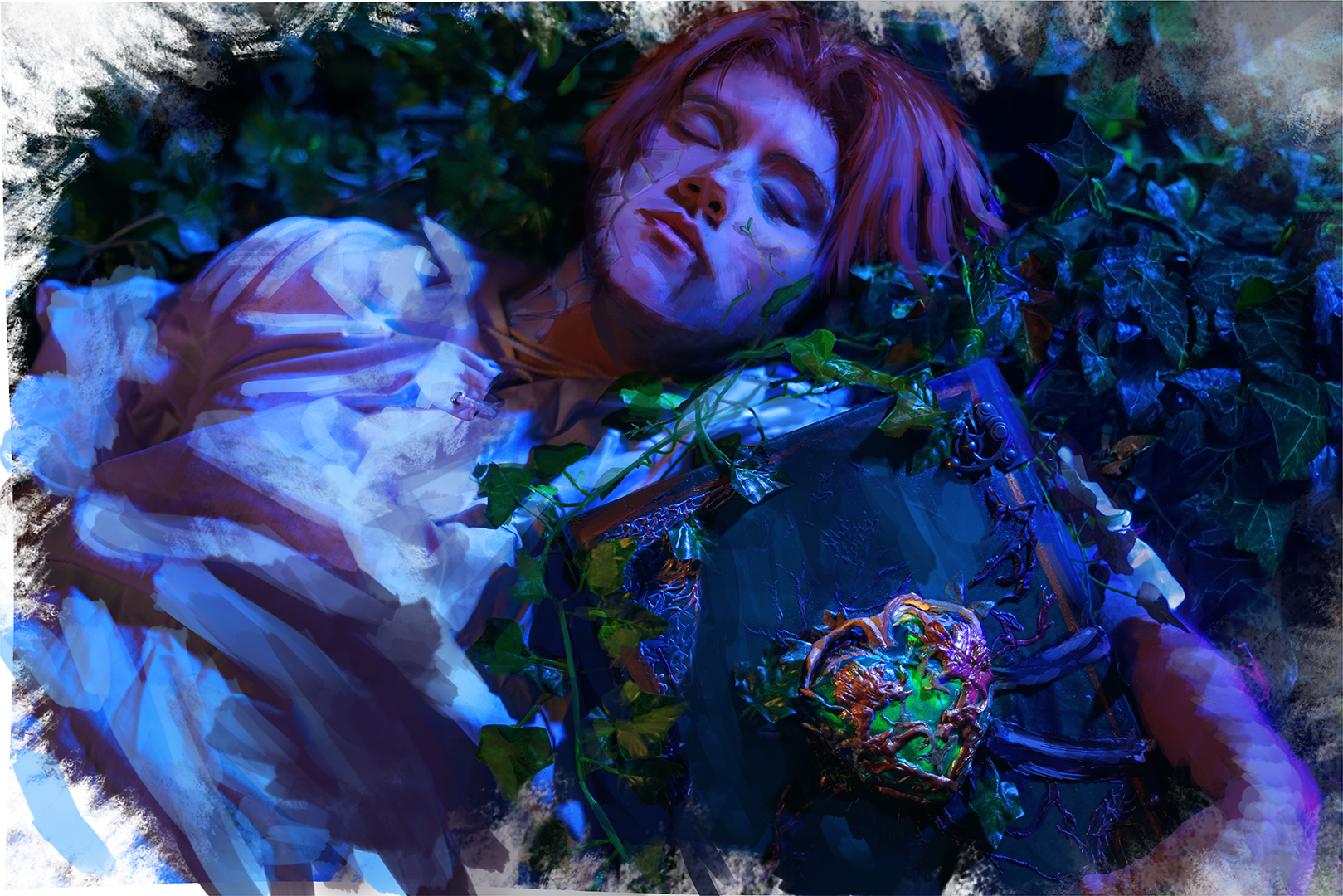
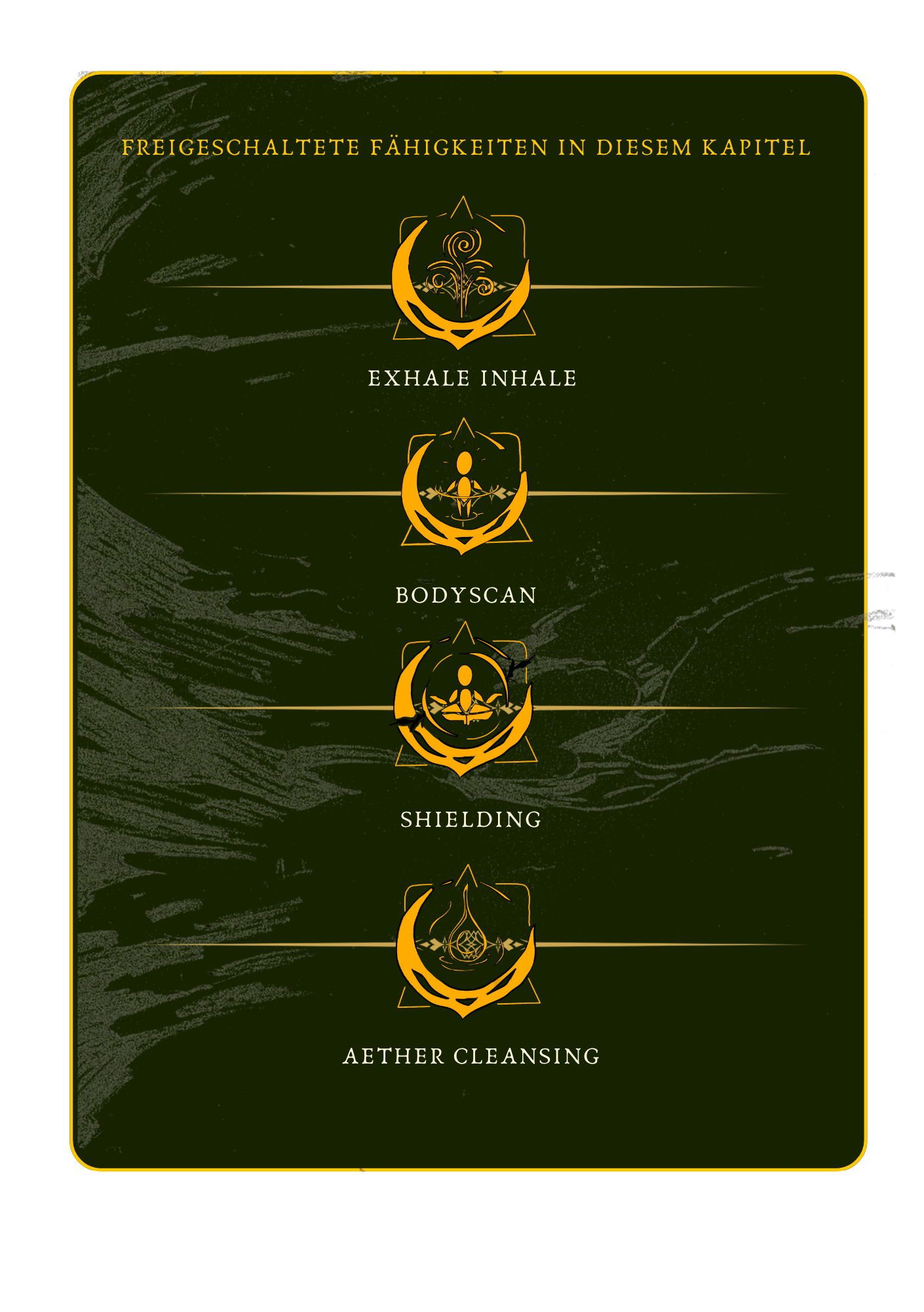

Searching for some Inspiration
Community Campaign.
Instead of immediately trying to build the next massive version of the project, I wanted to test something much simpler: a community campaign.
What would happen if I just... wrote?
What would happen if I let other people decide how the story continued?
Could I use it as an opportunity to improve my writing, develop a routine and experiment with interactive fantasy storytelling without immediately building an entire game around it?
And perhaps most importantly: could I actually keep doing this?
Was this kind of storytelling something I could imagine myself working on long-term, like so many interactive fiction authors already do?
That little experiment ended up teaching me much more than I expected.
It didn’t only help me with my Worldbuilding, it also helped me understand what kind of stories my community actually wanted to follow.
What interested them? What made them curious?
Would people even enjoy my writing?
Would they want to continue reading? Would they actually crave more of the story?
Those were important questions for me, and slowly another project started adding another piece to the puzzle.
Snail Mail Club
The Snail Mail Club became another way for me to step deeper into interactive fiction and immersive fantasy worldbuilding.

Photo by Mira Moon
Again, it helped me practise my writing. Again, it forced me to actually finish parts of my worldbuilding instead of allowing them to live forever inside seventeen chaotic documents.
But this time there was another layer: Inside the Snail Mail Club, we step into Ananthara through the eyes of my OC Wyld, who acts as your guild companion while you explore different cultures, places and pieces of history from Ananthara.
the community could physically interact with Ananthara through artwork, letters, digital content, soundscapes, additional lore and all the little fragments that made the world feel less like something you simply read about and more like somewhere you were actually visiting.
In many ways, I used the Snail Mail Club to experiment with different tools and ideas.
How could I make Ananthara more accessible?
How could I tell its stories differently?
How could I draw people into this world instead of simply explaining the world to them?
And at some point I asked myself:
What if you didn’t have to explore Ananthara through Wyld’s eyes?
What if you could explore it through your own?
You could create your own character, make your own decisions, explore the world in your own order and slowly shape your own story through the choices you made.
And I found that thought ridiculously exciting, because that is exactly the kind of experience that would draw me into a fantasy world.
From that moment, all these seemingly disconnected experiments suddenly started connecting with each other and somewhere inside all of those questions, the idea of creating a proper interactive fiction game returned.
All Projects connected to One
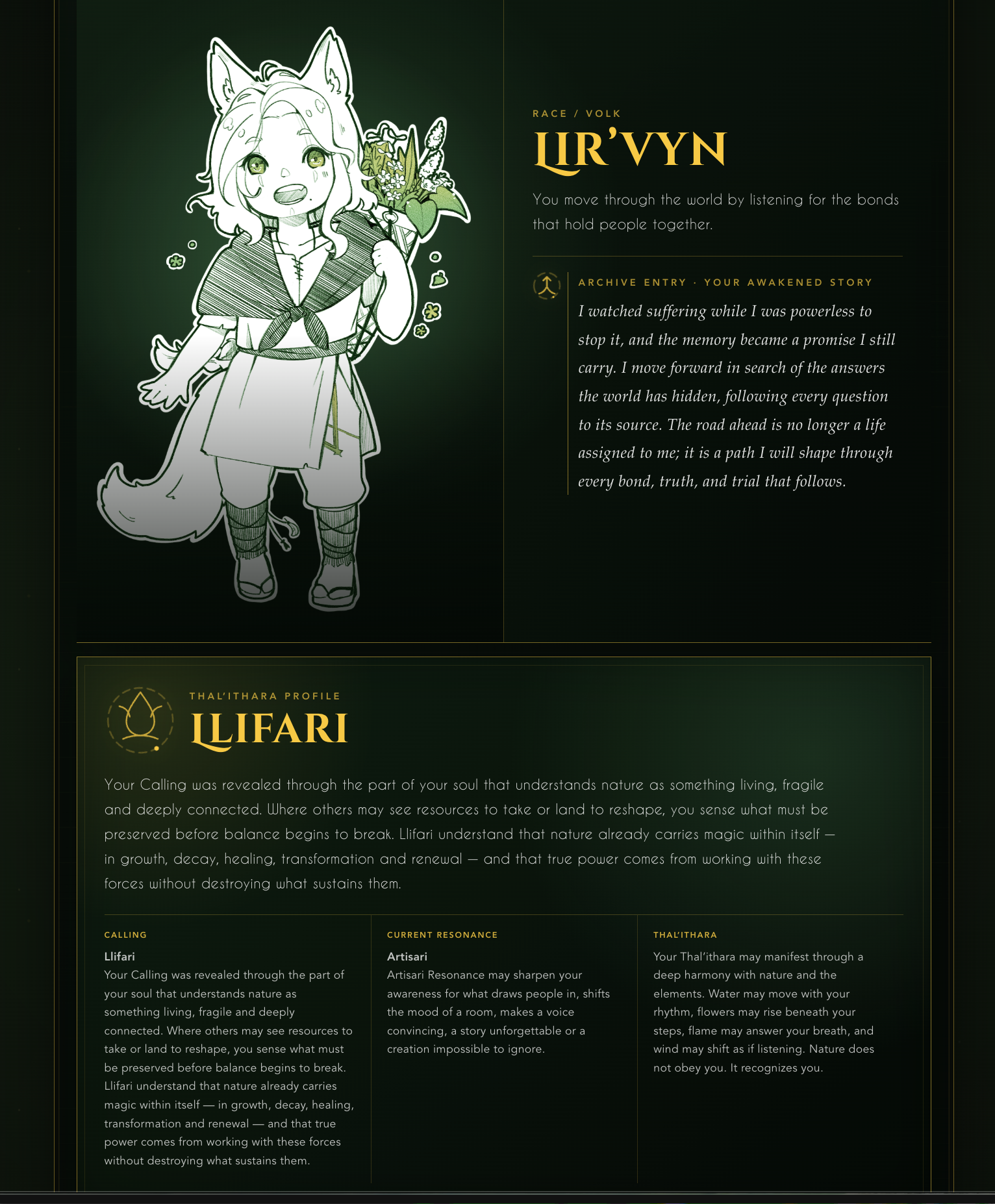
Part of the Character Sheet from the Character Creator
I created a character creator based on my existing worldbuilding, and then I went back to the project I had abandoned before.
Instead of throwing all that work away, I took the information, concepts and story I had already created and transformed the original storyline into three different personal storylines within the larger campaign of my interactive fiction.
All of these experiments eventually shaped the overall setting of Ananthara: The Lost Fragments.
I took the core setting of the Snail Mail Club: you are a Seeker of Truth, travelling through Ananthara to uncover secrets, myths and pieces of forgotten history.
Then I combined that with the three personal storylines that originated from the first story draft I had already written. So yes — the storyline from the old Mindful RPG, Green Screen, project essentially got torn apart and divided into three personal narrative paths.
And finally, I took the central story of the Snail Mail Club. While, see Ananathara through the Eyes of Wyld, learning about different cultures you both try to uncover the mystery surrounding an ancient, all-knowing book. That mystery became one of the foundations for the central conflict of the interactive fiction.
It gives players a reason to search Ananthara for information, uncover secrets and travel through the world while simultaneously progressing their own personal storyline piece by piece, because all of their fates are, in one way or another, connected to this mystery.
And suddenly I wasn’t trying to write three completely separate novels disguised as an interactive game anymore. There was a shared core. A reason for all these characters and personal stories to move through the same world.
Choosing ChoiceScript for My Interactive Fiction Game
Once I had figured out the overall storyline, I needed to answer one slightly terrifying question: How do I actually build this thing? After a recommendation from my boyfriend and a lot of research online, I decided to use ChoiceScript.
My first goal was relatively simple. Or at least I thought it was simple.
Create a prologue, add a character creator, introduce the world and already include enough interactive elements to show players that their choices actually matter.
For example, your character creation shouldn’t simply change the name of something inside a character sheet.
If you choose to become a Draekhar, people should perceive and react to you differently than if you choose to become a Varinnar. Your identity should affect how you experience the world.
I really want to go all in with this project and create an immersive, interactive and personal experience inside Ananthara.
I want you to feel like you aren’t simply reading about this world. You are part of it, and your decisions shape your story within it.
I also wanted interactive elements that went beyond repeatedly clicking a Next button, especially when it comes to magic. And that is approximately where Past Joshua created several problems for Future Joshua.
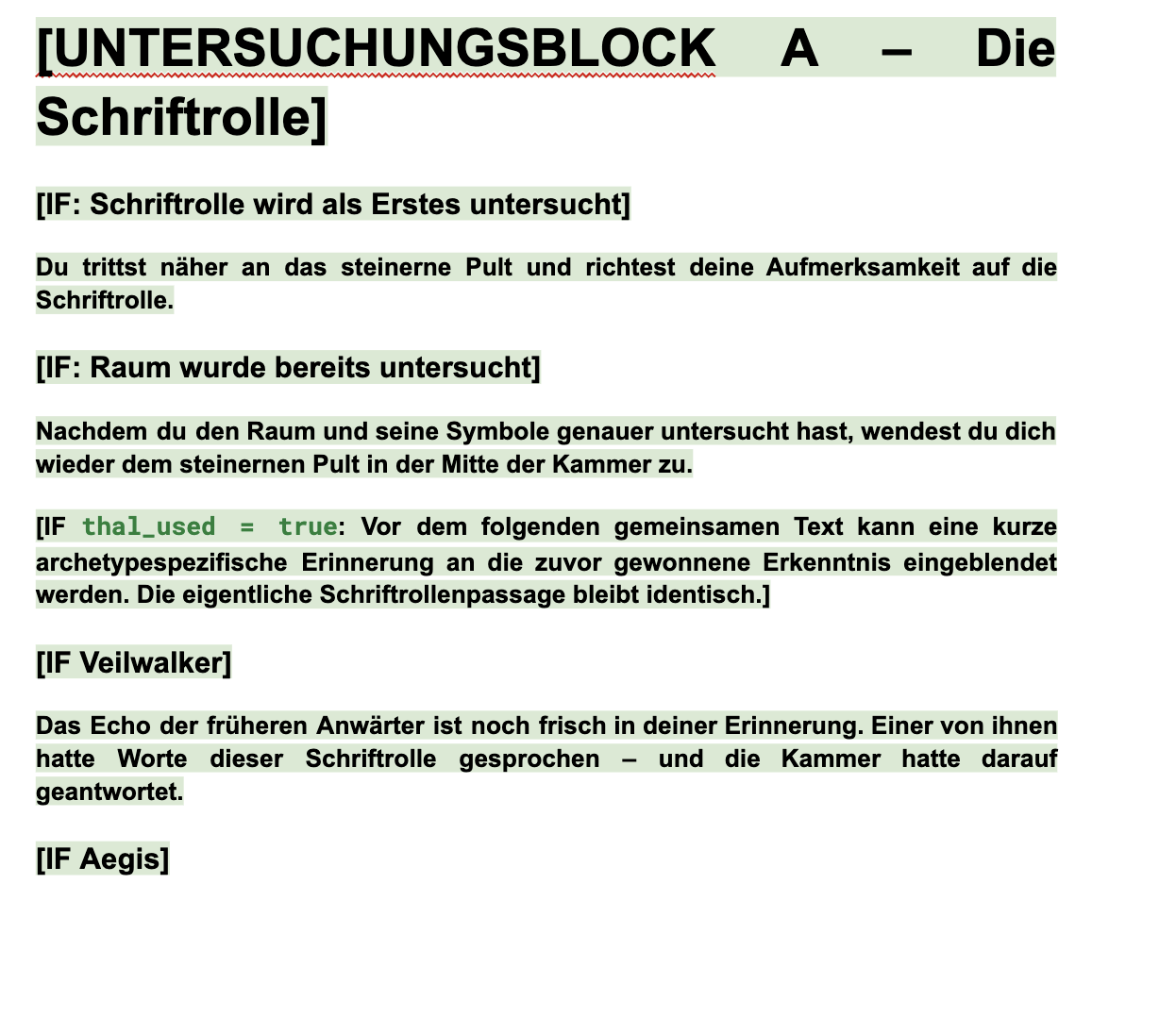
Part of my Documentation (Language German)
First, I finished the prologue and documented all the different choices and impacts I wanted those choices to have.
And one of the hardest parts was simply trying not to get completely lost inside the endless amount of: If this happens... then what happens if they did THAT before? And: Wait. What if they are THIS species? And: What if they have THIS kind of magic? And: Oh no.
The possibilities multiply incredibly fast. Bringing my magic system into the game was probably the biggest pain of all because the magic system of Ananthara was deliberately designed around endless forms of self-expression, rather than fixed spells and rigid classes.
Which is wonderful for fantasy worldbuilding. Slightly less wonderful when you are the person who eventually has to turn it into functioning game logic.
Even through the character creator alone, you can already achieve around 30 different combinations within one archetype. And even those archetypes aren’t supposed to function like fixed RPG classes. They are guidelines, not strict boxes defining exactly which spells and abilities you are allowed to have.
If you want to read more about my magic system, you can check out my full article about it here.
Every Choice Creates Another Choice
I completely underestimated the amount of thought I would have to put into making all these systems interact with each other. Every decision can have another impact later, and not every magic user has the same possibilities during the same action.
Think about Baldur’s Gate, for example. If you are playing a Bard, you might get completely different interactions than someone playing a Mage. I wanted some of that feeling inside my interactive fiction too.
Your character shouldn’t just exist cosmetically. Who you are should occasionally change what you are capable of doing. And then there were the three personal storylines. If three people can begin their adventure for completely different personal reasons, what is the shared narrative core that allows me to write one large interconnected story rather than accidentally writing three separate novels at the same time? Because I already have actual novels to write. I don’t need to accidentally create three more.
The Playable Demo
Long story short… i made it.
There were mental breakdowns. There were hyperfocus breakthroughs. There were probably several moments where I stared at my code wondering why something didn’t work, only to discover that I had created the problem myself several hours earlier. You know. Game development.
But eventually... I finished a playable demo. And I still find that a little surreal to say.
The first playable version of Ananthara: The Lost Fragments is finally something I can ask other people to test. Which is terrifying, but also incredibly exciting.
I want you to play it. Test different decisions. Try the character creator. Tell me how the experience feels. And please report any bugs you find because there is a very real possibility that somewhere inside one of those branching paths, something is quietly on fire.
Your feedback will help me prepare the next steps, and this is where the community becomes part of the project again. Because your choices and feedback won’t only matter inside the story. They will also help shape which parts of the interactive fiction I focus on in future updates.
And don’t worry. I even implemented a save option so you hopefully won’t have to restart the entire game whenever a new update arrives. At least, in theory. :’D
What Are the Next Steps for The Lost Fragments?
This project is — and will continue to be — extremely time-consuming, especially because I don’t want to develop it completely behind closed doors. I want you to actively take part in future decisions around the project and its plot. Because of that, I am considering opening a Patreon that would allow people to actively support the development of The Lost Fragments while becoming more involved in the process.
The demo in its current form will remain free to play. Future chapters, however, are planned to become available to active supporters and readers. That support wouldn’t only help me continue developing this interactive fiction game. It would also help fund future Ananthara projects — especially the novels that are already in development.
Because when you support The Lost Fragments, you aren’t only supporting one interactive fiction project. You are helping me create more ways for people to step inside Ananthara. More stories. More immersive fantasy experiences. More experiments. And more ways to explore themes like self-expression, freedom, wonder and learning to trust yourself through fantasy storytelling.
Because that has always been the bigger dream behind Ananthara. Not simply building a world people can read about, but building a world people can enter.
Step Into Ananthara Yourself
If you would like to dive deeper, you can read more about Ananthara: The Lost Fragments on the project page
And, of course, I would love for you to
test the demo.
Explore the character creator.
Make terrible decisions. Make wonderful decisions.
Try to break things.
Tell me what worked.
Tell me what confused you.
Tell me where you wanted to know more.
Your feedback is incredibly valuable for figuring out where this project goes next. And if you want to follow the development of The Lost Fragments, make sure to join the newsletter. That is where I will share future development updates, new insights into the project and, especially, information about the upcoming Patreon launch.
I hope you enjoyed this little behind-the-scenes look at how several abandoned projects, a Snail Mail Club, an overly complicated magic system, community storytelling, ChoiceScript and a questionable number of IF statements somehow turned into my first playable interactive fiction game.


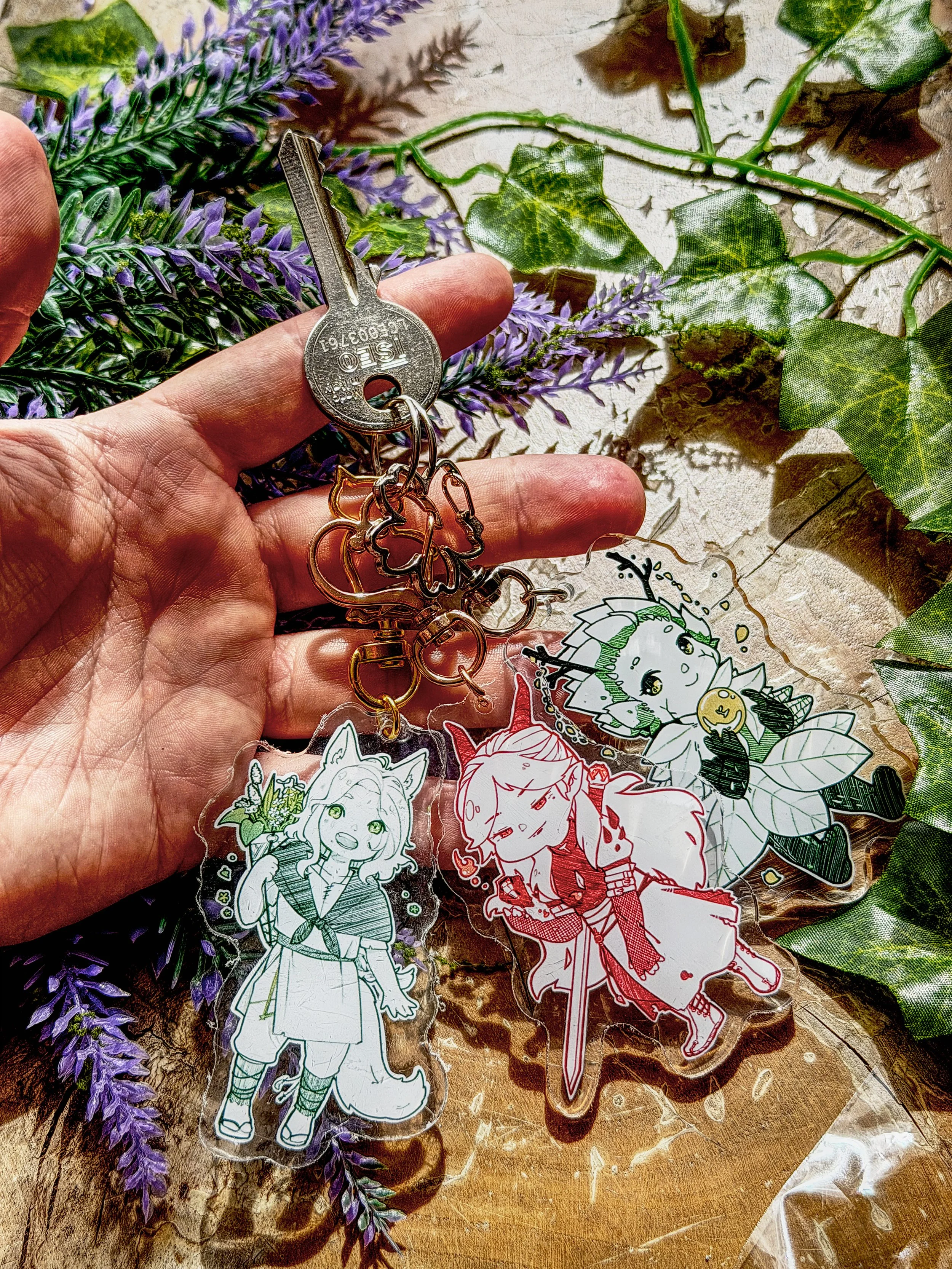
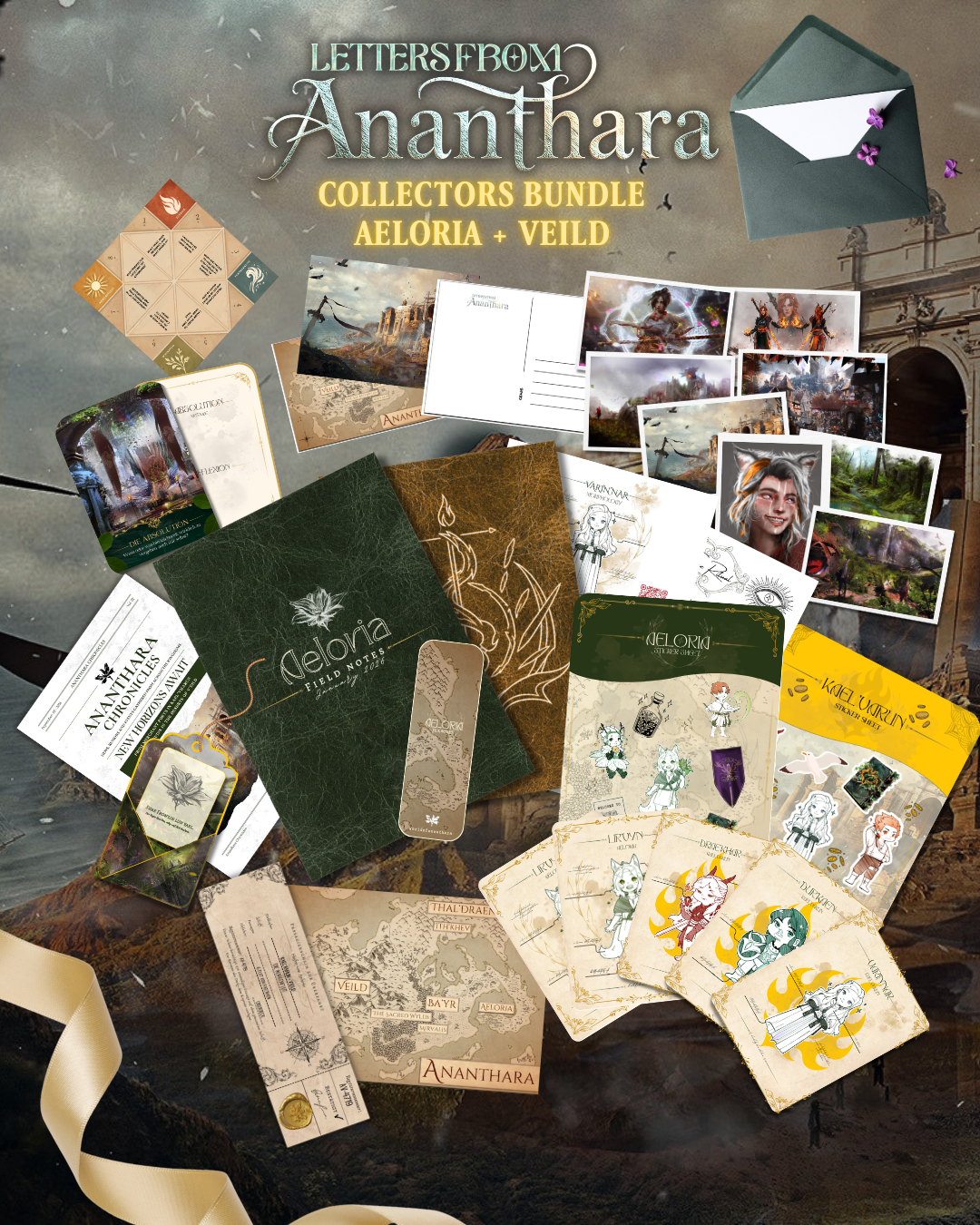
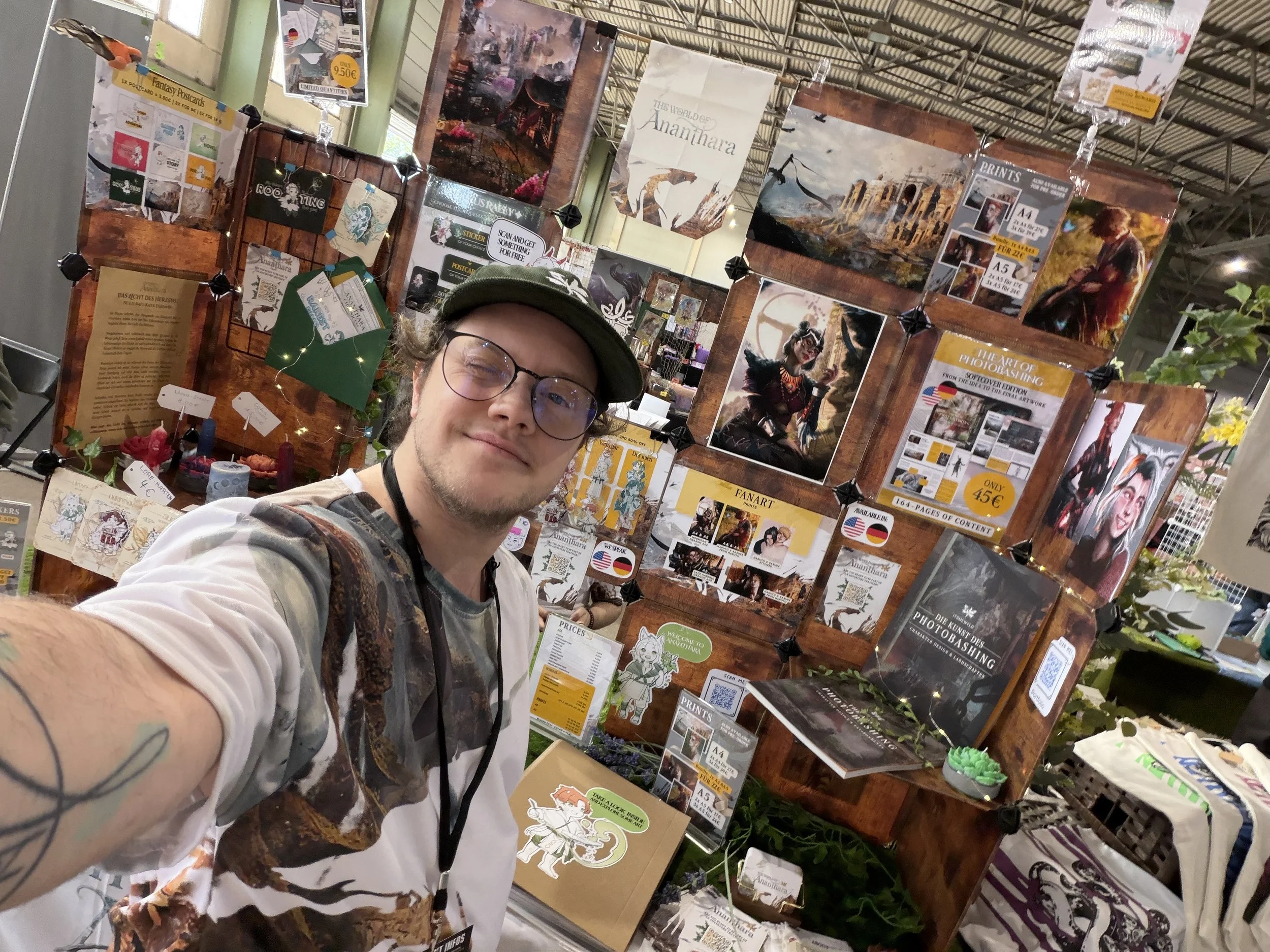

An idea can become an entire world.
Learn how to turn your ideas into artworks through Photobashing Techniques by combining photography, 3D, and digital painting into characters, environments, and cinematic fantasy scenes. In this 164 Pages Full step-by-step photobashing guide, we explore important artistic fundamentals and learn how to combine photography, your own references, 3D scenes, digital painting, and photobashing techniques into cohesive finished artwork, for artists who want to create atmospheric characters, cinematic scenes, and immersive fantasy worlds.
Inside the book you will learn about:
Character design and visual development
Environment and landscape design
Creating your own photo references
Working with 3D scenes and digital sets
Composition, perspective, lighting, color grading, and storytelling Fundamentals
Practical Photobashing workflows using Photoshop, Blender, Procreate, and DAZ 3D
Please note: This is a physical product and will be shipped to you. It is not an instant digital download.
Printed colors may vary slightly from the images shown on screen due to differences between RGB displays and CMYK printing.