My First Artist Alley Was Not What I Expected
Quicklinks
Preperations | First Impressions | Reality-Check | Finances | Conclusion
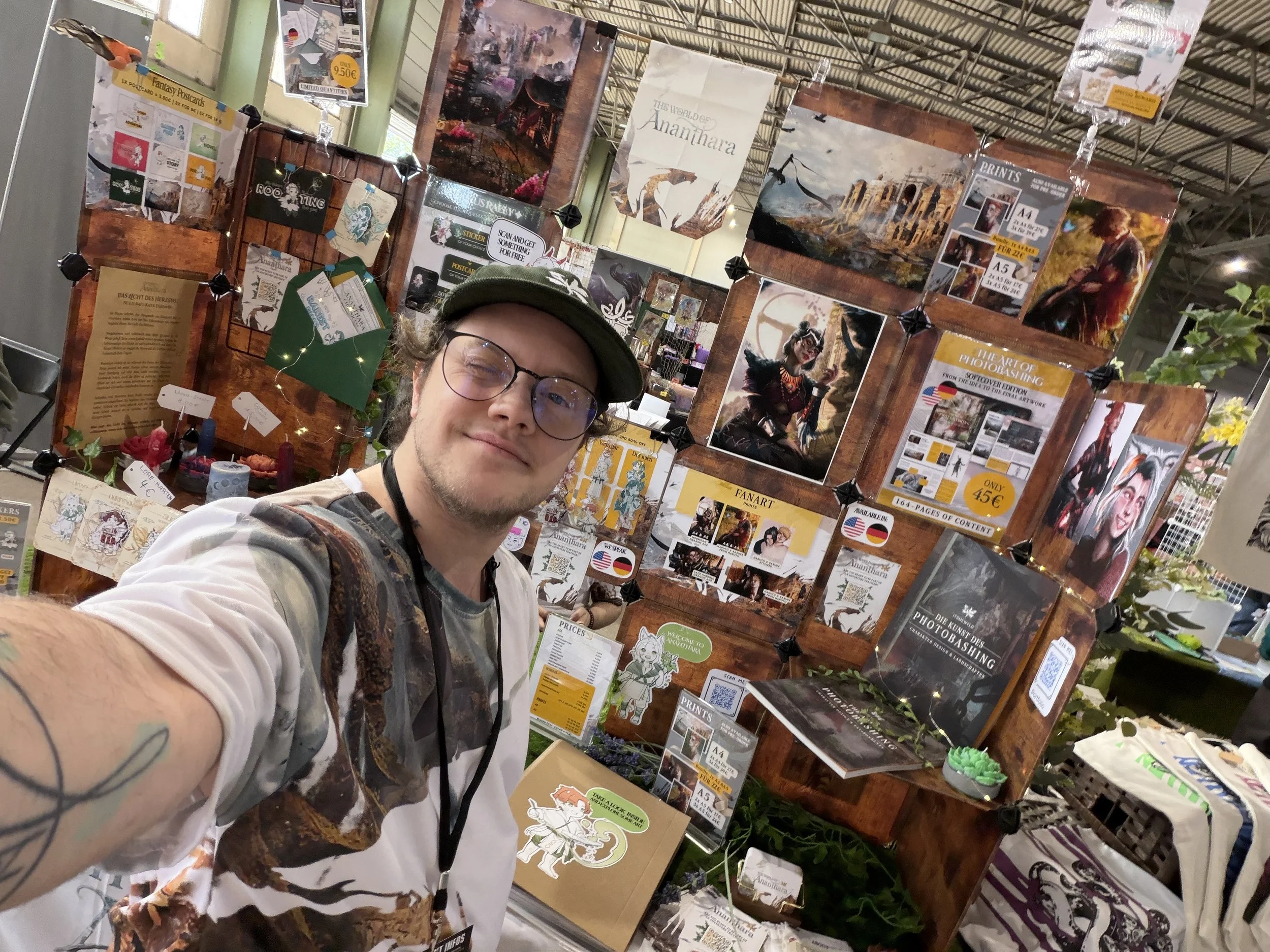
My first artist alley experience just felt like a fever dream.
My first Artist Alley is behind me. Three days at a convention, months of preparation, more than €1,800 invested, less than €100 in sales — and an experience that I still haven’t fully processed.
As I’m writing this article, I’m lying on the couch with a pretty nasty cold. Apparently, my body has decided that absolutely nothing is happening for a while. And maybe that’s exactly why this is the right moment to put into words what my first Artist Alley really felt like.
There were moments I’m incredibly proud of. There were conversations that reminded me why I create Ananthara in the first place. There were moments when I realized that I’m capable of things I had been deeply afraid of beforehand.
And at the same time, there was disappointment. Sensory overload. Self-doubt. Boredom. Shame. A financial reality that hurt. And eventually, even the question of whether I had completely lost my way with this vision.
Both are true. And that’s exactly why I want to document my first Artist Alley experience the way it actually was.
Why I Wanted a Convention Booth in the First Place
I had always wanted to have a booth at a convention, just like so many other artists, and use it to introduce people to my world and my products. About two years ago, I decided that I finally wanted to make that experience happen. But personal circumstances and health issues got in the way, and everything had to be postponed once again.
This year, I thought I would at least try doing one convention. Because of my health limitations, I unfortunately can’t just decide to attend nine, ten, or twenty conventions a year. I have to be very selective, carefully weigh my options, and figure out what actually feels realistic and manageable for me.
It wasn’t even certain at first that Nexus — or rather, the Nerd Rock Festival in Leipzig — would become my first Artist Alley experience. My application was initially rejected, or more accurately, I was placed on the waiting list, so I assumed that was the end of it.
Then, at some point, I received a message saying that a spot had opened up.
And suddenly, what had been an abstract “I’d like to try this someday” turned into a very real decision.
The timing seemed manageable overall. I could imagine creating enough financial and mental space by then to prepare for an event like this. At the same time, I knew from the beginning that attending a convention would not be a small thing for me.
Lots of people. Loud music. A constant stream of new impressions. Talking to strangers. Being approachable for three days straight. Selling, explaining, handling payments, observing what was happening around me — while somehow also trying to take care of myself.
As a neurodivergent person, those aren’t exactly the kind of conditions that make my nervous system go: Sounds like a relaxing weekend.
Still, I wanted to try.
Because my real goal was never just to sell prints, keychains, or books. I wanted to find out what would happen when Ananthara left my screen — and how people would respond to it in the real world.
Ananthara has existed for me for years as a world made up of stories, concept art, characters, cultures, magic, places, and an ever-growing number of ways to immerse yourself in it.
So much of it is created alone at my desk. I write lore. I develop artwork. I design ways for people to experience Ananthara more directly. I work on stories and interactive projects.
Online, what you get in return are numbers. Views. Likes. Clicks. Reach.
Twenty likes can feel like very little. But when twenty people are actually standing in front of you, asking, “So, what exactly is this?”, reality hits very differently.
And that was exactly the kind of connection I wanted to experience.
I kept asking myself: Could I explain Ananthara to someone who had never heard of it before? Could my art make someone curious enough to want to know more? Would people be interested in how I create my images through photobashing? Would anyone try my Character Creator and, through that, find a more personal way into the world?
And perhaps there was an even more personal question underneath all of that:
Could I actually do this?
Could I stand behind a booth and represent something that means this much to me?
Preperations
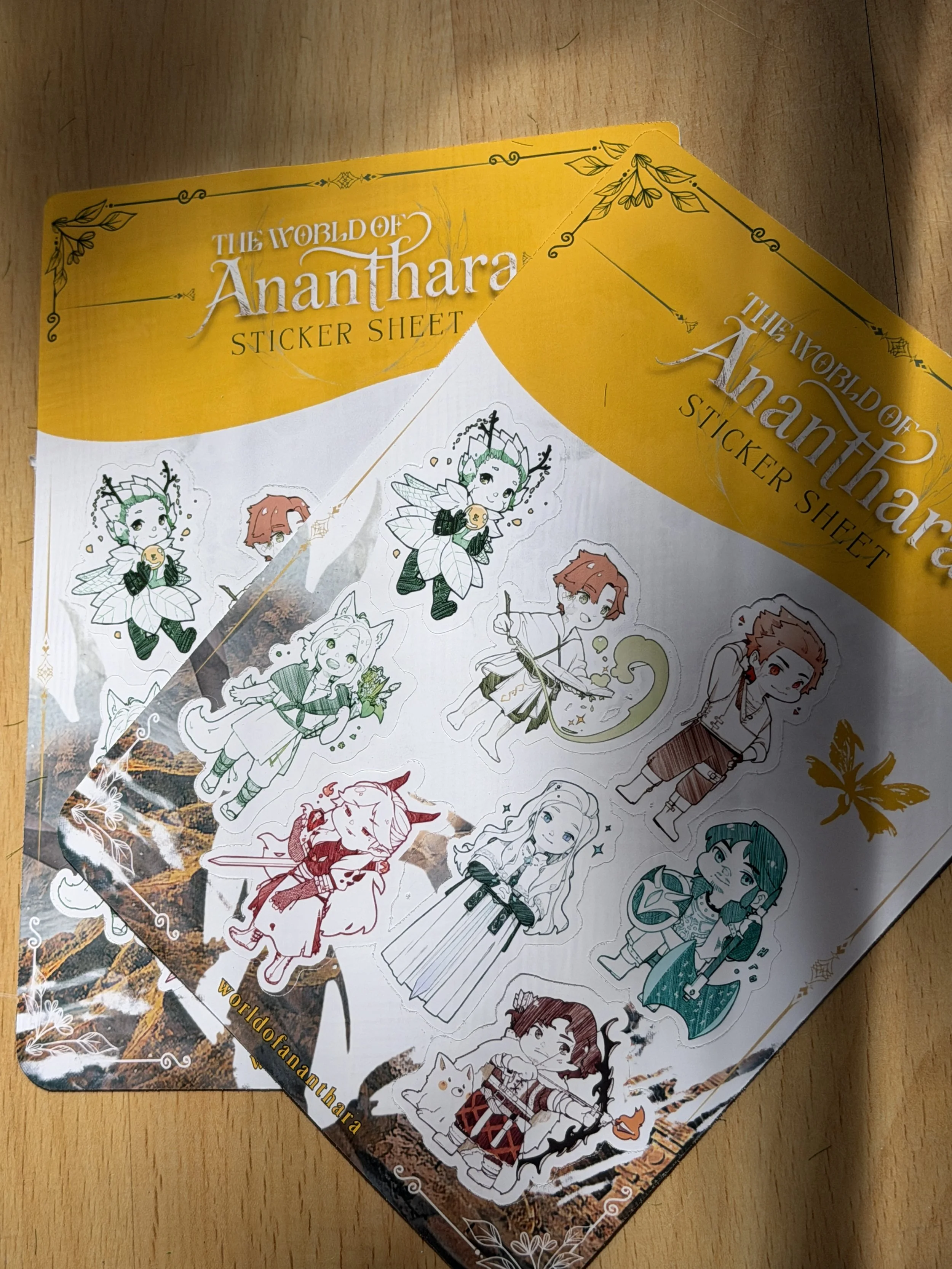
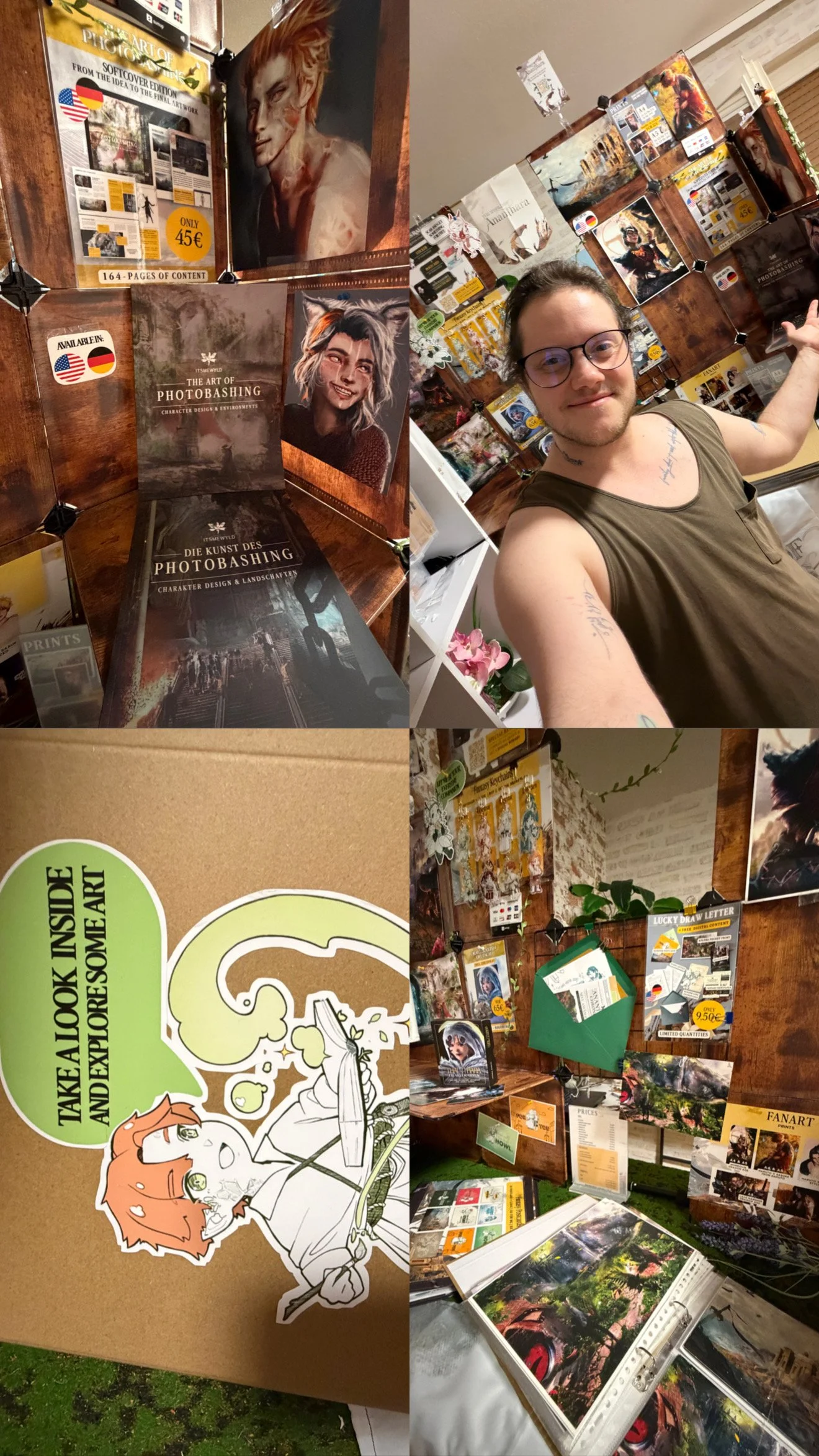
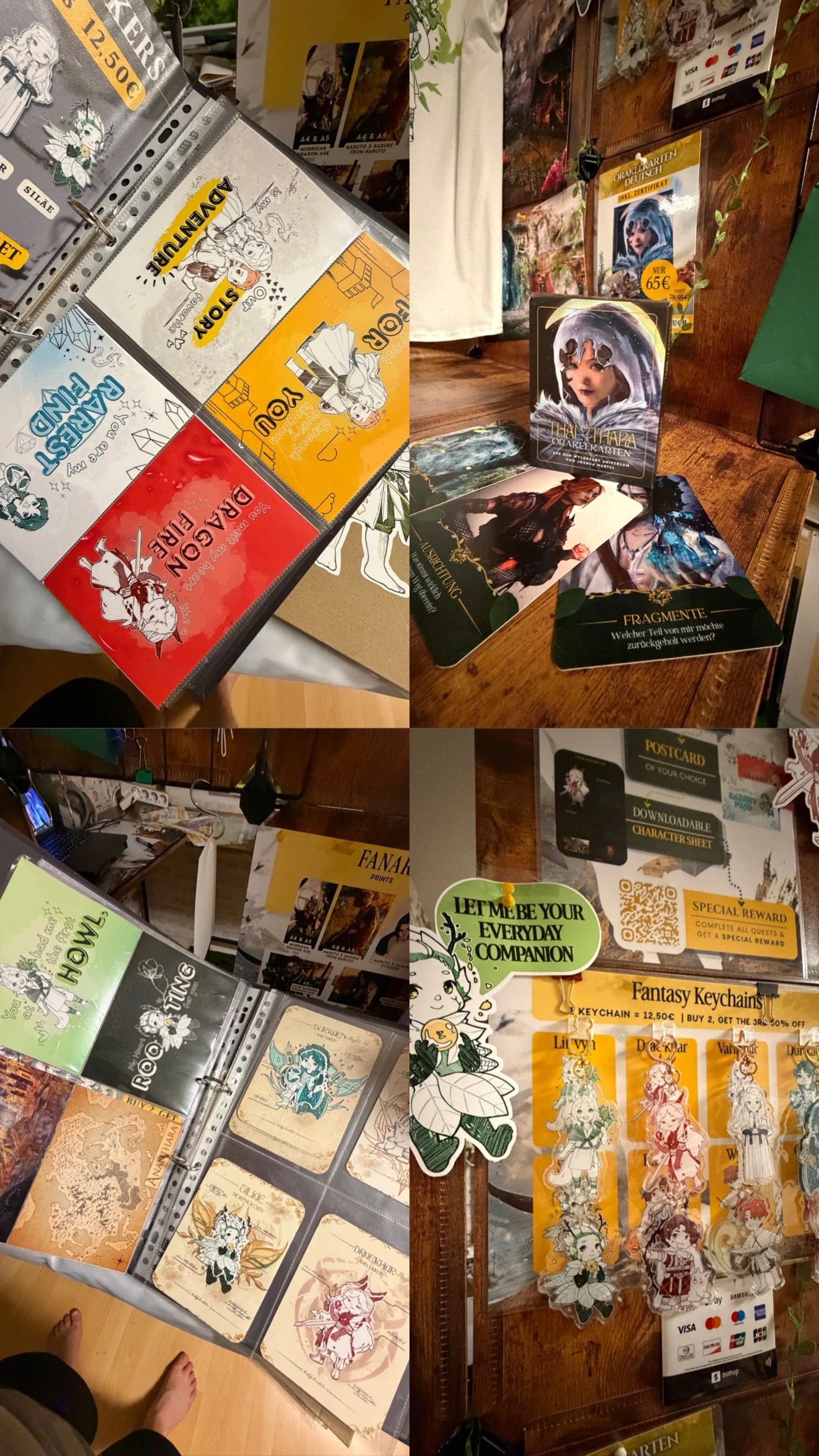
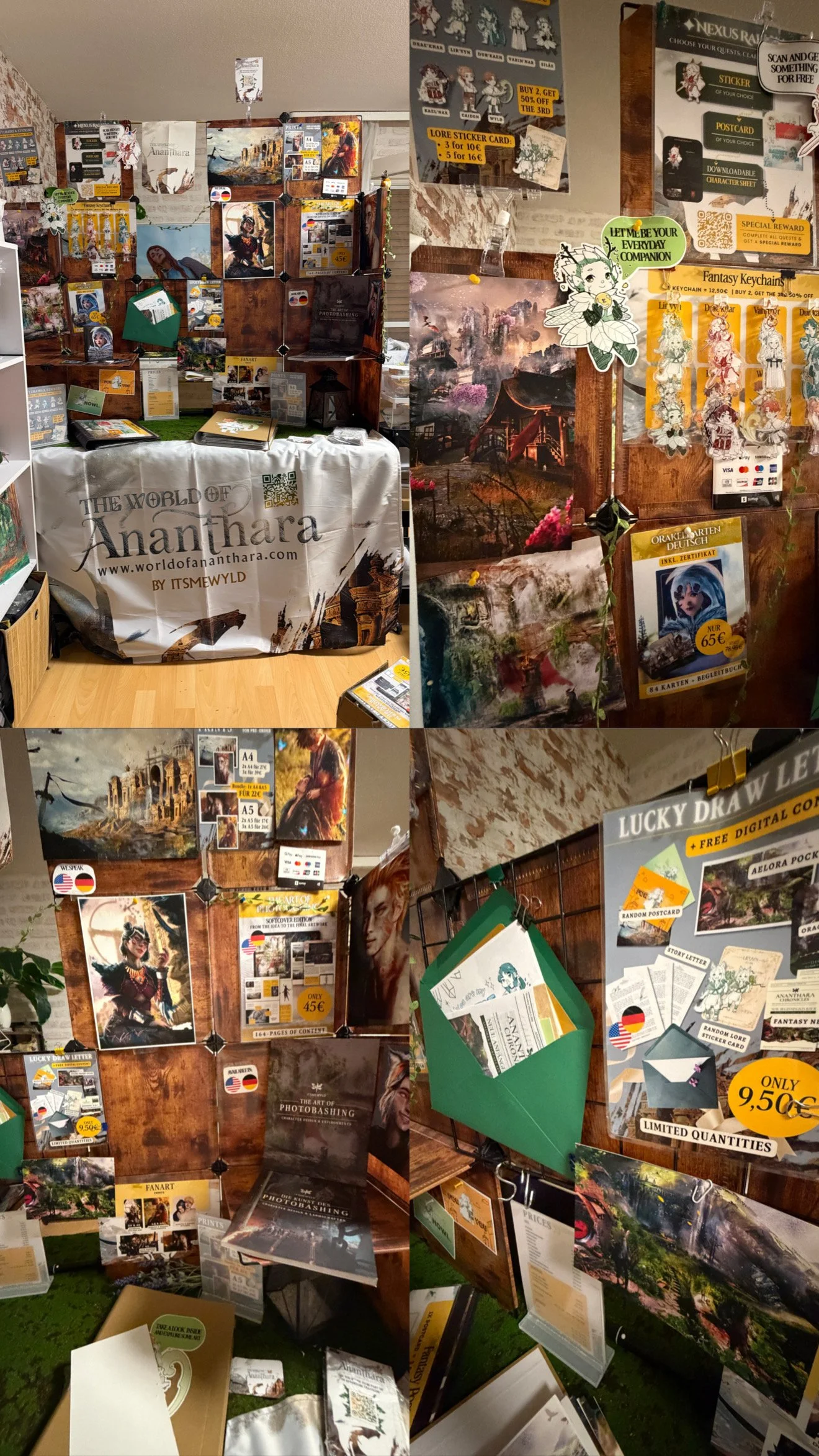
Since around June, one question had been following me constantly: Do I have enough?
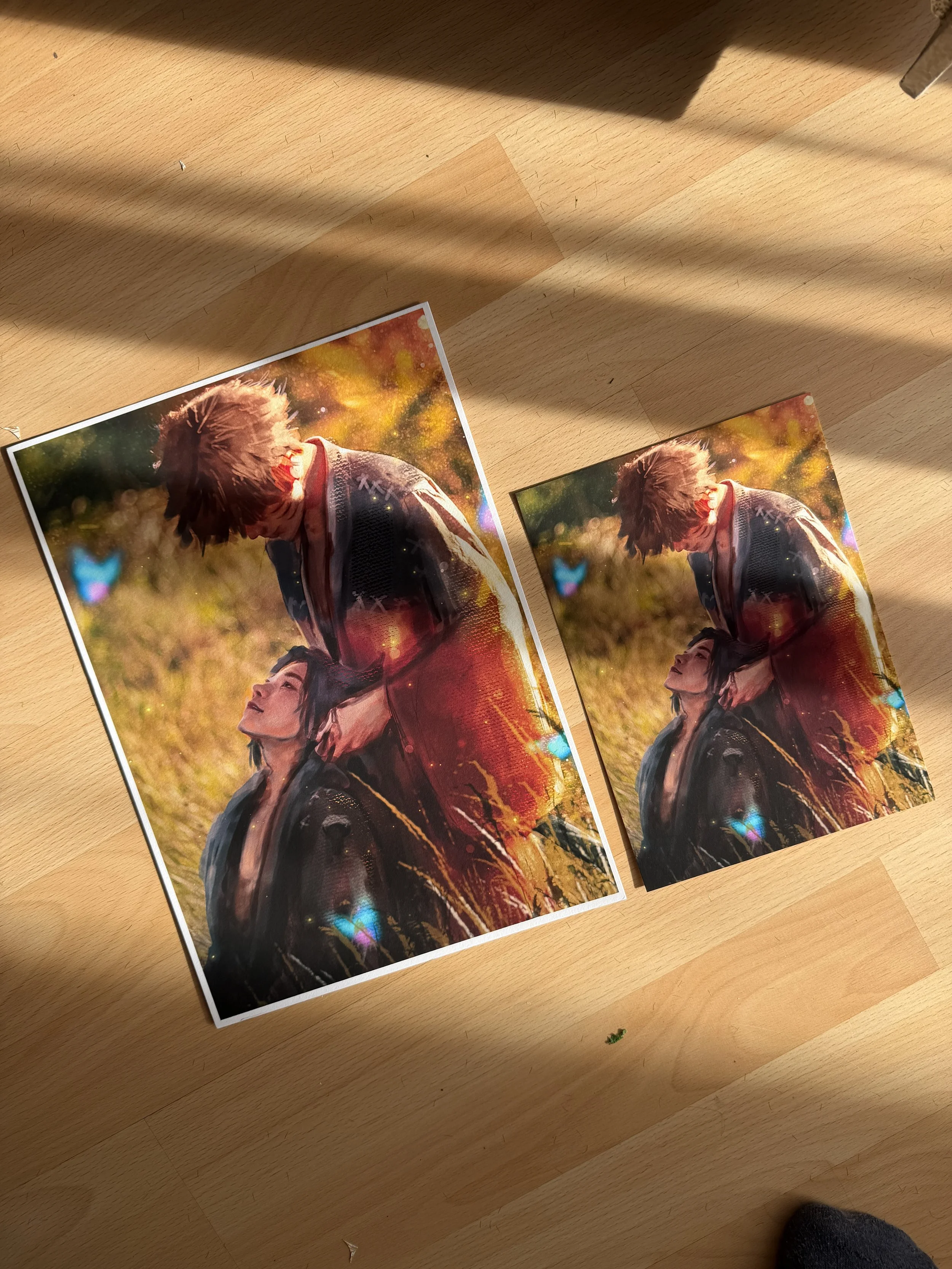
Enough prints. Enough stickers. Enough letters. Enough keychains. Enough books. Enough variety. Enough products for three days.
The difficult thing about your first Artist Alley is that you have no personal point of reference.
You don’t know whether five prints of one design will be enough or whether you should bring twenty. You don’t know which products will work. You don’t know how many people will even show up. Of course, you can read other artists’ experiences and observe what they do, but in the end, your own convention is still an experiment.
My brain, however, reacted to that uncertainty less with “Then we’ll just test it and see” and more with:
Then we’d better prepare for everything.
So I kept creating more products, more variations, and more possible entry points.
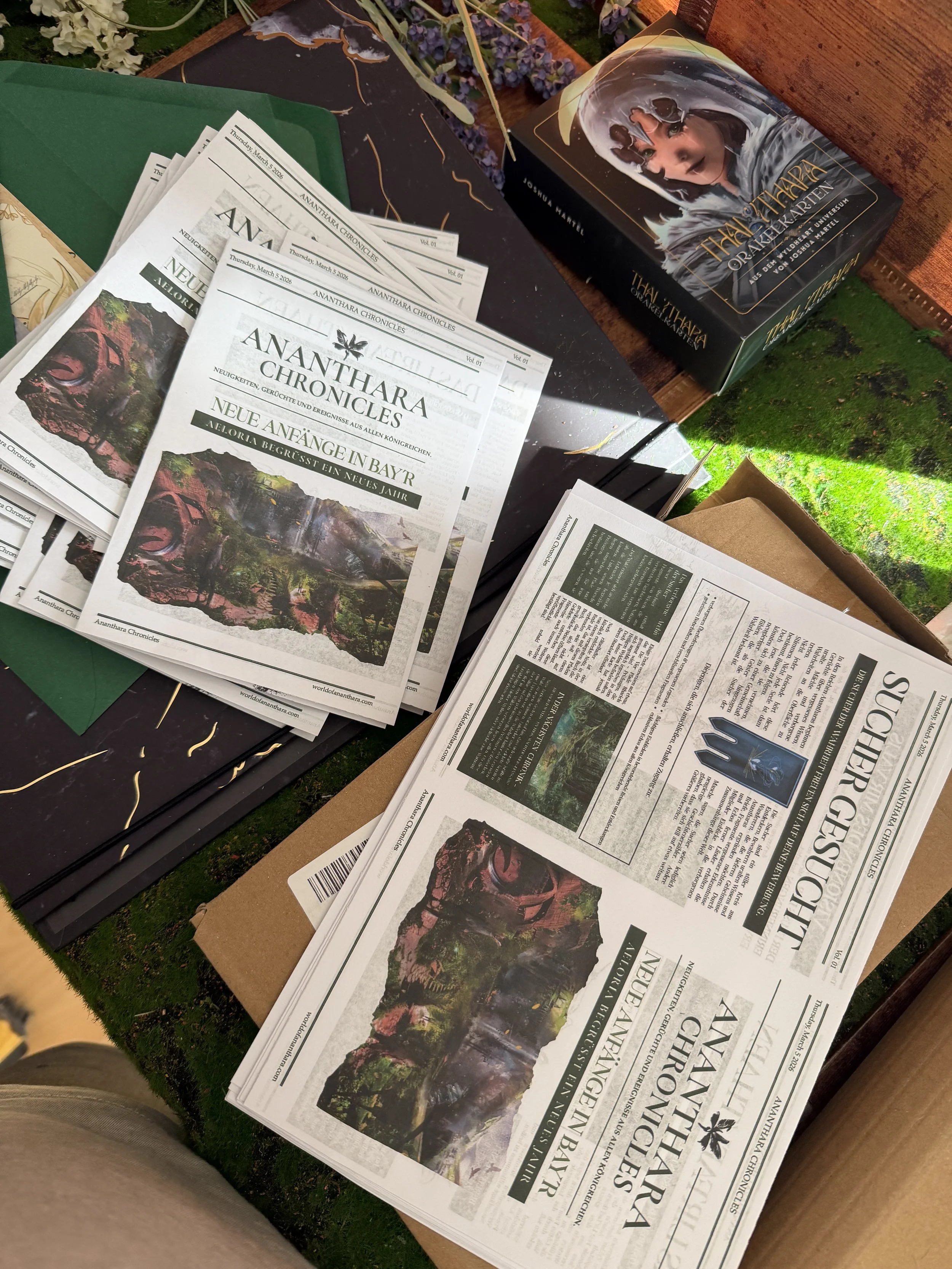
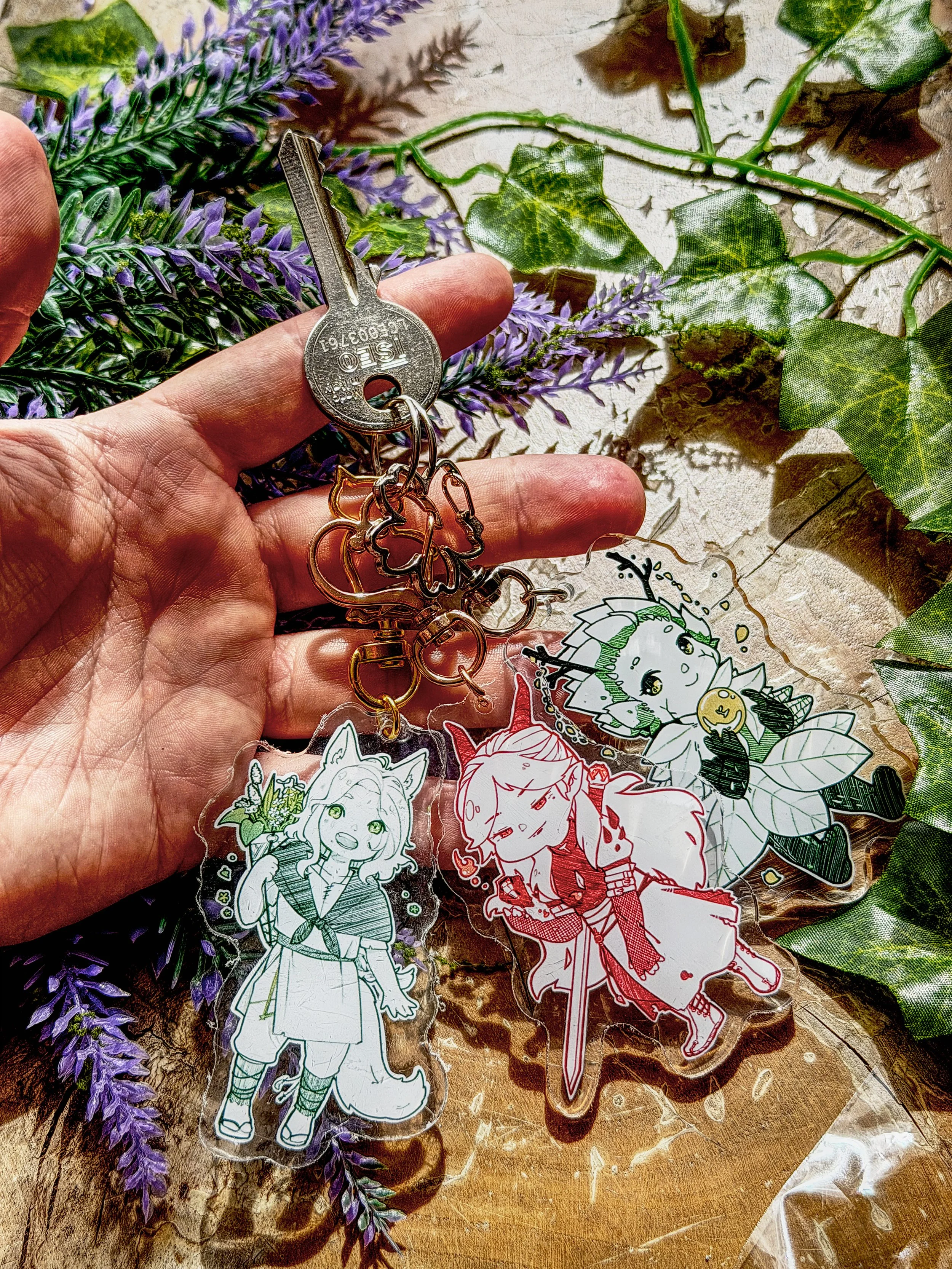
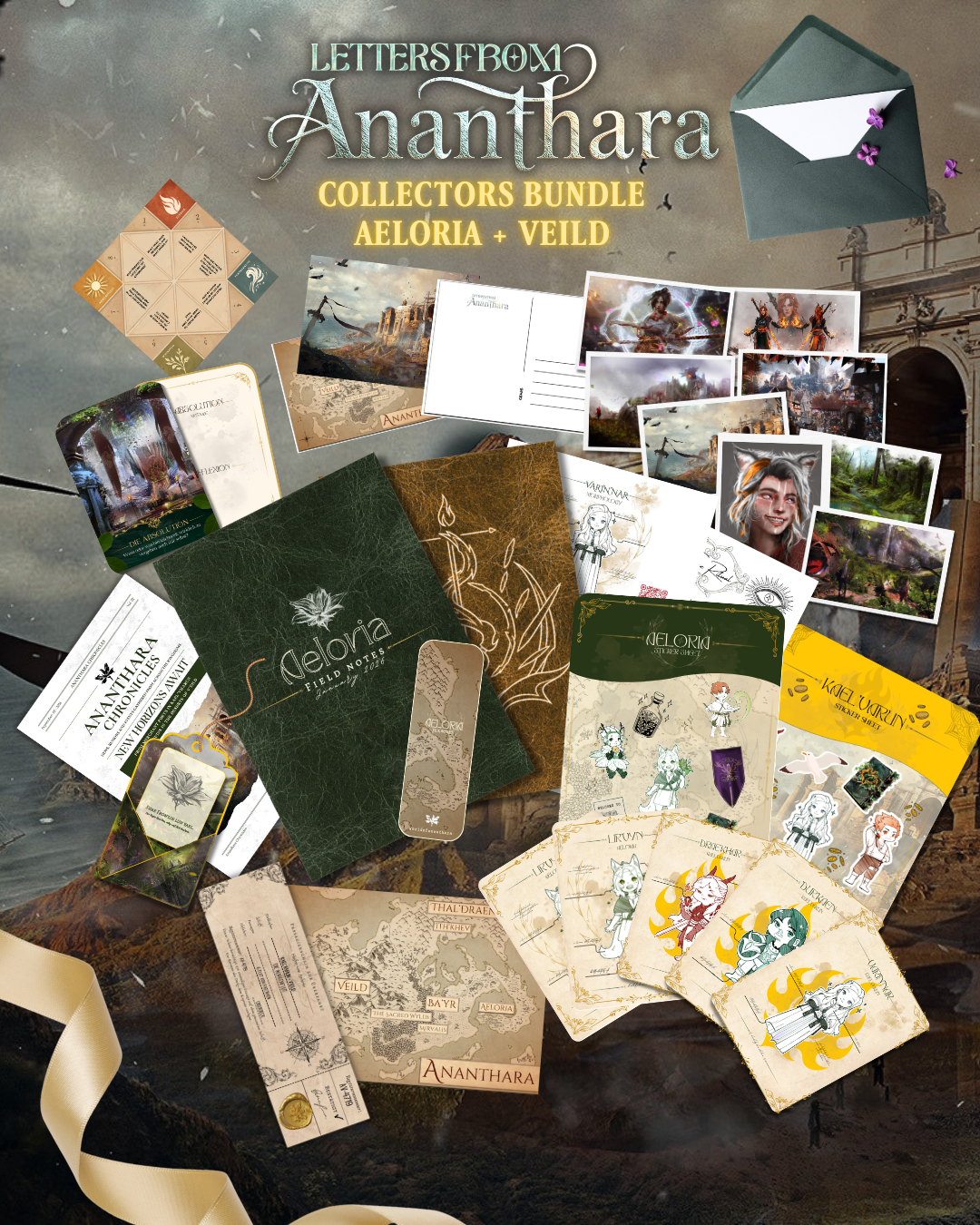
Prints. Fanart. Original art. Keychains. Books. Stickers. Lore cards. Letters. Oracle cards. My own convention rally. My Character Creator. Information material. Business cards.
Just a few days before the convention, I was still working on new prints.
I had prepared around a hundred letters. Roughly a hundred exclusive sticker sheets for my rally. German and English versions. Different ways for people to discover either my art or Ananthara itself.
And looking back, that preparation was already part of what I needed to learn at the convention.
I had tried to control uncertainty through preparation.
But you can’t fully prepare for your first convention.
At some point, you actually have to stand behind that table — and then reality decides which of those hundred thoughts you had beforehand were ever relevant in the first place.
Of course, I had a concept. There was a reason behind every product: I wanted to create resonance. I wanted people to become curious, to want more, and to find their own way into Ananthara.
But looking back, I think I relied too much on my own sense of what would resonate.
I loved my rally idea. I would have bought my own letters.
And once again, I had to learn that you are not necessarily your own best customer.
Sometimes, you have to step outside your own bubble to understand what actually feels relevant to someone else — and what might simply be too much for a person encountering your art or your stories for the very first time.
Nexus — “On the First Day, I Was Genuinely Close to Tears at Times.”
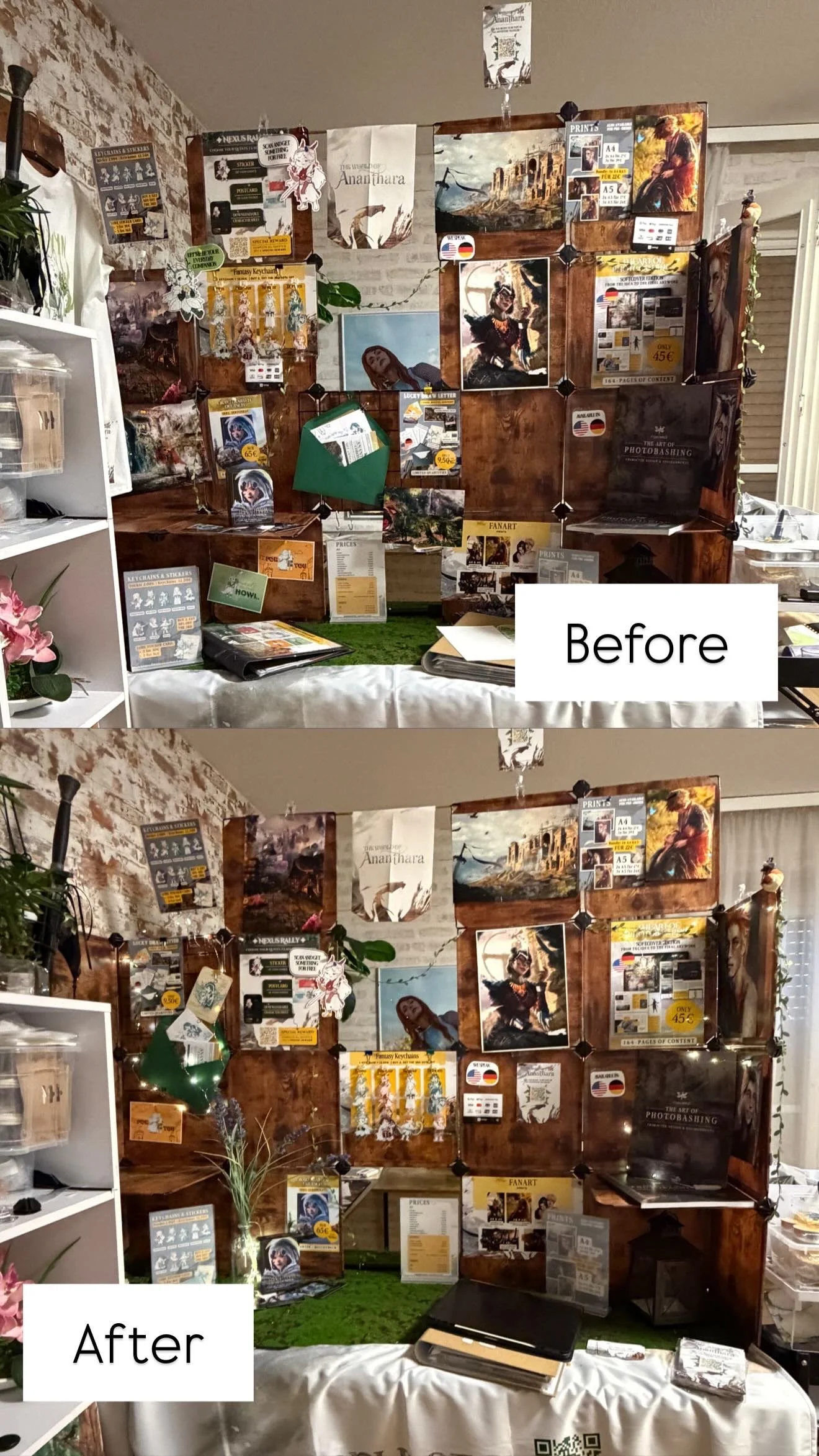
When I first walked into the Artist Alley, I felt pretty intimidated.
All around me were artists with clearly defined product ranges, professional displays, obvious pricing, and products that I immediately understood at a glance.
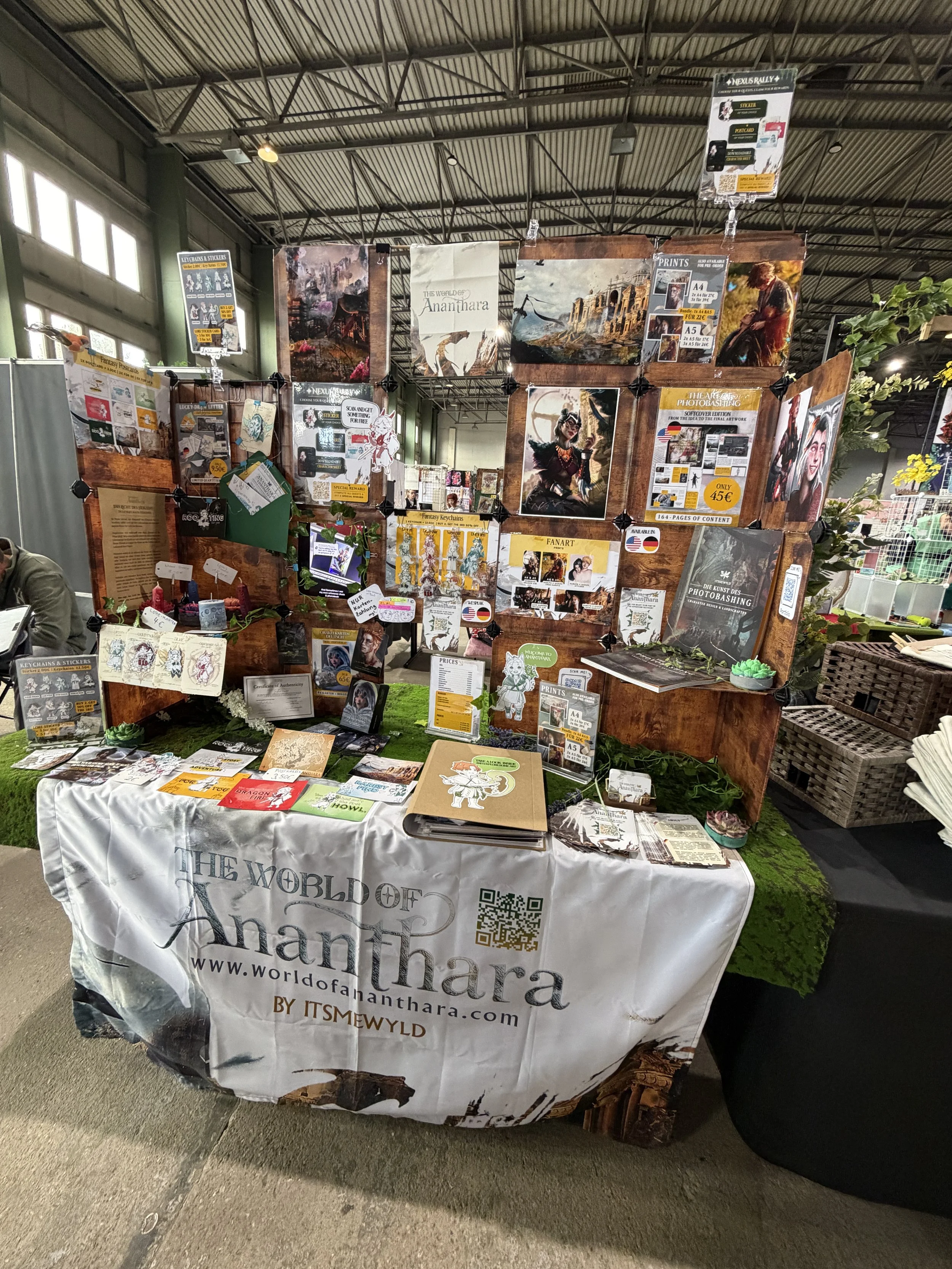
And then there was my booth.
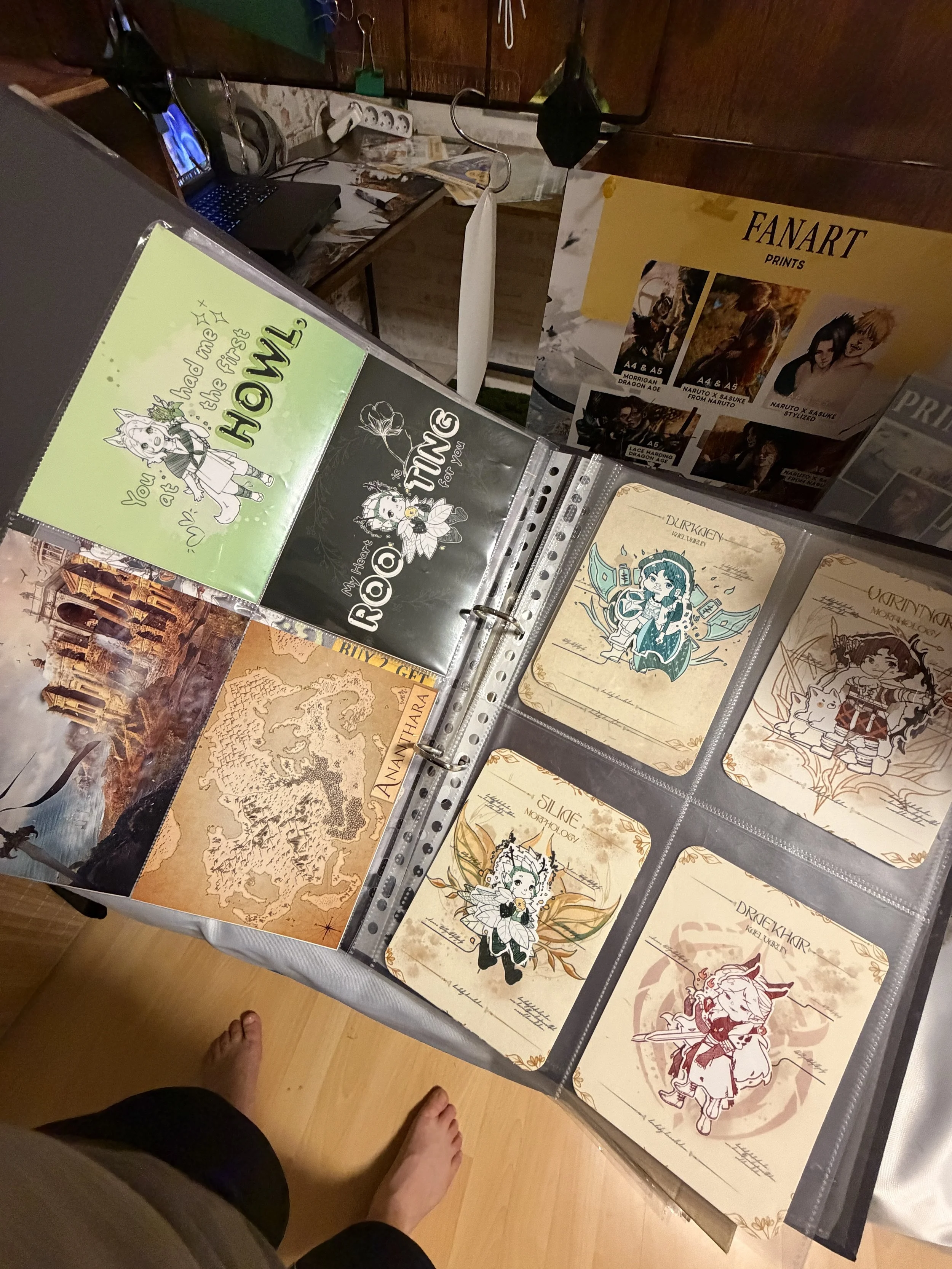
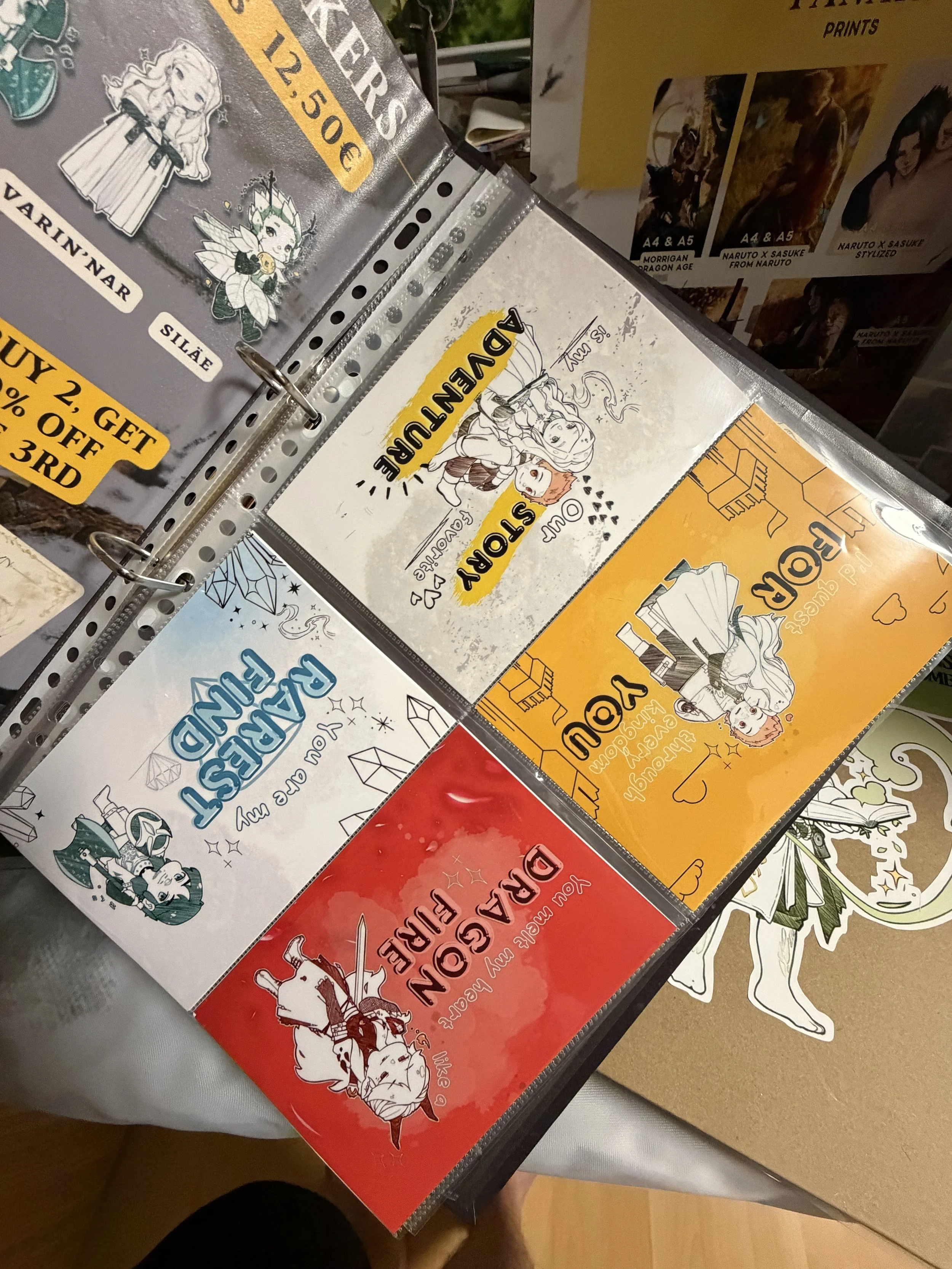
Ananthara. Photobashing. Prints. Fanart. Books. Keychains. Letters. Lore cards. Oracle cards. A Character Creator. A rally.
Every single element had a reason behind it for me. But in that moment, it suddenly felt like a lot.
Pricing had already been giving me headaches beforehand. Because of my dyscalculia, it isn’t only traditional arithmetic that I struggle with. Understanding numerical relationships and comparing prices can be exhausting for me as well.
What is a reasonable price for a print I produce myself? How much material goes into it? What is common at other Artist Alleys? How much can I charge without putting people off? And at the same time, how do I make sure that at least some of my costs are covered?
And then there was the actual process of taking payments.
Adding up several products. Accepting money. Giving back change. Talking to someone at the same time and still trying to be friendly and present.
In my head, there were about a thousand ways all of that could go wrong.
“On the first day, I was genuinely close to tears at times.”
Everything was happening at once: setting up the booth, the people, the other artists, my products, the prices, the responsibility — and the thought that at any moment, someone might actually stand in front of me and want to buy something.
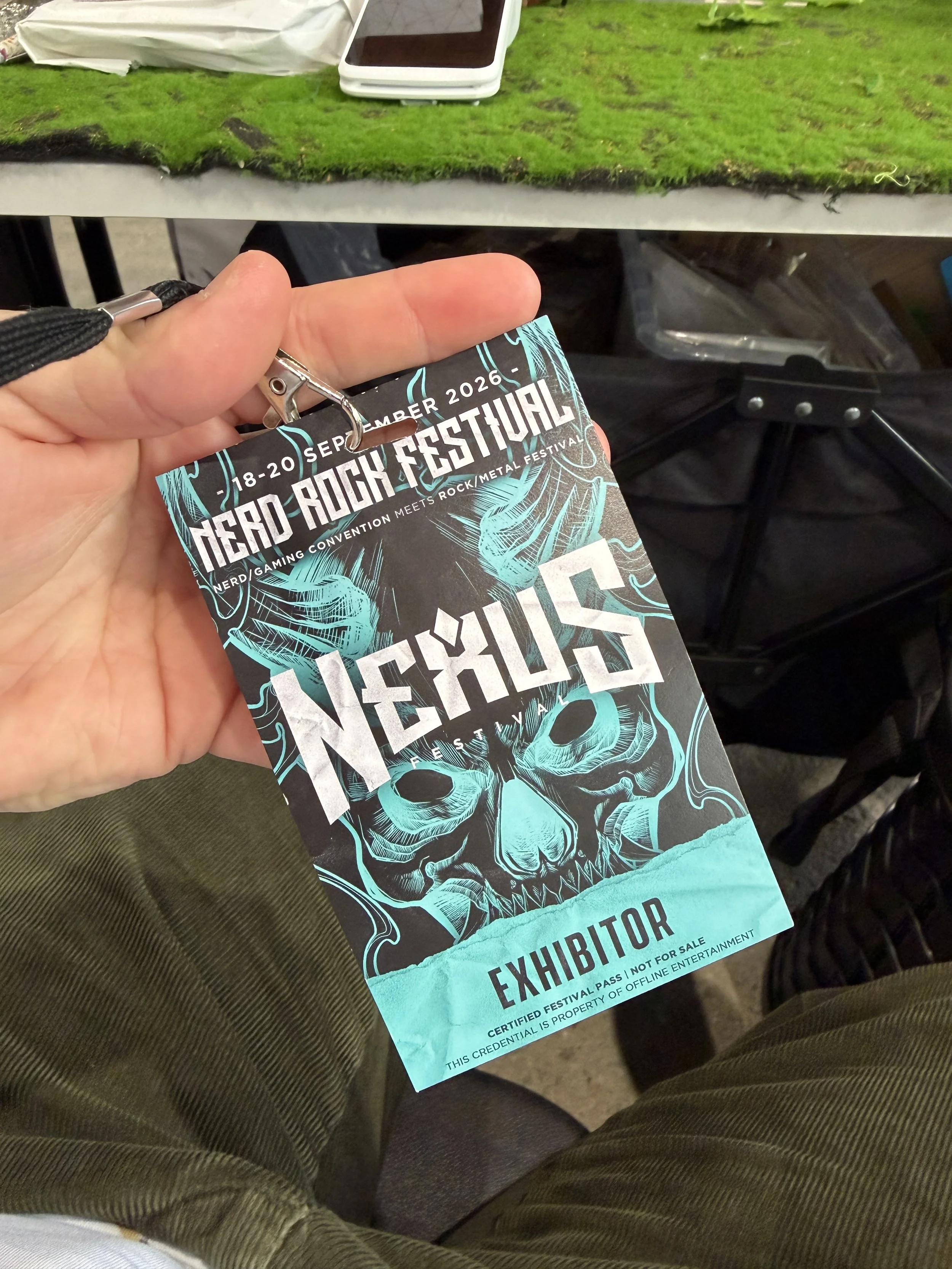
And then my first customer came along.
I took the payment. It worked.
No big drama. No disaster. No moment where everything suddenly fell apart.
Just a sale. For someone else, it probably would have been a completely ordinary moment. For me, it was huge.
Because before that, I had a hundred possible scenarios running through my head. Afterwards, I had one very concrete piece of evidence against all of them:
I can do this.
All of my social energy went into whatever was happening directly in front of my booth.
Booth. Visitors. Questions. Observing. Next person. Explaining everything again.
Anything beyond that small area suddenly felt almost impossible to grasp.
Before the convention, I had even thought it might be a good opportunity to meet other artists and make connections. In reality, I barely had the capacity for that. All of my social energy went into whatever was happening directly in front of my booth.
Of course, I noticed how many people simply walked past my table.
Especially in a quiet hall, you notice every single one.
You could analyze each person individually.
Why didn’t they stop for longer?
Is my display bad?
Are my prices wrong?
Is my art not interesting enough?
Does nobody understand what Ananthara is?
But that made the people who did stop stand out even more in my memory.
The ones who opened my book.
The ones who asked questions.
The ones who really took the time to look at my artwork.
The ones who wanted to know how photobashing works.
The ones who let me explain Ananthara to them.
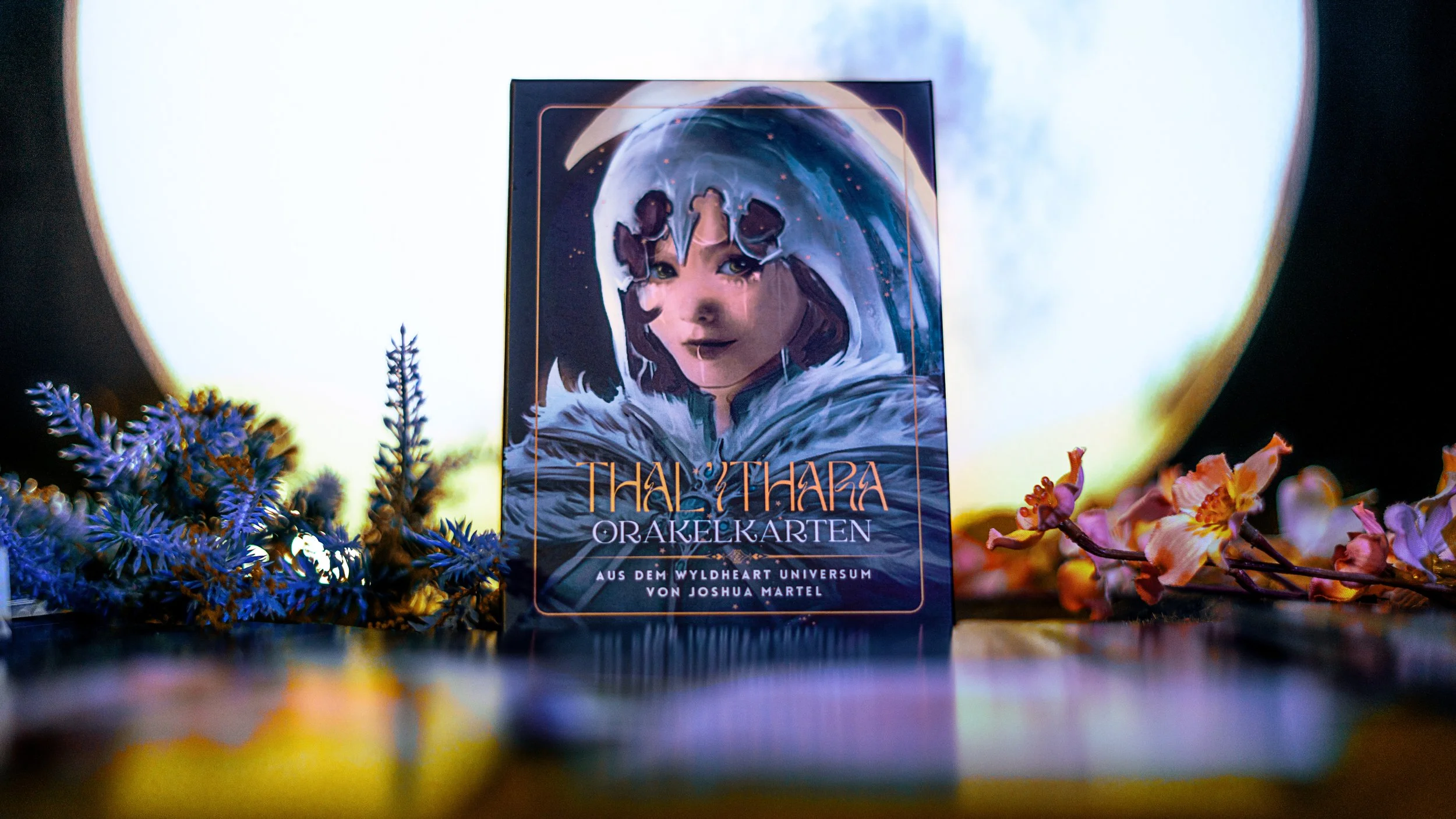
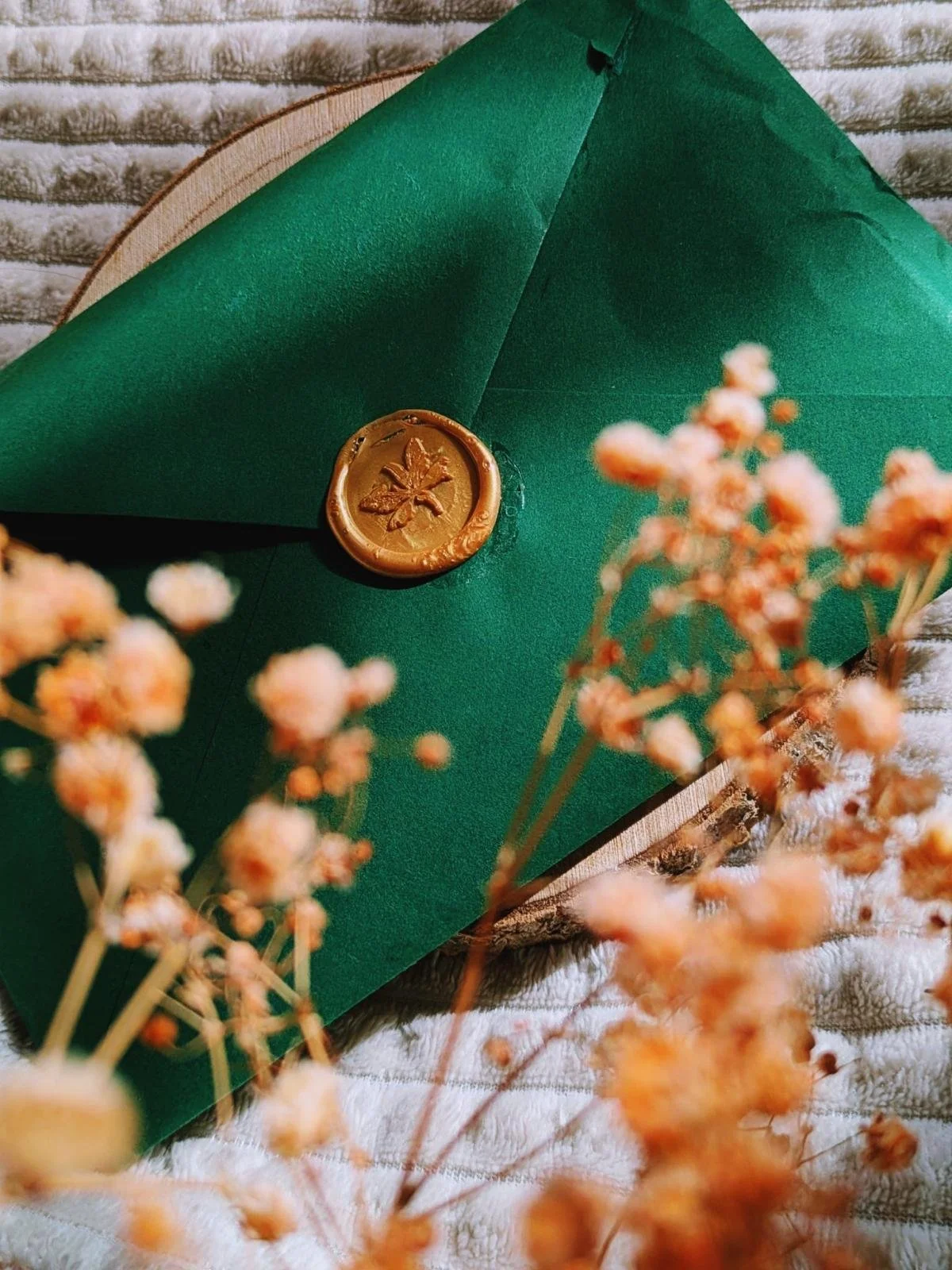
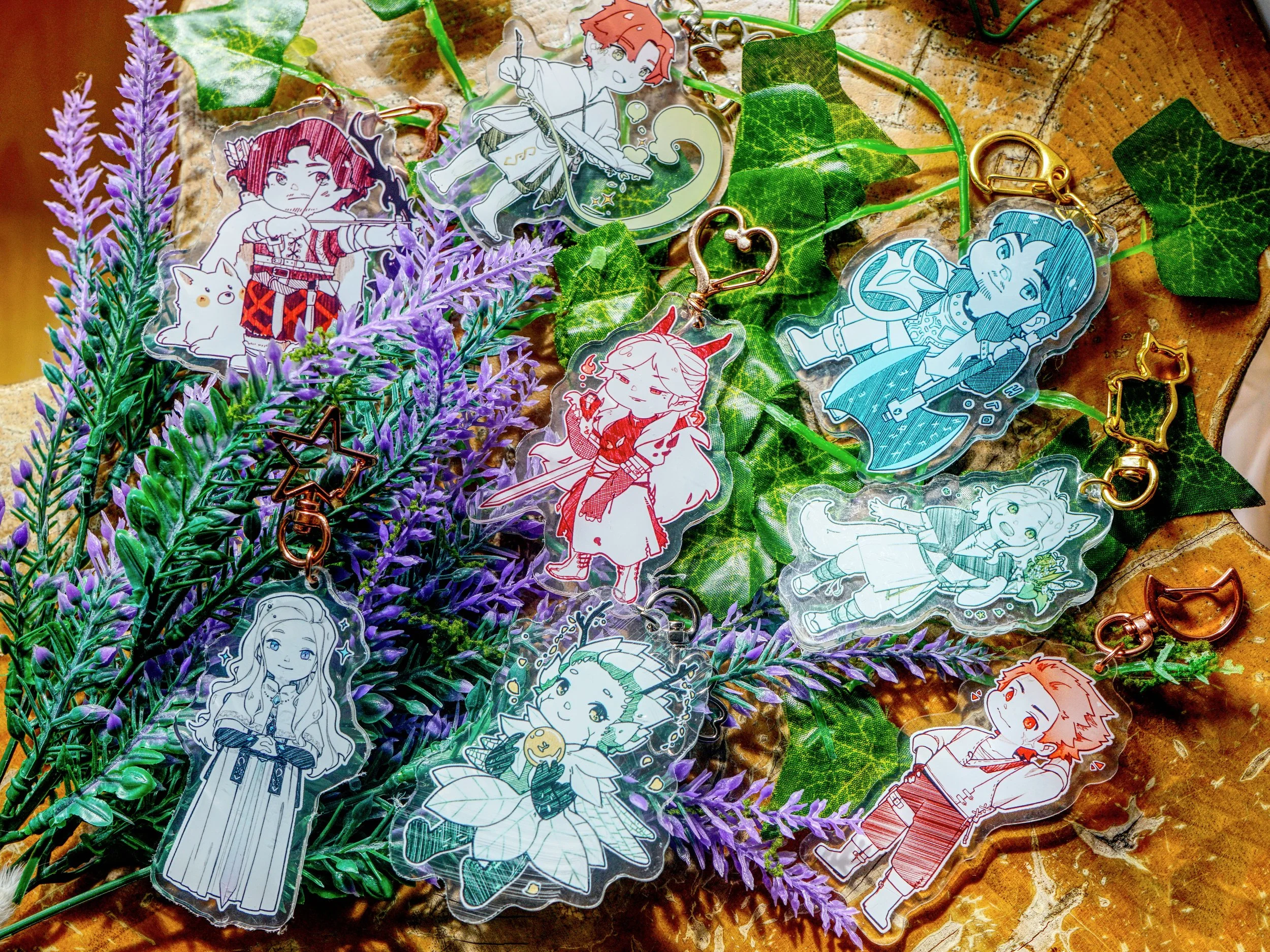
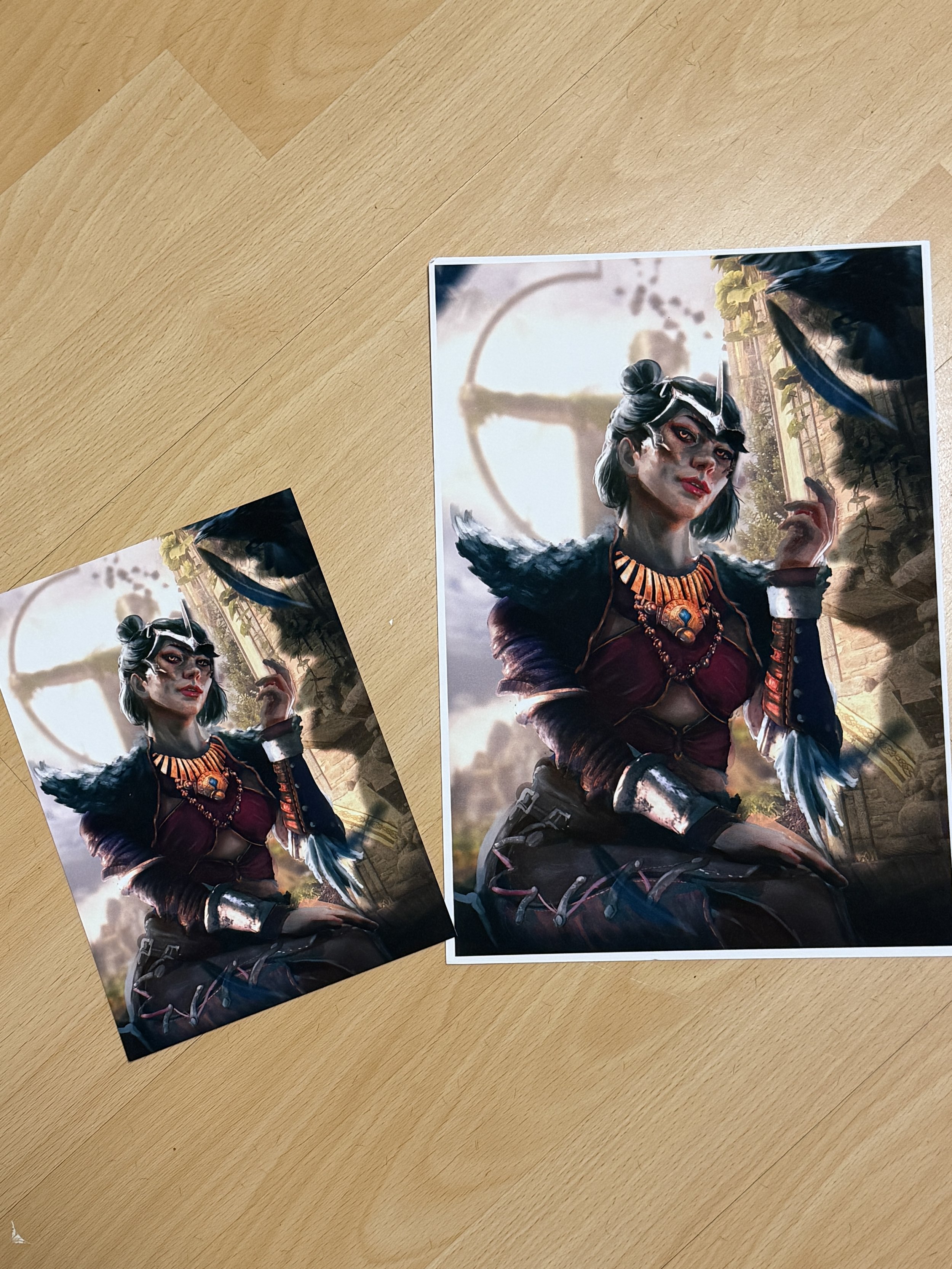
Reality Check and Self-Doubt: Online vs. Convention
When you work almost entirely online, this difference is hard to describe.
Online, I see numbers. Someone scrolls past a Reel for two seconds and becomes a view. At the convention, suddenly there was an actual person standing in front of me, essentially saying:
Tell me more. And that did something to me.
Especially with a project like World of Ananthara, I spend an incredible amount of time alone with a vision whose full scale probably no one but me can truly see.
I develop stories and characters. I create concept art. I write lore. I plan interactive experiences and work toward making Ananthara more than just a fantasy world you read about, but a world you can immerse yourself in in different ways.
When you talk about all of that online and a post barely gets any reach, another question eventually starts creeping in almost automatically:
Does anyone besides me even care about this?
Rationally, of course, I know that an algorithm says nothing about that.
Emotionally, that is much harder to believe.
And that is exactly why some of those conversations at the convention mattered so much.
The Artist Alley was empty. My sales were bad.
And yet, there were people who felt something when they encountered Ananthara.
Those two things do not cancel each other out.
I Almost Started to Feel Ashamed for Taking This Dream So Seriously
When the convention was finally over, more than anything, I felt relieved.
I wanted to go home. I didn’t want to talk anymore. I didn’t want to keep observing everything around me. I didn’t want to keep functioning.
And at some point, shame set in.
Objectively, I could also have been proud of myself.
I did my first Artist Alley.
I spent three days showing my art.
I explained my world to complete strangers.
I handled payments despite my dyscalculia.
I actively approached people.
I faced a situation I had no idea beforehand whether I would even be able to handle.
And still, I felt ashamed.
I felt ashamed that I had brought two friends with me, only for the three of us to sometimes just stand there together in an almost empty hall.
I felt ashamed that I had spent more than €1,800 and made less than €100 in sales.
I felt ashamed when I thought about all the materials I had prepared.
And eventually, that feeling became even more uncomfortable.
I almost started to feel ashamed for taking this dream so seriously in the first place.
Less Than €100 in Revenue After Spending More Than €1,800
In total, I spent €1,805.59 on the booth, equipment, materials, products, and shipping. My revenue was less than €100.
Of course, that does not mean that every single euro simply disappeared. Many of those expenses were initial investments. Displays, stools, my SumUp card reader, stands, a power bank, and other equipment can all be used again. The books, prints, and keychains still exist and can be sold later.
But money that has already been spent is still gone for the time being.
And when you are standing at home afterwards, surrounded by boxes full of products, the sentence “You can still sell all of this later” feels very different emotionally than it did when you were calculating everything beforehand.
After a convention into which I had poured so much money, work, and emotional energy — only for it to perform so poorly financially — one question eventually became impossible to ignore:
Should I even keep doing this?
Can I ever turn Ananthara into what I can see in this world?
Can one person even carry a vision this large?
How much money, energy, and time can I invest before I eventually have to admit that maybe it simply isn’t working?
I regret how much money I spent on this first experience.
There are many things I would do differently. I would produce different quantities. I would structure my booth differently. I would leave more room for the needs of my own body.
And if I ever attend another convention, I would probably think much more carefully about whether the audience there is actually a good fit for what I want to share.
What I’m Taking Away From My First Artist Alley
Maybe that is the most important difference between how I approached the convention beforehand and how I see things now.
Before the convention, I wanted to solve as many problems as possible before they could even happen.
Now, I want to observe much more. Test. Simplify. Ask questions.
What are people actually interested in?
Where do they stop?
What do they understand immediately?
What do I need to explain?
Where does curiosity turn into a real connection?
And where am I perhaps trying to control things that cannot really be controlled?
My first Artist Alley did not prove that Ananthara will work.
But it also did not prove that no one cares about this world.
What it showed me is that real resonance looks very different from a number on a screen.
A hundred people can walk past my booth and forget about it again a few moments later.
But sometimes, someone stops.
Looks a little closer.
Asks a question.
And wants to know:
What else is there to discover here?
Maybe those are exactly the kind of people I create Ananthara for in the first place.
The convention was a pretty brutal collision between imagination and reality.
I now know that I can stand behind a booth.
I know that I can handle payments.
I know that I can approach people.
I know that I can explain my art.
I know that I probably don’t need three people with me just to feel safe there.
And I know that some people do stop when they encounter Ananthara.
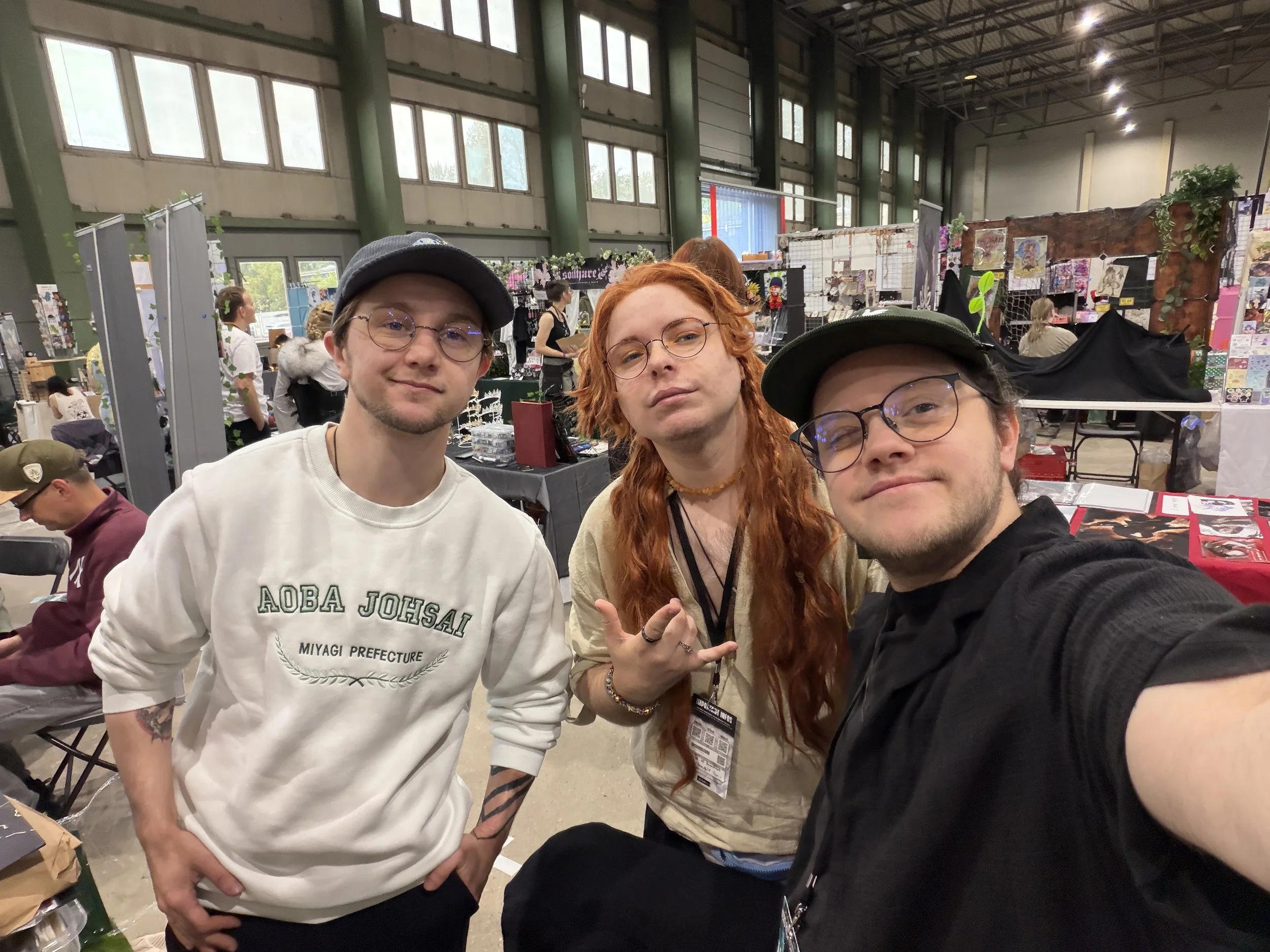
I’m also incredibly grateful that my friends Lore & Wick and Bakaneki_Price were there to support me — honestly, the best emotional support I could have asked for. uwu Thank you again!
If you’re currently preparing for your own first Artist Alley, I’ll go into much more detail in the upcoming articles about how much I prepared, where I miscalculated financially, what I would do differently with my booth setup today, and why many of my marketing ideas worked very differently at the convention than I had expected.
And if, instead, this article has made you curious about the world I was trying to bring out into the real world in the first place, you can discover World of Ananthara here — or subscribe to my newsletter to read the first draft of my novel’s prologue.
Feel free to share your questions and experiences in the comments —
I’ll try to address them in the next post!



An idea can become an entire world.
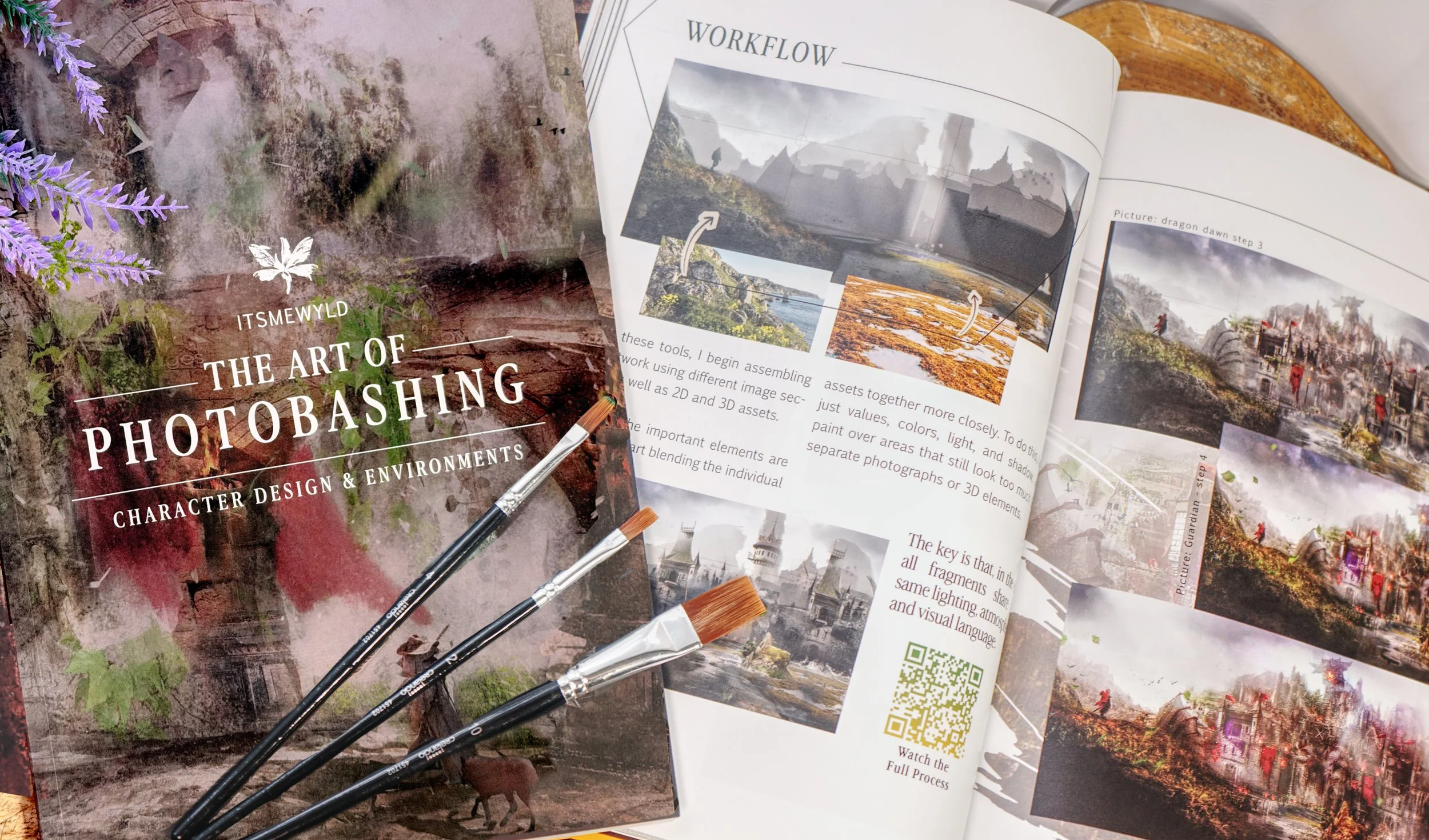
Learn how to turn your ideas into artworks through Photobashing Techniques by combining photography, 3D, and digital painting into characters, environments, and cinematic fantasy scenes. In this 164 Pages Full step-by-step photobashing guide, we explore important artistic fundamentals and learn how to combine photography, your own references, 3D scenes, digital painting, and photobashing techniques into cohesive finished artwork, for artists who want to create atmospheric characters, cinematic scenes, and immersive fantasy worlds.
Inside the book you will learn about:
Character design and visual development
Environment and landscape design
Creating your own photo references
Working with 3D scenes and digital sets
Composition, perspective, lighting, color grading, and storytelling Fundamentals
Practical Photobashing workflows using Photoshop, Blender, Procreate, and DAZ 3D
Please note: This is a physical product and will be shipped to you. It is not an instant digital download.
Printed colors may vary slightly from the images shown on screen due to differences between RGB displays and CMYK printing.