The 3 Rules Every Magic System Needs
Quicklinks
01 Clarity | 02 Limits | 03 Consequences | summary
In my last Blog i told you about the lessons i’ve learned creating a magic system. Today i want to dive deeper into the fundamentals.
Because every magic needs some kind of shape. It needs enough structure that the audience can follow what is happening. It needs limits, so magic does not solve every problem too easily. And it needs consequences, so using magic feels like a choice instead of a shortcut.
So instead of scratching the surface like last time let’s break this down.
1. Magic Needs Clarity
The first thing a magic system needs is clarity. That does not mean you have to explain every rule, every spell, every ancient source and every magical exception in the first chapter. Please do not do that. Clarity does not mean overexplaining. Your magic shouldn’t be something you have to explain to the core but something that should be experienced and understood.
When magic appears in a story, the audience should eventually understand why it works, what kind of pattern it follows and why it belongs to this world.
If magic feels completely random, it becomes difficult to trust. A character suddenly unlocks the perfect ability at the perfect moment. A spell appears that was never mentioned before. A problem gets solved because magic can apparently do exactly what the plot needs right now. And the audience starts to feel the hand of the writer behind the story. That is usually where magic begins to lose its weight. Because the issue is not that magic is powerful. The issue is that it feels uncontrolled from a storytelling perspective.
When building a magic system, one of the first questions you can ask is: What pattern helps the audience recognize this magic?
That pattern can be very simple. Maybe magic is tied to elements. Maybe it requires spoken words. Maybe it depends on rituals. Maybe it comes through symbols, tools, spirits, music, memory, prayer, emotion, bloodline, nature, or technology.
The pattern does not have to explain everything. But it should help the audience feel that the magic has a shape.
Witch Hat Atelier shows its pattern through drawn magic. Every spell is created by drawing specific glyphs and completing a circle before the magic can take effect.
Avatar: The Last Airbender shows its pattern through movement. Elemental magic can only be performed through the right physical forms, with each element following its own style.
For my own fantasy world, this was one of the biggest challenges while creating the Thal’ithara, the magic of Ananthara. I never wanted magic to reduce a person to a rigid class like “fire mage,” “healer,” “bard,” or anything else that would define them too narrowly.
In Ananthara, the way you naturally express yourself defines how your magic takes shape.
But if every person’s magic were completely individual, with no shared structure, the system would become chaotic. It would feel random instead of meaningful. So I needed a pattern that could guide the magic without trapping the person.
My solution was the Archetypes.
Archetypes are fixed forms of magical expression shaped by a person’s inner Calling. A Calling is the part of someone’s soul that reveals how they naturally express who they are at heart.
For example, if someone is an artist at heart, their Calling may shape their core Archetype into an Artisari. If someone is a tinkerer, inventor, or builder at heart, their Calling may shape their core Archetype into a Vanguard.
This core Archetype does not change. It remains the person’s central expression of magic.
But people are never defined by only one interest, one instinct, or one way of seeing the world. Throughout their lives, they may be drawn to other forms of expression, knowledge, devotion, craft, nature, discovery, protection, or transformation.
This is where Resonance comes in.
Resonance is the influence of a second Archetype. Unlike the core Archetype, Resonance can shift over time as a person grows, changes, learns, or becomes drawn to new parts of themselves.
Thal’ithara is awakened through the connection between the core Archetype and its Resonance.
An Artisari whose Resonance is Seeker may express their magic through visionary creation. Art, architecture, symbols, and crafted works may reveal what was once hidden, allowing lost memories, buried truths, and forgotten histories to be seen, felt, or relived.
In this way, the Archetype gives the magic its stable core, while Resonance gives it variation, depth, and personal evolution.
So Magic in Ananthara always follows the same pattern: it begins with a person’s fixed Calling, is shaped by their current Resonance, and ultimately manifests as a unique expression of their identity. While every manifestation is different, no form of Thal’ithara can exist outside the nature of the soul from which it was born.
You can read all about my magic system here
So for your own magic system, ask yourself:
How do people in your world wield magic?
What pattern does it follow, from the first sign, word, movement, or ritual to the final manifestation?
And why does this form of magic belong to your world in the first place?
But recognition is only the first step. Once the audience begins to understand what magic is capable of, the next question becomes even more important:
Where are its limits?
2. Magic Needs Limitations
The second thing every magic system needs is limitations. The more powerful your magic becomes, the more important its limits become. Because powers are exciting. But limits are what make them meaningful.
A character who can heal is interesting. But a character who can heal only by taking the pain into their own body suddenly has a much harder choice to make.
A character who can see the future is powerful. But if they only see possible futures, the ability no longer makes them all-knowing. They still have to interpret what they saw. They can still be wrong. They can still be afraid. That makes the power feel less overpowered and much more human.
This is why limits matter. They stop magic from becoming the easiest answer to every problem. Because if every problem can be solved with “more magic,” then tension begins to disappear. If healing can fix every wound, danger loses weight. If resurrection is easy, death loses meaning. If truth magic can reveal everything, secrets become difficult to protect. If teleportation has no restrictions, journeys, distance, and isolation lose their narrative power.
A good limit does not weaken your magic system. It strengthens it.
It forces characters to think. It forces them to make choices. It makes them creative. And it gives magic a sense of weight.
Because the most interesting question is often not: “Can magic solve this?”
The more interesting question is: “What does magic still not solve?”
Maybe magic can heal a body, but not restore trust. Maybe it can reveal a fact, but not explain what that fact means. Maybe it can protect a kingdom, but only by draining the land around it. Maybe it can bring someone back from death, but not bring them back unchanged.
Limits make sure that power does not remove conflict, but transforms it. So before you move on, ask yourself: What can magic not do? When does it fail? What does it require? What can interrupt it? And what problem remains difficult, even with magic?
For Ananthara Magic cannot be used endlessly without affecting physical, mental, emotional and spiritual energy. Just like working a 9-5 you only have a specific amount of energy left to function right?
So the question is not only: Am I powerful enough? It becomes: How much of myself can I give before I begin to lose balance, energy and strength?
That is where Strain comes in as a warning when someone is pushing too far beyond their limits and needs to recover before the damage becomes deeper.
And if that warning is ignored for too long, the magic can become unstable. That instability can lead toward Chaos Magic. which leads us to the consequences of Magic.
3. Magic Needs Consequences
Many magic systems stop too early. They define what magic can do. They define what magic cannot do. But they forget to ask what magic has changed.
The third thing every magic system needs is consequence. Magic should not exist in isolation. If it is powerful enough to change a character’s life, it is probably powerful enough to change the world around them.
Consequences show how magic affects culture, religion, history, politics, education, fear, law and everyday life. If healing magic exists, medicine will change. If truth magic exists, courts and trust will change. If magic can be inherited, family lines and social status will change. And if magic can be taught, education becomes a question of access.
Not every part of society needs to revolve around magic. Not every village needs a magical academy, and not every conflict needs to be caused by magic. But if magic exists, people will respond to it. They will study it, fear it, worship it, regulate it, sell it, hide it, inherit it or try to control it.
In V’eild, a kingdom in Ananthara, many people fear magic because of historical trauma.
In Bay’r, magic is seen more spiritually, as part of the natural cycle of giving and receiving.
In Thal’draen, magic is studied, taught and developed through education, healing, invention and research.
The same magic exists across the world, but different cultures interpret it differently. That difference creates institutions, beliefs, conflict, history and taboo.
Some forms of magic in Ananthara are not forbidden because they are impossible. They are forbidden because the price is too high.
If someone tries to control or manipulate another person with their magic, the price could be losing parts of memory, emotion, identity and self, which suddenly shows how magic can be abused and how suddenly it becomes horrifying.
This is also where you can ask who gets left behind. Who was never touched by magic or who is directly confronted with the consequences of magic.
In Ananthara, that question led to the Untouched: people whose Thal’ithara never awakened. They are not empty, and their magic is not missing. It simply never found the moment that could ignite it. But in a magical society, people without awakened magic can easily become invisible or be pushed into work that does not require magical expression.
That is consequence. Magic creates power. Power creates systems. And systems decide who is seen, who is useful, who is feared and who is ignored.
So when you build your own magic system, ask how magic changes daily life. How does it shape culture, religion, medicine, education, politics or social class? Who controls it? Who fears it? Who is excluded from it? How can it be abused? And what historical wounds could exist because of it?
Those answers are what turn a magic system into worldbuilding.
Final Thought
So if you want to build a magic system that feels believable, do not start by inventing hundreds of spells. Start with three questions.
Can the audience understand the shape of it? What stops magic from solving everything? And what changes because magic exists?
That is clarity. That is limitation. That is consequence.
And once you answer those three questions, you are not only building magic anymore. You are building the world around it.
Because every answer leads somewhere bigger. To culture. Religion. History. Politics. Education. Fear. Belief. That is what makes magic so useful for worldbuilding. It does not only tell you what characters can do. It helps you understand the kind of world they live in.
If this helped you think differently about your own magic system, I created a workbook that turns these questions into a step-by-step process. It guides you through the source of your magic, its pattern, limits, costs, taboos, consequences, culture, visual language, and the final worldbuilding test: what would fall apart if your magic disappeared?
You can find the workbook through the link below.
And I would love to know: What is the source of magic in your world?

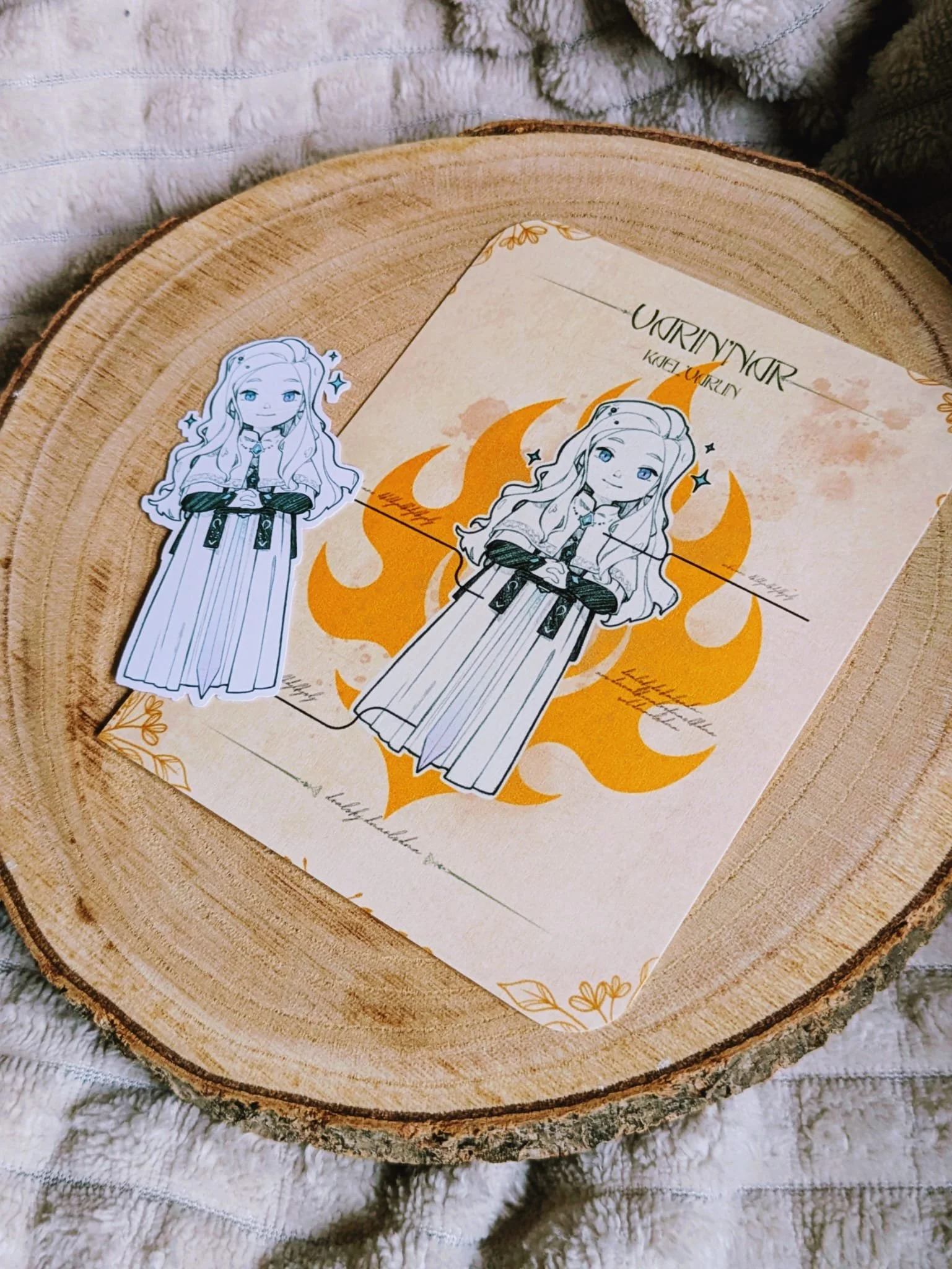
A story-driven fantasy snail mail experience from the world of Ananthara.
This issue reveals new Lore about your Companion Wyld and the mysterious Grimoire he carries along.
Become a part of the Festival and reflect on specific Journal Prompts woven into the Story.
Each issue includes illustrated collectibles, character art, and magical treasures for fans of fantasy worlds, snail mail, and happy mail surprises.
Letters & Treasures — Single Issue includes
• printed story-driven letter
• Letter Print Varin’nar Monk
• Lore Card Varin’nar
• Decipher Puzzle Game
• Varin’nar Sticker
• POV Card
Shipping Information
⚠️ Mail is shipped via DHL standard mail (no tracking)
Delivery may take up to 14 business days

40-page digital workbook · English · Instant download
Deepen your worldbuilding and develop a magic system that doesn’t feel like a random collection of powers, but instead becomes an integral part of your fantasy world making both the setting and its stories feel more vivid and alive.
This 40-page Magic System Workbook guides you step by step through the development of your magic and the deeper Questions that will enhance your Worldbuilding: your magic’s source, structure, limits, taboos, mastery, corruption, cultural impact and visual language. It also helps you test your system for loopholes, inequality and narrative relevance.
Includes: guided prompts, case studies, practical worksheets, English and German versions, and an instant digital download.
Perfect for fantasy writers, worldbuilders, TTRPG creators and artists.
Inside the workbook
Define the source and structure of your magic
Create clear limits, costs and taboos
Explore mastery, corruption and loss of control
Discover how magic shapes culture, power and everyday life
Develop a distinct visual and sensory language
Abuse, Loopholes, and Social Consequences
Explore exclusion, privilege and conflict
Connect your magic to your world and story
Guided prompts, case studies and practical worksheets
You will receive
40-page digital workbook
Checklist
Case studies from Ananthara and Thal’Ithara
English Version
Instant download
Printable PDF files
Perfect for fantasy writers, worldbuilders, game masters, TTRPG creators and artists developing original worlds.
This workbook does not just help you invent magical abilities. It helps you understand what magic changes.
Digital product only. No physical item will be shipped.
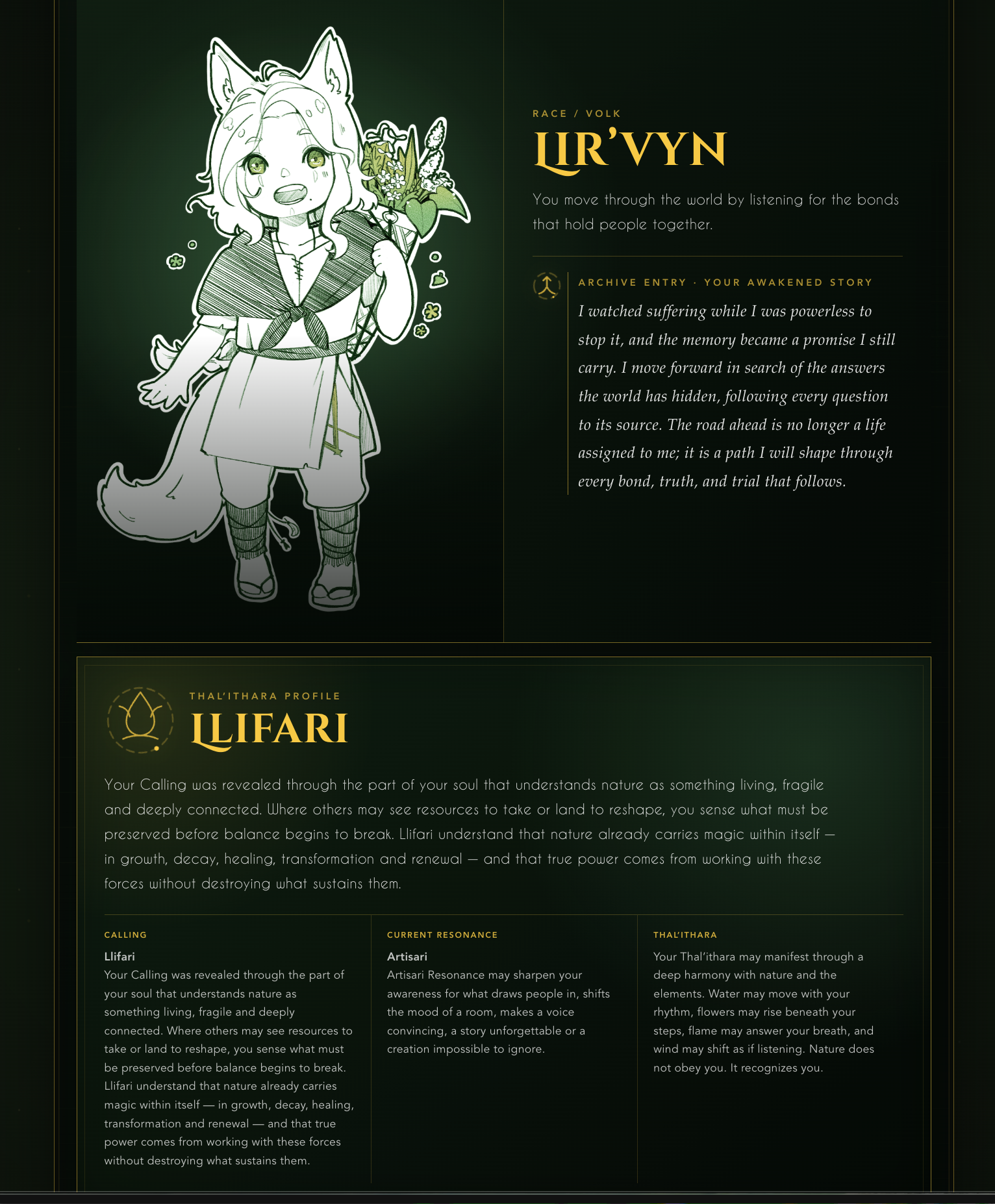
Find out who you are in Ananthara | Start the Quiz



Ananthara is more than a fantasy world — it is a place built around identity, freedom, self-expression and the courage to become who you really are. Discover how it began, what its magic means, and why this world was created to be entered rather than simply observed.